


Connecting with Coaches
January 28, 2014
In the coming weeks, the MHSAA will meet with the leadership of the high school coaches associations of our state. We have been doing this for more than 25 years, with two primary purposes.
First, we want to provide a forum for these leaders to share with one another their new ideas and initiatives and to discover “best practices” from one another, hoping that this will lead to the better plans being implemented in multiple organizations.
Our second purpose is to present some of the MHSAA initiatives or rules changes that are applicable to all or most sports. It’s not a time when we talk about the baseball pitching rule or the football playoff point system, but a time when we discuss topics of more universal application.
This year those topics included new requirements for coaches education, new rules for athletic-related transfers and proposed rules changes for international students, a simplified scrimmage rule for all sports, and a modified penalty for participation in certain all-star events.
It is intended that these coaches association leaders will be enabled to take these topics to their respective boards and members in order to increase understanding of proposed changes and to facilitate feedback to the MHSAA Representative Council and staff.
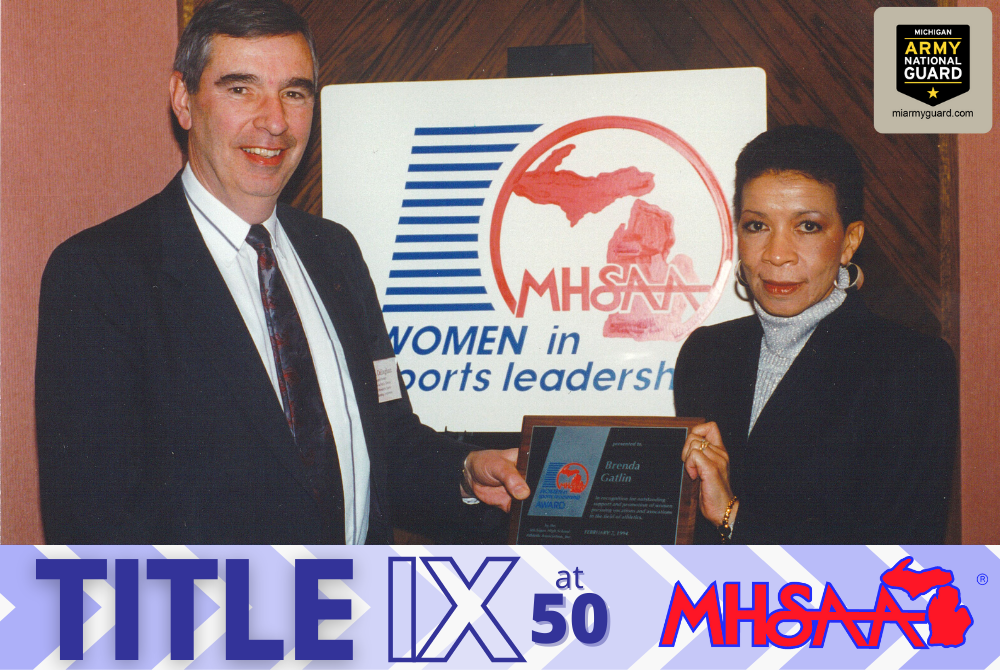
Title IX at 50: WISL Award Honors Builders of State's Girls Sports Tradition
By
Geoff Kimmerly
MHSAA.com senior editor
February 1, 2022
Michigan’s school sports history is filled with women who and have and continue to take on giant roles to advance girls athletics and the opportunities and benefits they provide.
Since 1990, the MHSAA has celebrated pioneers, advocates, voices and leaders with the Women In Sports Leadership Award.
From L’Anse’s Carol Seavoy in 1990 through St. Ignace’s Dorene Ingalls in 2021, 34 women have received the WISL Award, which most recently has been presented either during the biennial WISL Conference in Lansing or during the Girls Basketball Finals at Michigan State’s Breslin Center.
The 35th WISL Award winner will be announced in coming weeks.
Below is the list of the first 34 honorees:
1990 – Carol Seavoy, L’Anse
1991 – Diane Laffey, Harper Woods
1992 – Patricia Ashby, Scotts
1993 – Jo Lake, Grosse Pointe
1994 – Brenda Gatlin, Detroit
1995 – Jane Bennett, Ann Arbor
1996 – Cheryl Amos-Helmicki, Huntington Woods
1997 – Delores L. Elswick, Detroit
1998 – Karen S. Leinaar, Delton
1999 – Kathy McGee, Flint
2000 – Pat Richardson, Grass Lake
2001 – Suzanne Martin, East Lansing
2002 – Susan Barthold, Kentwood
2003 – Nancy Clark, Flint
2004 – Kathy Vruggink Westdorp, Grand Rapids
2005 – Barbara Redding, Capac
2006 – Melanie Miller, Lansing
2007 – Jan Sander, Warren Woods
2008 – Jane Bos, Grand Rapids
2009 – Gail Ganakas, Flint; Deb VanKuiken, Holly
2010 – Gina Mazzolini, Lansing
2011 – Ellen Pugh, West Branch; Patti Tibaldi, Traverse City
2012 – Janet Gillette, Comstock Park
2013 – Barbara Beckett, Traverse City
2014 – Teri Reyburn, DeWitt
2015 – Jean LaClair, Bronson
2016 – Betty Wroubel, Pontiac
2017 – Dottie Davis, Ann Arbor
2018 – Meg Seng, Ann Arbor
2019 – Kris Isom, Adrian
2020 – Nikki Norris, East Lansing
2021 – Dorene Ingalls, St. Ignace
Second Half's weekly Title IX Celebration posts are sponsored by Michigan Army National Guard.
Previous Title IX at 50 Spotlights
Jan. 18: Decades Later, Edwards' Legend Continues to Grow - Read
Jan. 18: Iron Mountain Completes Championship Climb - Read
Jan. 11: Harrold's Achievement Heralds Growth of Girls Wrestling - Read
Dec. 20: Competitive Cheer Gives Michigan Plenty to Cheer About - Read
Dec. 14: Evelyn's Game Had Plenty of Magic - Read
Dec. 7: Council Term Ends, But Leinaar Leaves Lasting Impact - Read
Nov. 30: Basketball Season Ready to Add to Rich Tradition - Read
Nov. 23: Marysville Builds Winning Streak Yet to be Challenged - Read
Nov. 16: Wroubel Has Championed Girls School Sports from Their Start - Read
Nov. 9: Pioneer's Joyce Legendary in Michigan, National Swim History - Read
Nov. 2: Royal Oak's Finch Leading Way on Football Field - Read
Oct. 26: Coach Clegg Sets Championship Standard at Grand Blanc - Read
Oct. 19: Rockford Girls Set Pace, Hundreds After Have Continued to Chase - Read
Oct. 12: Bedford Volleyball Pioneer Continues Blazing Record-Setting Trail - Read
Oct. 5: Warner Paved Way to Legend Status with Record Rounds - Read
Sept. 28: Taylor Kennedy Gymnasts Earn Fame as 1st Champions - Read
Sept. 21: Portage Northern Star Byington Becomes Play-by-Play Pioneer - Read
Sept. 14: Guerra/Groat Legacy Continues to Serve St. Philip Well - Read
Sept. 7: Best-Ever Conversation Must Include Leland's Glass - Read
Aug. 31: We Will Celebrate Many Who Paved the Way - Read
PHOTO Brenda Gatlin accepts the 1994 WISL Award from former MHSAA Representative Council president Brian Callaghan. (MHSAA file photo.)