


Improving Over the Long Run
October 22, 2013
A participant in a 5K run told me recently that when she first entered races, her goal was just to finish. After those early successes, her goal in entering races was to improve her personal best time.
It was only after several years of consistent improvement that she entertained the thought of actually trying to attain a spot in the top 20. Eventually, a “Top 10” and then a “Top 5” finish became the goal. And only recently has she made it a goal to try to win one of these races.
This is a wise way to approach sports. Engage at first to improve your health and fitness. Then to enhance your speed, coordination and/or endurance. Then to test the limits of your abilities. And only then to test yourself against others.
Adults might look to this as a natural, healthy way to improve themselves in almost any endeavor. And adults who are coaching youth should look to it as a healthy way to lead young people to improve both as athletes and as human beings.
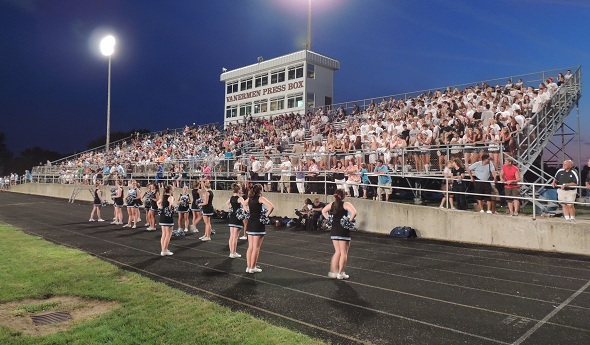
To Ford Field, and Home Again
August 31, 2012
The last time Lansing Catholic and Pewamo-Westphalia's football teams had suited up, it was under the bright lights of Ford Field for last season's MHSAA Finals.
The reigning Division 5 and 7 runners-up, respectively, returned to the field Aug. 24 in a season opener at Holt Junior High, in what was another first-time experience for leaders on both sidelines.
It was the first time in a coaching career spanning four decades that Cougars coach Jim Ahern started anew after making it to the previous season's final game. Despite numerous near-misses while coaching at Ithaca, last season was his first trip to the title game.
Pewamo-Westphalia's Brad Weber has been leading the Pirates for only five seasons, but his school and community also had never made it to a season finale before last November.
Click to see what each had to say after Lansing Catholic opened with a 45-21 win.