

Online & On-Demand, Video 24/7
August 14, 2014
By Rob Kaminski
MHSAA benchmarks editor
During the 2009-10 school year, the MHSAA dipped its toe into the video streaming currents by launching a pilot program with schools from the Capital Area Activities Conference in mid-Michigan.
Participating schools were provided equipment and a robust streaming platform through When We Were Young Productions and its technical partner, PlayOn! Sports.
The year before, more than 400 events were aired on MHSAA.tv and with its cable television partner, Comcast Cable, but this was going to break new ground. This plan – known then as the Digital Broadcasting Program – was going to allow students to stream content of classmates during competition, and upload to a web portal for all to see. High school sports in Michigan had a stage on which to display its product.
“And, it was free,” said MHSAA Communications Director John Johnson, recalling the “old” days of just five years ago. “We were able to provide more content to more viewers than ever before, and the results proved that we had an audience. Not only are our student-athletes being showcased, but their classmates are producing the content and gaining hands-on experience in a rapidly growing area of technology. It’s a win-win.”
Traffic on MHSAA.tv more than doubled during the early years, reaching more than 1 million page views midway through 2009-10.
Better yet, there was no peak in sight, not only for Michigan, but other states which had tapped into WWWY and PlayOn!’s expertise and resources.
PlayOn!, based in Atlanta, purchased the Wisconsin-based WWWY in 2012, becoming the nation’s largest rights holder and aggregator of high school content, airing more than 30,000 events annually for 34 state associations.
When the National Federation of State High School Associations sought a platform on which to launch a national network, PlayOn! Sports was a natural fit.
“When we originally looked at the creation of a national network, the question was, ‘Do we want to go the TV route or streaming route?” said Mark Koski, Director of Sports, Events and Development for the NFHS who also serves as the liaison between member state associations and PlayOn! “We realized quickly that streaming was a no-brainer. Why have just one ‘Game of the Week’ type of package on TV? Why eliminate anyone when we can open it up to all schools at any time and provide 24-hour access?”
For most state associations, the decision to join the NFHS Network was equally elementary, as most were already with PlayOn!.
When the NFHS and PlayOn! launched the NFHS Network in time for the 2013-14 school year, 28 of the 51 state associations were on board as Network members. That number now stands at 34, with four additional states contributing some content to the network.
There are approximately 19,000 high schools in the country, and some two million events annually. Programming will not be an issue. In fact, it’s high time these events are brought before the public’s eye, in the opinion of the Federation. Two-thirds of the way through the first school year, the Network had done just that, airing more than 26,000 events.
“One of our biggest reasons for starting the Network, and a huge advantage that we enjoy over other programming, is that students who never received any type of exposure – like cross country, swimming & diving, track & field athletes – now have that opportunity,” Koski said. “And, we stream other activities; bands, orchestras, graduations. This is not only for fans, but for participants and families.”
With 34 states providing championship contests in various sports (the NFHS Network airs member tournament contests not under contractual obligations with other providers), the Network enjoys its heaviest traffic during tournament seasons, as the recent spike in viewership this March attested.
During the first three months of 2014 alone, the Network attracted 1.4 million unique visitors, following a successful four-month launch period last fall that attracted 1.5 million sets of eyes.
While tournaments provide the meat of the NFHS Network menu, regular-season events might well be the bread and butter. Enter the School Broadcast Program, formerly known in Michigan as the Digital Broadcast Program.
Nationally, 856 schools representing 37 states take part in the endeavor, filling a valuable role in the overall scheme of the Network.
“In several months during the school year there are no state championships, so the School Broadcast Programs pick up the slack with quality content. Additionally, placing this many events so quickly on the Network, so effectively, has been challenging. The School Broadcast Programs have helped alleviate the workload.” Koski said.
As of April, the void between postseasons has been filled to the tune of 17,500 events from SBPs. Of those events, more than 11,500 are sporting events, which means nearly 6,000 are other school functions, from pep rallies to school plays. All of these programs are produced by students, for students, another point of pride for the Network.
“For more than a century, school sports has had the highest profile of all youth sports,” said MHSAA Executive Director Jack Roberts, who also serves as president of the NFHS Network Board of Directors. “Ours is a unique brand that stands out among all of youth sports. Done right, this network will solidify interscholastic athletics as the most popular and principled youth sports experience for many generations.”
Such an ambitious undertaking does not come without some trepidation, both philosophical and practical. Maintaining the wholesome, amateur nature of school sports while presenting the product in the most technologically professional manner was considered, as was the financial impact.
“We discussed a number of potential hurdles,” Koski said. “Was the overall idea of a network more like college and professional levels of athletics? Did we want to expose student-athletes in this manner? We decided it was time to give our students, and our product, its due.
“Another major question was how putting games onto a network affects attendance. Between 50 and 75 percent of the state high school association budgets comes from attendance.”
Thus far, Koski reports, there has been more praise than criticism, and members of the Network have not reported adverse effects on tournament or regular-season attendance. For the most part, it’s a way for interested parties who can’t get to the games to still have the ability to watch. And, that’s one of the primary goals.
In Michigan, the MHSAA faced an additional speed-bump, if not full-fledged hurdle. Tournament content in the early days of MHSAA.tv had been free. As part of the NFHS Network, the content is pay-per-view.
However, the Network “admission price” offers an unlimited content period, no matter what plan subscribers choose. So, customers can view multiple games in numerous states for one price. That would be a lot of stamps on the hand and gas mileage to physically accomplish the feat.
“We really modeled this after the Big Ten Network with kind of a NetFlix feel,” Koski said. “Our customers pay one subscription for unlimited content.”
Live events on the NFHS Network during 2013-14 cost $9.95 for 24 hours, $14.95 for 30 days and $89.95 for the school year. The season rate was $49.95, good for 120 days from the date of purchase.
“We are starting to see a trend where people lean toward the 30-day plan,” Koski added. “The Network has done a great job with the return policy. If you’re not happy, we return the money. Many times it’s that the venue doesn’t have the proper technological setup and there are hiccups. Right now we’ve seen only about 1.5% return rate. However, it is our goal to drop this below 1%.”
Another noticeable trend involves the preferred medium used to access content. PlayOn! statistics indicate that 60 percent of subscribers are watching events via mobile devices, versus 40 percent on computers. Just a year earlier, the figures were reversed. It is, indeed, a small world after all.
Numbers at the MHSAA.tv site continue to be solid in this first year under the NFHS Network umbrella. The Network tracks its “referral” portals, that is, the sites from which most of the viewers enter the NFHS Network page; basically, which states are attracting the most viewers. Currently, the MHSAA is second to Illinois on the list, largely due to its prior relationship with PlayOn!, as well as being one of the pioneers in the industry.
“A lot of the MHSAA’s success has to do with the awareness that was built prior to joining the Network,” Koski said. “We’re excited that the top two states are Illinois and Michigan, because that speaks loudly for the future. Having had prior agreements with PlayOn! clearly gave them an advantage as far as awareness. Two, three, four years from now, we’d expect that those states now with us that were not previously part of PlayOn! will achieve similar numbers once their followers and the casual fan grow accustomed to watching school sports in this manner. It’s all exciting, and we all want immediate results, but we’ve got to have some patience. It took ESPN a number of years to be known as ESPN.”
Ultimately, the popularity of the Network could result in attractive sponsorship opportunities for corporate partners, which in turn would provide additional revenue for member state associations. Currently, Network members receive a rights fee for content provided.
“We’ve made strides by leaps and bounds so far, and believe we’ve built a platform on which to display the great things students are doing, while delivering our mission and perspective,” Koski said. “And, the more funding we can generate, the better off we can assist our schools.”
An age-old school assignment lies ahead for Koski and the Network: report on what they did during summer vacation.
“The immediate challenge is to find content for outside of the school season,” Koski said. “What do we show after June state championships, and in July and August. Maybe some archived items is the ticket. How special would it be for people to have access to events from when they participated in school sports and performing arts to enhance viewership?”
In the Eyes of the Beholder
Courtney Hawkins has spent his share of time in the dark.
A 1992 graduate of Michigan State University where he was an All-Big Ten wide receiver, Hawkins went on to play nine seasons in the NFL with Tampa Bay and Pittsburgh. To say he’s watched his share of football video is an understatement.
“At MSU we had about an hour pre-practice film session, then a post-practice film session. Then we were encouraged to watch extra film, so we’d log about three or four hours of film per day in college,” recalled Hawkins, now back at his high school alma mater Flint Beecher as the athletic director and head football coach.
“At the professional level, we literally sat in the dark from maybe 7 a.m. until lunch time, then were on the field for a couple hours, showered up and went back in film session. So, you’d watch film for seven to nine hours a day, and I’d get home at 6 or 7 o’clock. People see the three hours you’re out there on Sunday, but, man, in terms of hours, it’s a job like G.M.,” he said.
 Back at the place where Hawkins honed his skills, the game remains the same, but video access has changed drastically. At the high school level, it’s also not the students’ job. There are academics to consider, in addition to just letting kids be kids.
“What I’ve found in high school is, kids don’t know how to watch film,” Hawkins said. “What’s easiest for me is I’ll take clips of opponents – 12, maybe 20 – whatever I think there bread-and-butter is, and hammer that to our kids. In a room full of 16-to-18- year-olds it would take hours to watch an entire game. We try to get kids home at the proper time to do chores, homework, or go to other activities.”
With the access to an abundance of video literally at the palms of their hands, it is important to realize that these are high school students and encourage them to curtail some of their enthusiasm toward the technology.
“I wonder if all this video watching/reviewing is taking some of the fun out of HS sports,” said Randy Heethuis, Hudsonville Unity Christian boys and girls soccer coach. “I believe there is a fine line between educational athletics where video can be used to educate and the overuse where high school athletes spend hours watching video each week even during the school day. When high school athletes stop enjoying the experience, or their sport feels like work rather than fun, we as coaches have pushed them over that line.”
Lest one think Heethuis is not competitive, it should be noted that his girls program has won seven of the last nine MHSAA Championships, and the boys won titles in 2007, 2009 and 2012.
Ditto Nick Archer, whose East Lansing boys soccer team has captured three MHSAA titles in the last dozen years, including last fall.
“I try to keep it in balance. We’ve gone from the ‘70s when we had nothing, to now when we can know too much,” said Archer, in his 38th year as a head coach. “In soccer, with the PKs (penalty kicks) you can find tendencies and strengths. People can build up quite a databank, and we have done that, too.
“But you’ve got to know when enough’s enough. Sometimes it is too much,” Archer adds. “I’m more concerned about my team. We don’t really change what we do, it’s just a matter of being aware of what our opponent might do and being prepared for it. You have to remain true to who your team is and what you do well.”
Hawkins and his staff remind their players of that fact on a daily basis during the season. Players are going to watch games on their own and develop expectations, both positive and negative. Often times, today’s coaches have to de-program their players.
“What we sometimes fight here is our kids will find the video of the next opponent and say such and such isn’t that good; ‘we’re gonna blow through them coach.’” Hawkins said. “It creates a mindset that as a coach I’m trying to stamp out. It can set kids up for letdown, or on the other hand they see a team that looks better than they really are against a lesser opponent, and they get intimidated. As coaches, we have to provide an even keel.”
With proper supervision and balance, positive results are attainable.
“Video does give you a certain comfort zone or a handle on your opponents. You can see that maybe their guys are all 6-foot-8, or find out who their top scorers are,” said Archer. “Our team is sometimes better prepared than we have been in the past when we go against schools we don’t know. The bottom line is, the game certainly has changed and you either adapt or get left behind.”
As the games on the field and the courts have evolved and in many ways become more sophisticated over the years, technology changes on a daily basis. The pluses and minuses of its effect on sports can be debated, but improvements in quality and ease of use are crystal clear.
“With the new editing systems, you can email kids clips,” Hawkins said. “They’re clicking away no matter what, whether it’s YouTube, hudl, whatever, so I prefer that they watch what I send them. I am a firm believer in leading the kids. You lead them, or they’ll find it on their own.”
Or, worse, they’ll watch with others, who can run the gamut from well-intentioned to misguided to those with their own agendas. Remember, it’s just as easy for parents, fans, classmates and coaches of non-school teams to download a team’s most recent performance.
“One concern I have with all this video being available online is, how many other ‘coaches’ are the athletes watching it with and what mixed messages are athletes receiving?” said Heethuis. “This has the potential to lead to more confusion on the part of the athlete, and that's probably not good for anybody.”
Hawkins understands the role of parents and appreciates those who study the game with great interest. To properly evaluate video and critique performance, however, the viewer must have knowledge of the game plan and each player’s assignment on given plays.
“On the outside looking in, you may see what you think you see, but a kid might be making a mistake. If parents are adamant I invite them to come in and watch film with me and we’ll evaluate it together,” Hawkins said. “Watching video is like looking at art. Everyone can interpret a painting differently until they sit down with the artist who explains it and they say, ‘OK, I see it now.’”
If viewing and sharing video is more convenient, then actually seeing the images in the video has never been better. Most devices can record and play in HD, making it easier for coaches and players to identify uniform numbers, formations and positioning.
“The quality now allows you to get a good look at personnel and numbers. With VHS tapes, you couldn’t always see what number the left tackle was. It also cuts down on the time it takes to search back and forth through the old tapes,” Hawkins said.
The variety of platforms available also offers viewing alternatives in cases where some video is sub-standard, and makes it likely that game footage can almost always be found.
“Most of our video comes from MHSAA.tv, YouTube or MLive, or we share video. We are familiar with hudl, and more and more soccer teams are using that,” Archer said. “It’s been most beneficial for us during tournament time, but we always have someone physically there to scout during the tournament, too.”
The hudl website, with deep roots in the sport of football, has become the “go-to” site for most schools and conferences, and is a burgeoning evaluation and training tool among officials.
“Within the last two years, we haven’t played a team that’s not on hudl or some kind of editing site,” Hawkins said. “And, I’ve noticed that the video is almost always in hi-def, because the equipment is a lot more affordable.”
Due to budget constraints, Hawkins has his own personal camera and hires a friend to record Beecher’s games. He hopes to experiment with an end zone camera next season to provide additional views. He explains that keeping up with available technology is a necessity to “even the field.”
Depending on a number of factors, including video personnel, quality of the footage, frequency of postings and creative editing, video creates a smaller world, if not always an ideal world.
“A lot depends on the person recording the games. Some get too close to the play rather than following the development or sequence,” said Archer, who benefits from a designated parent videographer and a student from the School Broadcast Program at each contest. “Also, we use hi-def, and some schools don’t. The technology certainly is there to get high-quality video if you want it.”
At times, creative editing can eliminate portions of contests which schools upload to the web.
Dan Flynn, longtime head football coach at Escanaba High School, and more recently an assistant at Marquette, calls it the “hot dog illusion.”
“We use hudl, and what you have to remember is, it’s only as good as the users. All of the online video and new technology hasn’t changed one important thing: some coaches aren’t going to show you some plays,” Flynn warns. “We call it the ‘hot dog illusion,’ where a series of plays is missing and all of a sudden the score changes. The opposing school says, ‘We don’t know what happened to it.’ Well, I guess the kid shooting it must have gone and got a hot dog; the hot dog illusion.”
After Further Review
Just reading the words above yields a Pavlovian response in the football world. Conversations cease, posteriors inch forward on chairs, torsos bend toward TVs. All in anticipation of decisions which follow the three most magnetic words of autumn Sunday services: “After further review.”
Ironically, the oft-maligned individuals who deliver the subsequent verdicts very often log more video hours than the player who just did/did not stay in bounds or did/did not fumble.
Game officials are passionate students of the games they officiate, and video sessions have become vital to preparation and advancement. As with coaches and athletes, accessibility to such resources has never been more plentiful for officials at all levels of our games.
The boom has occurred at such a meteoric rate that it’s difficult to imagine life without video.
“When I was just beginning, it was pretty rare to have video of yourself,” said Meghan Joseph, a Capital Area Officials Association member who now works NCAA basketball. “Before online video, you’d have to watch games on TV and emulate what those officials would do and incorporate it into your game.”
 Oh, by the way, Joseph just turned 30 and was the youngest NCAA Division I Women’s Basketball official when she received her first assignment at that level eight years ago. We’re not exactly talking “good old days” here, but eight years in the technological realm can seem like a lifetime.
Today’s newer contest officials are among the most ardent beneficiaries of hi-tech devices and continual change. It’s what they grew up with. Now, they have the ability to apply all of it to an avocation they love.
Dave Uyl, a former professional baseball umpire who now works NCAA Division I baseball and Division III football, spent a year-and-a-half as an Associate Editor for Referee Magazine, the monthly Holy Grail for officials nationwide.
“Just during my time there, we noticed a great increase in the number of high school officials associations using video on a regular basis at their meetings,” noted Uyl. “Without a doubt, the best meetings are those in which video is incorporated. It is so much more valuable to be able to break down plays and evaluate mechanics on the screen. It’s one thing to read a rules book, but another to be able to look at plays.”
The Genesee County Coaches and Officials Association is one of the MHSAA Approved Associations at the forefront of the video vortex.
“We use a lot of video in our training. We can take examples and break them down at any speed we wish and present that to the group. We find that it keeps the attention span of our officials much better if they are visually engaged at our meetings instead of just listening to lectures,” said Steve Tannar, who has been to his share of meetings with the Genesee group as a five-sport official.
Jeremy Valentine, football officials coordinator for the MHSAA’s Southeastern Conference and a five-sport official himself for the Huron Valley Officials Association, has noticed that the effects of video can vary amongst officials.
“The ability to watch yourself on film has been very helpful to a number of officials at a variety of experience levels,” Valentine said. “However, some officials may be intimidated to watch themselves on film for fear of what they may actually see.”
Tannar offers an alternative for those who might be camera-shy, but adds that the road to improvement – as in any endeavor – is to make mistakes and recognize them; whether alone, or in front of a group of peers.
“We typically don't use a ton of our own people in video presentations,” Tannar said. “We prefer not to put our guys on the spot, so anonymous video works best for us. That doesn't mean we never do it though. I've been up on the big screen for the whole room to see. Nothing wrong with a little humility from time to time.”
In the Capital Area Officials Association, nearly all of the video shown at its meetings involve member officials. Dan Renner has taken the reins of the video program during football season through hudl.com. Area schools post their contests to hudl, and Renner alerts CAOA members when new clips and games are online for review.
“Before hudl, we’d get six or seven DVDs per season from officials who were off on a given night and then went to shoot a game,” Renner said. “It’s amazing how quickly some of the games are up and posted now. We use it as a tool. We historically know what types of offenses schools in the area run, but for nonconference games it gives us an idea what those schools run, so we can pregame a bit better.
“You just have to understand that in an immediate-feedback world, if you boot a call during a game, you’ll come to the next association meeting and everyone has seen it and everyone knows. Film doesn’t lie, and you are putting yourself out there each time you go out.”
Eric Wills, Jr., like Renner, is a young official who just completed his first year at the NCAA Division III level. He has no doubt that his exposure to video, lots of it, accelerated his path.
“Sites like hudl really help young officials see snaps and get experience,” Wills said. “I watch my pre-snap keys, break down my zone, observe the dead ball officiating. Video allows us to get reps just by watching more snaps. I spend about two to two-and-half hours a week watching film and discussing it with other officials. Fellow officials are our best critics, and that’s how we get better.”
In an avocation that calls for confidence, knowledge, patience and physical and mental stamina, humility can be overshadowed by ego. That’s why it’s important to keep the big picture in mind while looking at the smaller pictures on today’s many devices, says Uyl, who worked four seasons at the Triple A level and two MLB Spring Training seasons in Arizona during his professional days.
“The important thing to remember is that you’re one crew. At the end of the day, the objective is to get it right. You can’t have hurt feelings about having a call overturned, and you can’t be afraid to look at a replay and overturn it. It ain’t called ‘Show Friends,’ it’s called ‘Show Business.’ This is a business,” said Uyl, who still has friends in Major League Baseball.
Video has moved from training sessions to the rules books, with MLB becoming the last major sport to incorporate replay provisions.
This year, Uyl and Valentine both will feel the on-field presence of cameras and replays during the fall. Like Uyl, Valentine is a college football official, working Division I FCS in the Pioneer League and Division II, where he worked the 2013 National Championship game. The targeting penalty was implemented for NCAA Division I play last year and now has reviewable components in place for Divisions II and III.
Joseph, meanwhile, already has experience with monitor reviews at the collegiate basketball level.
“We have rules in place for certain situations throughout the contest where we are required to go to the monitors,” Joseph said. “There is certainly less room for interpretation or judgment, but on the other hand there is a whole new set of rules dealing with monitor review. From a fan’s perspective, many think we go to the monitor when we feel like it, when really there are certain situations that we have to go to the monitor. That gets magnified in the last minute of a close contest, which is often the only part that fans remember.”
Cameras also can have an effect on games even before plays get to the review stage. The human element of officiating still remains, but in different ways.
“In Triple A ball and the Arizona Fall League, we had QuesTec (used by Major League Baseball in the early 2000s for purposes of providing feedback and evaluation of Major League umpires), and after every game you’d leave with a disc and a score on it,” Uyl said. “Video doesn’t lie. It’s an evaluation tool, and it’s here to stay. You kind of start officiating to the video; certainly we see that in football with all the replay at the collegiate and professional levels.”
In the MHSAA, replay use is limited to a select few scenarios. For both genders of the MHSAA Basketball Semifinals and Finals, officials may use the courtside monitor to determine whether an attempt is good or no good, or whether it is a 2-point goal or 3-point goal, only when the clock reads 0:00 at the end of a game. Ice hockey began to employ a similar system in 2011 for its Semifinals and Finals, only reviewing “puck crosses the line/beats the clock” scenarios.
Is there more to come? Valentine believes that with new targeting rules now in place for high school football, perhaps a halftime review similar to Division II and III collegiate levels could be helpful in determining if an innocent player could be returned to action.
“I can see a similar place in high school sports for these types of scenarios,” said Valentine. “It would also be helpful to allow the officials to use video following the contest to determine which players may have been involved in flagrant acts during the game, or to also reinstate players that may have been incorrectly ejected (for example, No. 12 was ejected for fighting when No. 15 was actually the player involved).”
Yet, high school athletics remain educational in nature, and some of the lessons include mistakes and consequences made by the game’s arbiters.
“Sports have survived for a long time with no replay and an occasional officiating mistake,” Tannar said. “I think part of the lesson an athlete can learn about life from sports is how to persevere when things don't go their way. Officials will make mistakes and players – and coaches, fans, etc. – have to learn how to overcome those obstacles because life is full of them.”
Video has certainly added a new means by which people are able to capture officiating mistakes. Often times, the officials are exonerated by the tales of the tape. In either case, class is always in session today.
“We watch clips in the locker room after games as a crew. If we see something we think was questionable, we can send it to our supervisor with an explanation,” Joseph said. “A coach can also send a clip to our video coordinator, who will send us a copy. If further conversation is needed, the supervisor, video coordinator and officiating crew might have a conference call. There is definitely more accountability with video.”
At the high school level, while most coaches are glad to assist in officials’ quest for improvement, some remain reluctant to share video – until a call is perceived to go against them.
“For the most part, the coaches thought it was great that we wanted to continuously improve,” said Renner. “There are a few schools that don’t want to share the video and are afraid with hudl it’s just a couple clicks away. Well, if you think about it, every game on Saturday and Sunday can be recorded by millions of people through basic cable with DVR.”
To be sure, no matter how protective some folks try to be, video of almost anything, anytime, is out there, waiting for more sets of eyes.
It’s easily accessible for millions of people, and easily generated and posted by millions more. That dynamic makes officials easy targets for second-guessing, but shouldn’t change how they approach their unenviable task on a daily or nightly basis.
“Pretty much every one of our meetings involves some mention of social media and the fact that we are always being recorded,” said Tannar. “I don't think about it when I'm on the court or field, but you do need to be aware that anything you do will be captured, reproduced, traded, sent, emailed and posted, so don't give them a chance to catch you doing something you shouldn't. Don't address the fans, remain calm when talking to coaches and be the smartest ones in the room with the rules so you always have book support.”
Valentine agrees that nothing beats being prepared, and also advises fellow officials to stick to officiating and leave the social media to others.
“If you go onto the field every day with the knowledge that someone may always be 'watching,' there is no need to worry about who may or may not be recording you with a mobile device,” Valentine said. “I have a bigger fear with what officials may post on social media forums following games.”
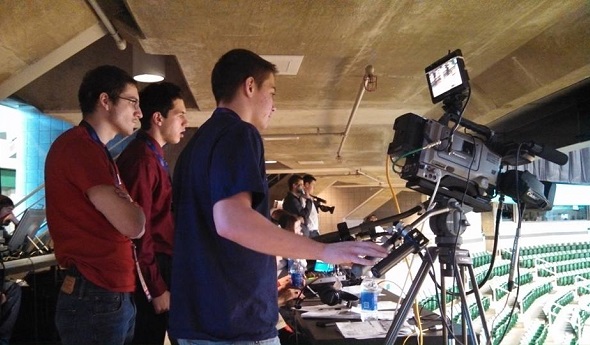
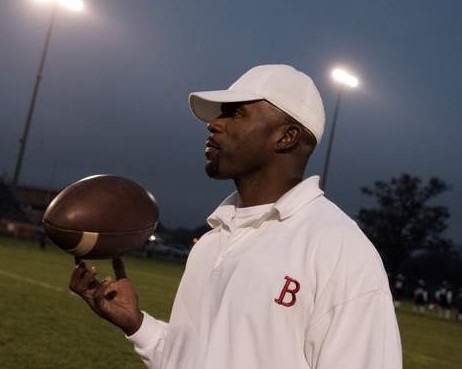
PHOTOS: (Top) Students at Michigan State University's Breslin Center film during the MHSAA Basketball Finals. (Middle) Courtney Hawkins has returned to Flint Beecher as its football coach and athletic director. (Below) Meghan Joseph began officiating Division I college basketball games during her early 20s.

Official Treatment
March 7, 2014
A book I quoted in this space three times last November – How: Why HOW We Do Anything Means Everything by Dov Seidman – has me thinking about sports officiating.
One premise of the book is that the Internet era has made the world so transparent and connected that there is no such thing anymore as “private” behavior or a “minor” mistake. Everything can become a public matter – instantly. Anything can become a major problem – overnight. Worldwide.
So, when our local real estate agent, who officiates junior varsity basketball, misses a call that an invested spectator captures with his or her smart phone camera, and sends to his or her relatives and a local media outlet that night, there is no limit to where that video could appear by the next morning.
And while major college and professional officials may now receive four-figure fees to work under those conditions, officials at the junior high/middle school and high school levels – sometimes working for little more than gas money - wonder if it’s worth the hassle.
There are many obstacles to recruiting and retaining officials for school sports, including poor business practices by assigners and bad sportsmanship by coaches and spectators; but a significant factor not to be overlooked is the adverse potential of immediate worldwide criticism for a call that had to be made in the blink of an eye.
The human factor of sports is now subject to inhuman expectations. In an enterprise that strives for fairness, it appears that it’s the official who is being treated least fairly.