


Sorting It Out
February 4, 2014
The MHSAA has a good relationship with the high school coaches associations of Michigan in spite of the fact that the MHSAA sometimes befuddles and frustrates some associations’ leaders and members. This occurs, for example, when a coaches association’s board of directors votes unanimously in support of a change in policy or procedure which fails to be adopted by the MHSAA Representative Council. Every so often over the past 25 years, I’ve had to provide reminders of why this occurs – in fact, why it must occur.
First, a coaches association is just that – an association of coaches; and coaches are but one of the many important voices to whom the MHSAA pays regular attention. The MHSAA also must hear the opinions of athletic directors, principals, superintendents, boards of education, contest officials and others. Typically, coaches desire more of everything: contests, classifications, trophies and medals. Just as predictably, most administrators seek reasonable limits on such things and can often be heard to say, “Enough is enough.”
Second, the makeup of many of our state’s high school coaches associations’ boards of directors, and even the associations’ members, do not reflect the MHSAA’s full membership. Understandably, many coaches associations’ board members are disproportionately from large schools in the southern or even southeastern part of Michigan.
And third, by their nature, coaches associations advance proposals for a single sport, which could impact other sports positively or negatively. There is no question that if one sport “gets” something, like another tournament classification or division, other sports will seek the same consideration which may or may not be practical for or beneficial to other sports.
When considering a proposal from a coaches association, MHSAA Representative Council members will almost always ask themselves: “Who’s not in the room? Who are we not hearing from? Is there another side of the issue? How does this play out among small schools, or urban schools, or northern schools? How will this affect other sports?”
We look to coaches associations for sport-specific advice; and we urge them to seek input from a constituency that is as large and diverse as possible. We look to other stakeholders to add their advice and counsel to the process; and we depend on the Representative Council to sort it out and seek the proper balance.
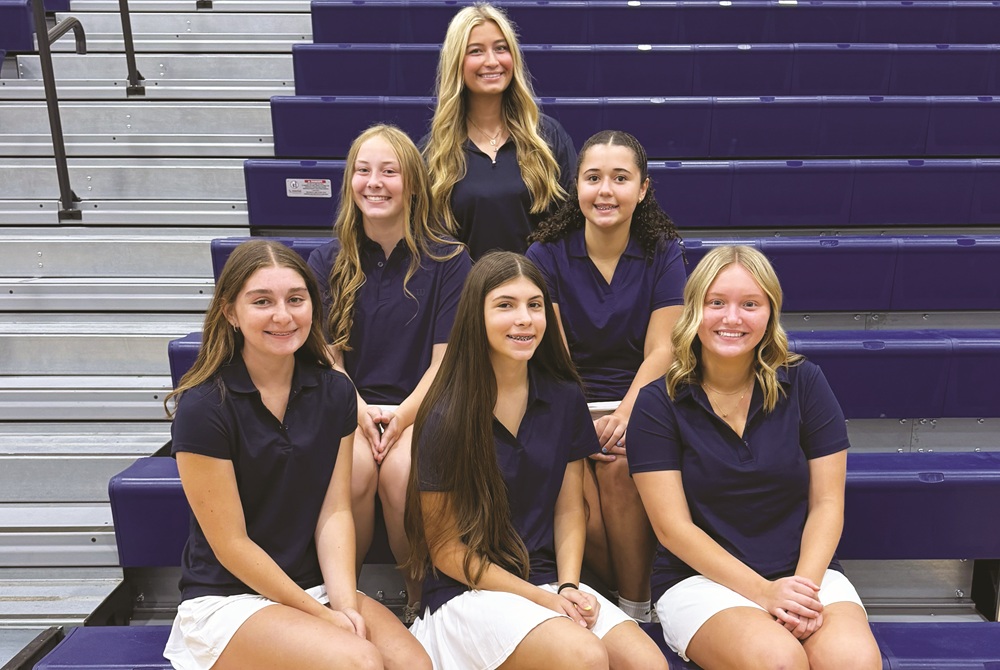
Recent Whiteford Grad Ovall Leading Bobcats' Inaugural Girls Golf Team
By
Doug Donnelly
Special for MHSAA.com
September 2, 2026
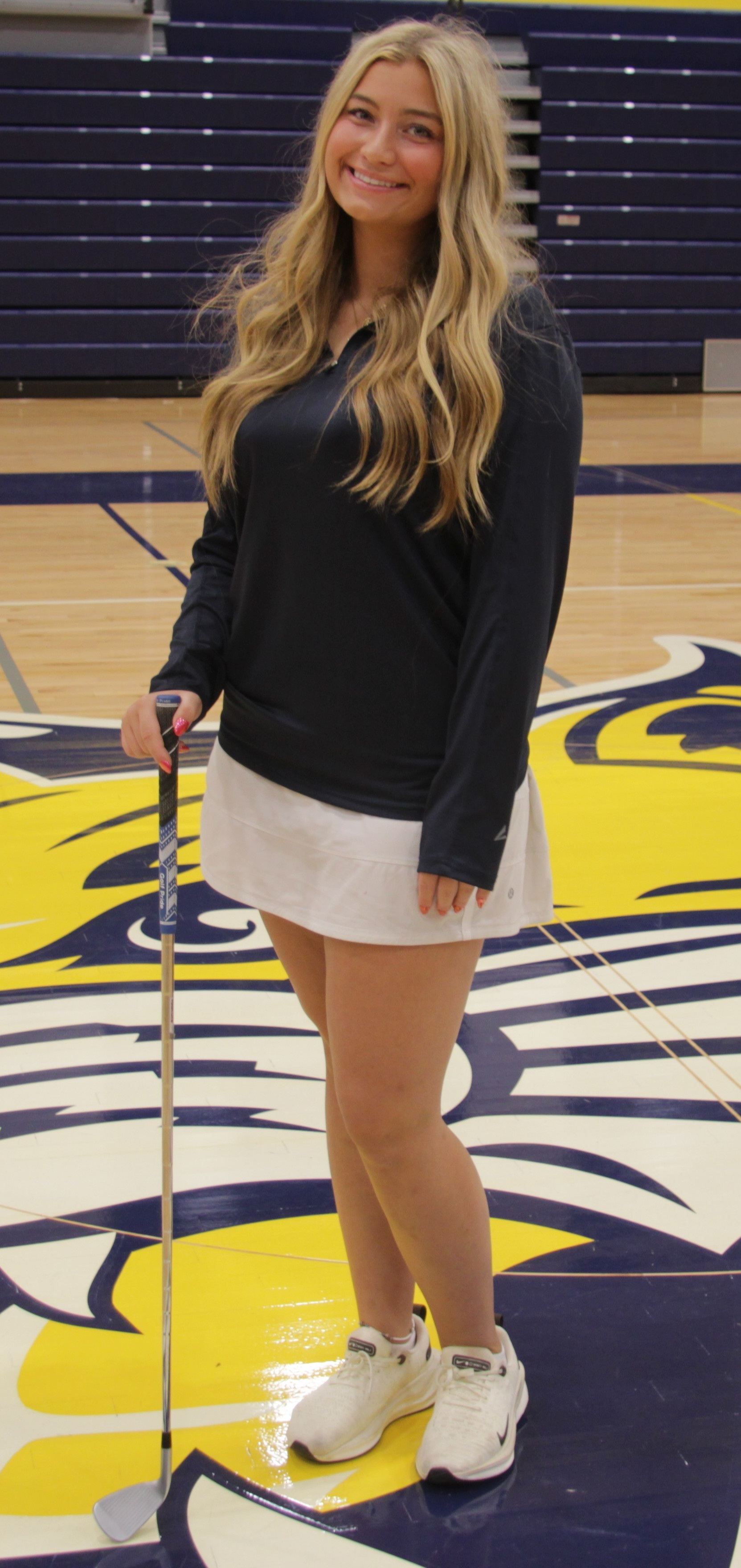
Addison Ovall might be the youngest varsity head coach in the state of Michigan this fall.
 Ovall, who graduated in June from Ottawa Lake Whiteford, had barely taken off her cap and gown when she found herself as the new head coach of the Bobcats girls golf team. She’s also a pioneer of sorts – she helped lead the crusade for Whiteford to field a team in that sport for the first time.
The five girls on the squad tee it up for the first time Tuesday.
“I always wanted to start a girls golf team while I was a student here, but there didn’t seem much interest in it,” Ovall said. “Once I graduated, I shared my story about having played on the boys team and I think that garnered some interest. It’s something I’ve always wanted.”
Ovall was going to golf in college, but a traffic crash during which she suffered a broken wrist put those plans on the backburner. For now, her work on the course is dedicated to helping five novice golfers learn the game.
“That just led me here to coach,” she said.
Ovall learned the game when she was a kid from her father.
“Ever since I was little, I had a club in my hand,” she said. “It seems like I’ve been playing forever.”
She started high school in Toledo and played on a girls golf team as a freshman at St. Ursula Academy, a private school in northwest Ohio. She moved to Whiteford as a junior and was set to be a one-person golf team in the fall of 2025 with her mom as the head coach. That’s when she was injured in the crash and couldn’t continue the season.
Whiteford athletic director Miranda Green went through the MHSAA to get clearance for Ovall to join the boys team in the spring.
“She had played in one competition in girls golf, then got hurt,” Green said. “I had to write a letter to the MHSAA, and she was approved to play on the boys team, but she had to sit one match. She was excited to still be able to play.”
Ovall said it was a difficult transition.
 “It was terrifying, to be honest,” she said. “I had to hit from the men's tees, had to learn everything, but I think it made me a better golfer and a better person overall. I met new people, which was cool. I had college opportunities, which was awesome.”
Her season was hampered by the wrist injury, but she didn’t let it stop her. It did get in the way of playing at the college level, however.
“It was sort of difficult, but I was better off for it,” she said.
While still in high school she started lobbying other girls in school to sign up for golf.
“Toward the end of the year we had girls start showing interest in it,” she said. “That was really cool. When the school asked me to come back to coach, I was pretty nervous. I didn’t think anyone was going to come to tryouts.”
She ended up having five girls join the squad, which gives them enough to compete in dual matches and tournaments.
“It’s just been fun to get to know the girls,” she said. “We are a very young team. We are just starting out so we are trying to see what our strengths and weaknesses are.”
While the first match isn’t until next week, they have been playing daily at Whiteford Valley Golf Club, the same home course the Whiteford boys team plays on. Ovall said they typically spend an hour on the driving range, then chipping and putting for the last 45 minutes of practice. One day a week, the girls play nine holes.
“It is good to see how the game is coming together and to see what we need to improve on,” she said.
Because there are so few members on the team, Ovall can spend about 15 minutes with each golfer daily.
“After we play a round, the next day I will focus on what their biggest weaknesses were on the course,” she said.
Ovall said teaching the game is a rewarding experience.
“We have one girl who is an experienced golfer, but everyone else is really brand new to the game,” she said. “We want them to go out and have fun. We’re all able to hit the ball, which is good. Right now, we just keep going over everything getting ready for that first tournament and going over all of the rules. We’ve had a month to prepare.”
Charlie Weiser is one of the freshmen on the team. She said she decided to go out for golf because her whole family golfs. The team is getting to know the rules and having fun together, she said. In practice, she likes to focus on driving and putting, but is getting pretty good with her 8-iron.
“I just started at the beginning of summer, but it’s been going pretty good,” she said. “There have been good days and bad days.”
Green said she didn’t have any apprehension about turning the new program over to Ovall.
“Honestly, it was a no-brainer,” she said. “She is the perfect person to do it. I’m excited for her. Hopefully she can keep the program growing.”
 Doug Donnelly has served as a news and sports reporter at the Adrian Daily Telegram and the Monroe News for 30 years, including 10 years as city editor in Monroe. He's written a book on high school basketball in Monroe County and compiles record books for various schools in southeast Michigan. He is now publisher and editor of The Blissfield Advance, a weekly newspaper. E-mail him at [email protected] with story ideas for Jackson, Washtenaw, Hillsdale, Lenawee and Monroe counties.
PHOTOS (Top) This fall’s Whiteford girls golf team is the school’s first. Top row: Coach Addison Ovall. Middle row: Grace Grosteffon and Avee Ingram. Bottom row: Addy Emch, Charlie Weiser and Brenna Allen. (Below) Ovall. (Photos by Doug Donnelly.)