


Teaching ABC's of Pressure Situations
October 30, 2013
 By Eric Martin
MSU Institute for the Study of Youth Sports
Coaches have seen the signs: Athletes having too much or not enough energy prior to a game, quickening breathing, sweating more than usual, being unable to focus on important details, and having their minds wander from the present to “what if” scenarios and past mistakes.
Athletes deal with pressure in many ways. Although some handle it well, many do not have the tools to perform to their full abilities in these situations. Most athletes place a high importance on succeeding in sport, and when athletes reach regional, district, or state championships, the pressure they feel may become overwhelming.
How athletes handle this increased pressure can often mean the difference between winning and losing. Therefore, helping athletes deal with it is something coaches should consider prior to athletes encountering these high-stakes situations.
Unfortunately, there is no magic elixir for helping your athletes work under pressure. But if these ABC’s of pressure situations are followed, your athletes will be much better equipped to cope, and the chances of their performance levels dropping significantly will be reduced.
1. Act the Part
How you as coaches act influences your athletes. For better or worse, athletes notice your emotions in response to these situations and take cues from how you handle pressure.
You are a demand on your players’ attention – you can add or reduce your players’ perceived stress by how you act. Understanding the demand you place on players requires self-awareness. How do you respond when a key call goes against you? Do you have nervous habits that athletes may notice? What messages are you providing to your athletes – both verbally and non-verbally? Athletes pick up on these non-verbal cues, so you must be aware of how you respond to these situations.
It is important to remember emotions are not always negative – rather acting differently than normal can be a signal to your athletes that you are stressed. Strive to be consistent in your actions – whether you are coaching during a preseason match or championship contest. These situations are stressful for you too, but you need to be the constant your athletes look to for stability.
2. Breathing – Remember to do it
It seems like a simple thing, but when athletes’ emotions are running high, they forget how to breathe – or, at least, forget how to breathe properly. Worse, they often think they are breathing normally but don’t notice breaths are becoming shorter and shallower. Teaching athletes to breathe properly when not in pressure situations will help them have the tools to rely on when they encounter more intense scenarios.
For proper breathing, athletes need to do so from the belly and not the chest. The pace of this breathing should be 6-2-7; that is, have athletes take a deep breath from the abdomen for six seconds, hold for two seconds, and then finally slowly exhale completely for seven seconds. This breathing strategy is ideal for pregame situations to quiet nerves and help athletes get ready to play, but a condensed version (3-2-3) can also be used for quick breaks in the action like a timeout or court change.
3. Control the controllables
During times of high pressure, athletes sometimes feel they do not have control over their own performances. It is important to help athletes focus on things they can control and not worry about those that cannot be changed or are outside their influence.
Instead of athletes dwelling on aspects that are out of their control like unusual game times for championship finals or a referee’s bad call, help them focus on completing their warm-up preparations and how they can respond to poor calls. Helping focus athletes’ attention on things they can control will help them better handle pressure situations and leave them feeling less helpless
Athletes’ emotions are typically out of their control, but how they view them and respond to these emotions are under their control. Author and preacher Charles R. Swindoll said, “Life is 10 percent what happens to you and 90 percent how you react to it!” Be sure your athletes know how to respond when difficult situations arise.
Conclusion: Fearlessness is an assembly
Not all athletes react to pressure situations in the same manner, but all athletes can benefit from these simple suggestions. Remember to ACT THE PART of how you want your athletes to act, teach your athletes proper BREATHING techniques, and help athletes focus on CONTROLLING THE CONTROLLABLES.
Good preparation is the key to performance. Increase self-monitoring and give athletes the tools to succeed in pressure situations; they, in turn, can be in a better position to succeed. However, like any skills, they must be practiced accordingly, and one session will not solve all issues. Devote the time to train athletes in these skills, and when the need arises they will have them ready to use.
Good luck this season!
Martin is a third-year doctoral student in the Institute for the Study of Youth Sports at Michigan State University. His research interests include athlete motivation and development of passion in youth, sport specialization, and coaches’ perspectives on working with the millennial athlete. He has led many sessions of the MHSAA Captains Leadership Clinic and consulted with junior high, high school, and collegiate athletes. If you have questions or comments, contact him at [email protected].
Let's Learn What This Time Can Teach Us
April 8, 2020
By Kevin Wolma
Hudsonville Athletic Director
A simple service return that landed into the net last fall ended my son’s tennis career.
When you are a senior, there is an end date. Just like that it is over.
Seems like yesterday I was playing catch with him in the front yard. Seems like yesterday I was rebounding as he shot at our basketball hoop. Seems like yesterday I put a tennis racquet in his hands for the first time. The success and failures along with the laughter and frustration all came to an end.
Along the way people would warn me about how fast the time goes, but when you are living day to day, you don’t really believe them. Going into the final day of the season, I had those thoughts that this would be the last day I’d watch my son play a competitive tennis match, but it didn't really hit me until I watched that last ball go into the net.
However, I also realized that we were going to experience many final moments during his senior year and this was a natural part of the journey. What I didn't know on that day was that this was the very last time I would see him compete. The cancellation of spring sports season with the COVID-19 crisis took that opportunity away from him competing in track & field this spring.
We never know when things will be taken away from us.
Administrators, Athletes, Coaches, Officials, Trainers:
Do you have a message that will provide inspiration, motivation or comfort to Michigan’s high school sports community during this unprecedented time? We’d like to help share it. Submit your “viewpoint” – written or video – to [email protected] for consideration for publication on Second Half.
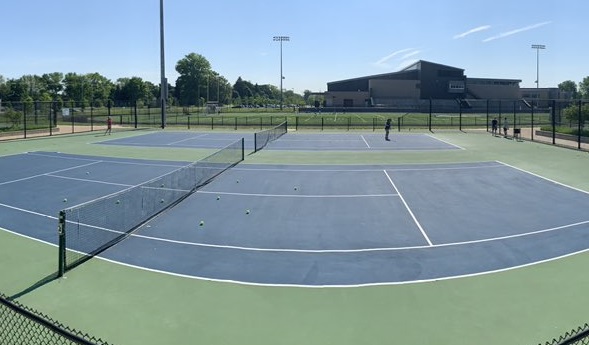
My daughter, also a senior, will also lose the opportunity to finish her tennis career at Hudsonville because of the COVID-19 shutdown. For the two of us, tennis was more than a sport – it was our connection. From the time she was 5 years old hitting foam balls in the gym to now, the tennis court became far more than a surface with a net and lines.
The tennis court was our place of solitude. We hit thousands and thousands of tennis balls over the years. But more importantly, the tennis court created a platform where lessons were shared, stories of success and failure were told, and a love for a sport was born. I dread the day the tennis court sits silent, because that means my daughter will move on to her next stage in life. That time could be now.
Sports is not the end-all, and it surely does not define a person. However, it is a mechanism to bring people together and to teach life lessons that are often taken for granted, until we realize it is over.
The purpose of this article is not to talk about the end as much as it is to emphasize the importance of those moments leading to the end. Don’t let those moments slip away. If your son or daughter asks you to go outside and play catch, please put down the computer or phone and do it. The email can wait. The phone call can wait. The game on TV can wait.
Admittedly, I have been occasionally guilty of this as well and now realize the importance of time and how unpredictable it can be. I have one more chance with my youngest daughter to make sure we don’t take those moments for granted. They are moments we will never get back, and again, we never know when those moments will be taken away.
As a high school athletic director, all I’ve wanted was more time. Sixty plus-hour work weeks while trying to navigate work and home schedules is often a challenge. Many of us live this life every day. We all would like more time.
However, over a 48-hour span during the month of March 2020, time was all I had. In those two days, after the Utah Jazz’ Rudy Gobert tested positive for COVID-19, both the NCAA and NBA shut down while schools and businesses began closing their doors indefinitely.
Now, time is all any of us have.
My hope is that we realize time is a gift and we must be willing to receive it when available. Take advantage of the time to regain a perspective of what is really important in our lives and act on that. This moment in time will end and for many of us, our lives will resume juggling personal, work, and sports schedules. Are we ready? Did we take this “time off” from the busyness of life and focus on how we can maximize every moment of every day?
For some of us, this gives us a chance to hit the restart button and maybe look at youth sports through a different lens. Maybe our interactions with our kids, coaches, and officials will be more positive. Maybe we worry less about the outcome and more about the process. Once we get back to the playing field, maybe we will look at participation in sports differently. Maybe we will understand that it is truly a gift, and every gift deserves a level of gratitude – gratitude toward the many people who allow this experience, and all its life lessons, to transpire.
Years from now, when we look back at the year of COVID-19, will we still value the essence of time and living in the moment? Will we still give gratitude to the gift of sports? Each one of us wants to look back at our kid’s experiences with athletics and have no regrets. No regrets with our actions. No regrets with our time. We have an opportunity as parents right now to pause, reflect, and make changes that could impact youth sports for generations to come.
We must seize this opportunity now because this part of life will be over before we know it. For some of us, maybe even more quickly than we expected.
Wolma has served as Hudsonville's athletic director since 2011 and previously coached boys varsity basketball and girls varsity golf among other teams. He also previously taught physical education and health. Photo courtesy of the Hudsonville High School tennis programs.