

Eventually, the sun will shine ...
April 25, 2013
By Geoff Kimmerly
Second Half editor
 We all believe that, right?
Rain – and snow for some – has been the buzzword of this spring sports season. Just about every newspaper is writing about it and every athletic director, coach, player and parent is dreading it on a now-daily basis.
But eventually, we expect the weather to clear up and teams to play catch-up. To that end, there are limitations teams in some sports face when attempting to make up their games – but also opportunities to take advantage of while trying to fill out their regular-season schedules.
- Girls soccer and girls and boys lacrosse teams may play only three games during a week, Monday through Sunday. A weekend tournament – which generally includes 2 to 3 shortened games – counts as only one in this equation.
- Baseball and softball teams can play as many games as they want in a week, but no more than two on a school day – and baseball pitchers must not pitch for two days following their 30th out in a week.
- For tennis, an individual may not play more than three matches in one day – unless she or he is playing in a league championship tournament featuring more than eight schools for which a fourth match would decide the championship. That player also could not have played more than six sets that day heading into that fourth and final match.
- Golf and Track and Field do not have weekly contest limitations. Track and field athletes can compete in only four events per day.
As expected, a number of teams – especially for baseball and softball – are scheduling to smash in as many contests as possible into the next four weeks. Postseason play for tennis and lacrosse begins May 16 – three weeks from today.
But teams do have options.
One rarely used but anticipated to be used more this spring is an opportunity to continue playing regular-season contests through the final day of the MHSAA tournament in that sport. For example, a baseball team can continue making up games through June 15, the day of the MHSAA Finals in Battle Creek. A tennis team can play regular-season matches through June 1, etc.
Also, the MHSAA Executive Committee approved Thursday to allow for this spring two additional multi-team tournament dates for soccer and lacrosse, which will give those teams an opportunity to get in a few more games. That means soccer teams will be allowed to play in four multi-team tournaments instead of two, boys lacrosse four instead of two and girls lacrosse five instead of three.
Teams will have to do some juggling, no doubt, and all other tournament stipulations still apply (games generally are shortened so more can be played, etc.). But with a little creativity, teams could at least get in a few of their make-up games in this way.
Also, the Executive Committee approved a motion to waive the four-contest MHSAA tournament entry requirement for all Upper Peninsula schools in all sports this spring. As of the weekend, snow still covered parts of the U.P.
Gaps shrinking
Much has been discussed about minimums for all four MHSAA classes for 2013-14, and how they are the lowest student totals in at least a decade.
It’s true. The floor in Class A is 893 (down from 911 this school year), Class B starts at 429 (down from 449), Class C at 207 (down from 217) and Class D at 206 (down from 216).
However, there is a better way to crunch the numbers: Consider the shrinking gaps between the largest and smallest schools in each class.
For 2013-14, the gap in Class A is 1,888 students – 261 students fewer than 2007-08 and nearly 900 students fewer than in 2005-06. The gaps between largest and smallest in Classes B, C and D also are trending smaller – which means each class actually includes schools more similar in size, instead of a perceived other way around.
SAC 2013-14 on the way
We’re thankful for a valuable group of students who help us throughout the school year – our 16-member Student Advisory Council, made up of eight seniors and eight juniors from all over the state who are charged with providing feedback on issues impacting educational athletics from a student’s perspective, while also assisting at MHSAA championships and with special projects like the “Battle of the Fans.”
Selecting the next class to join is a highlight of every spring – but hardly an easy process.
A six-member selection committee, myself included, considered 62 sophomore applicants today from all over the Lower and Upper Peninsulas, representing all four of our classes and nearly every sport we sponsor.
Every candidate is impressive for a variety of reasons. That’s what makes this difficult – we could pick any number of combinations to make up our new SAC class, and no doubt leaders galore will emerge from another impressive group.
But there are only eight spots on the council. And we’ll announce who received them later next week.
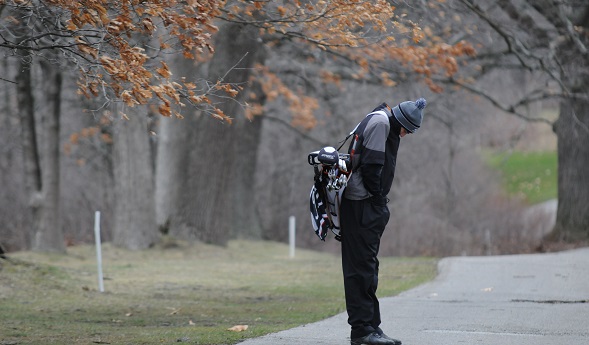
PHOTO: A golfer attempts to keep warm during a round on a dreary day earlier this season. (Click to see more at HighSchoolSportsScene.com.)
When Can I Walk Off Knee Pain — And When Should I See A Doctor?
June 7, 2022

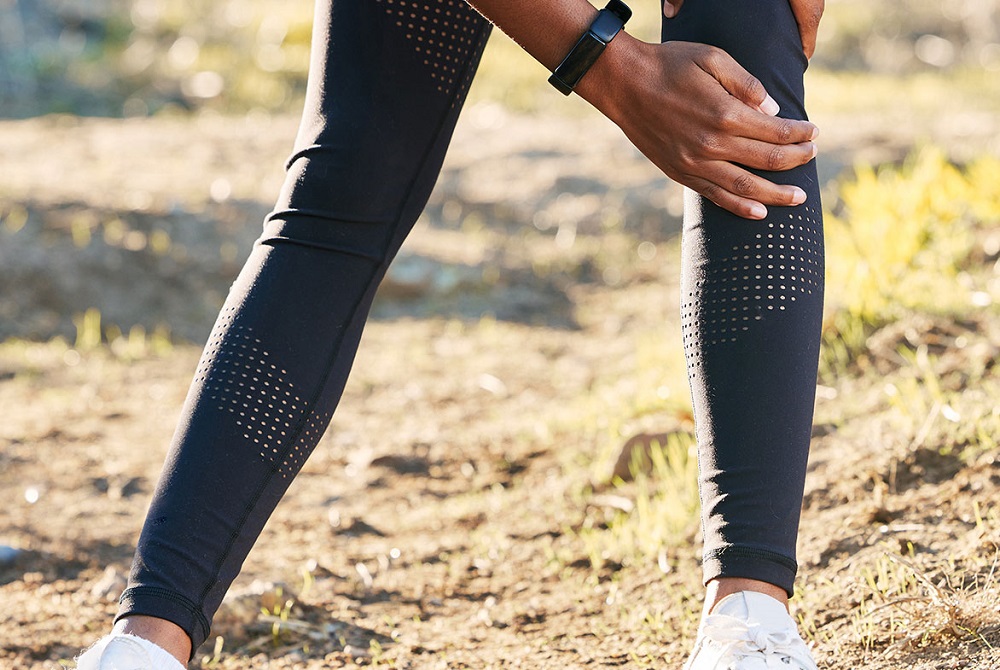
Whether you wake up with a stiff knee, sustain an injury, or start feeling knee pain for seemingly no good reason, you might wonder what to do. Should you immediately rush off to the doctor? Can you just ignore it and hope it will get better? Can you treat it yourself? Knowing when you need a doctor’s intervention can be a tricky decision to make.
We see people at the start of injuries and after they’ve been ongoing,” says Nancy White, M.D., a sports medicine physician at Henry Ford Health. “While the sooner you see an expert, the better, there’s really no right or wrong to it. However, there are a few key signs that it’s a good idea to get it checked out.”
Dr. White recommends seeing a doctor if:
► You are waking up with consistent knee stiffness. If there’s no history of an injury involved, it could be due to osteoarthritis or rheumatoid arthritis.
► If your knee pain isn’t going away.
► Your knee is swollen and you can’t bear weight on it.
► You can’t fully flex or extend your knee.
► Your knee is warm to the touch. This could signal inflammation.
If your pain is mild — or you’re trying to decide whether to see someone — Dr. White recommends icing it on a scheduled basis. “That means two to three times a day,” she says. “Apply the ice to your knee. It will get cold. It will burn, then it will get numb. Remove the ice when it gets to the numb stage.”
She also recommends elevating your leg and putting a compression wrap or sleeve on your knee. If the pain is bad, you can try taking ibuprofen or naproxen for a few days.
Common Causes of Knee Pain
But if your knee is not getting better, it’s a good idea to see a doctor, as common causes of knee pain include:
► ACL sprains and tears. Short for anterior cruciate ligament, the ACL is one of four ligaments in the knee that allows it to flex and extend. The ACL can tear when your foot is firmly planted in place, and the knee locks and twists or pivots at the same time.
► MCL sprains and tears. Short for medial collateral ligament, the MCL connects your shinbone to your thighbone. It can tear when landing after a jump, or after an exterior blow to the knee (usually during contact sports). Luckily, most MCL injuries heal on their own.
► Meniscal tears. The menisci are your knee’s shock absorbers; they're two discs made of soft cartilage. Abrupt movements (like pivots, stops, turns, squats or lifts) can cause them to tear.
► Kneecap dislocation. A direct hit to the knee — or a sudden twist or pivoting of the leg — can make the kneecap can shift out of place.
► Patellar tendonitis. This is also known as Jumper’s Knee, as it’s a common injury in basketball and volleyball players. The patellar tendon connects the bottom of the kneecap to the top of the shinbone, and can become inflamed from overuse, excessive force or repetitive stress.
Knee bursitis. The bursa is a small, fluid-filled sac located near the knee joint. Knee bursitis occurs when the bursa becomes inflamed, often because of a knee injury or overuse from frequent kneeling.
How to Help Prevent Knee Pain
And if you want to help prevent knee pain in the future? “Exercise regularly so that you’re strengthening your quadriceps, hamstrings and gluteal muscles,” says Dr. White. “It’s also important to stretch to increase quadricep and hamstring flexibility.”
Wearing shoes with sturdy soles and proper arch support can also help ease pain and issues you may already have, says Dr. White. “I would say the top reasons people get into trouble with their knees are things they could prevent by changing lifestyle habits. This includes maintaining a healthy weight, as being overweight can also lead to increased wear and tear on the joints.
To learn more about your orthopedic condition or to find a provider, visit henryford.com/ortho.
Dr. Nancy White is a sports medicine physician at Henry Ford Health. She sees patients at Henry Ford Medical Center – Novi, and Henry Ford Medical Center — Bloomfield Township.