

Eventually, the sun will shine ...
April 25, 2013
By Geoff Kimmerly
Second Half editor
 We all believe that, right?
Rain – and snow for some – has been the buzzword of this spring sports season. Just about every newspaper is writing about it and every athletic director, coach, player and parent is dreading it on a now-daily basis.
But eventually, we expect the weather to clear up and teams to play catch-up. To that end, there are limitations teams in some sports face when attempting to make up their games – but also opportunities to take advantage of while trying to fill out their regular-season schedules.
- Girls soccer and girls and boys lacrosse teams may play only three games during a week, Monday through Sunday. A weekend tournament – which generally includes 2 to 3 shortened games – counts as only one in this equation.
- Baseball and softball teams can play as many games as they want in a week, but no more than two on a school day – and baseball pitchers must not pitch for two days following their 30th out in a week.
- For tennis, an individual may not play more than three matches in one day – unless she or he is playing in a league championship tournament featuring more than eight schools for which a fourth match would decide the championship. That player also could not have played more than six sets that day heading into that fourth and final match.
- Golf and Track and Field do not have weekly contest limitations. Track and field athletes can compete in only four events per day.
As expected, a number of teams – especially for baseball and softball – are scheduling to smash in as many contests as possible into the next four weeks. Postseason play for tennis and lacrosse begins May 16 – three weeks from today.
But teams do have options.
One rarely used but anticipated to be used more this spring is an opportunity to continue playing regular-season contests through the final day of the MHSAA tournament in that sport. For example, a baseball team can continue making up games through June 15, the day of the MHSAA Finals in Battle Creek. A tennis team can play regular-season matches through June 1, etc.
Also, the MHSAA Executive Committee approved Thursday to allow for this spring two additional multi-team tournament dates for soccer and lacrosse, which will give those teams an opportunity to get in a few more games. That means soccer teams will be allowed to play in four multi-team tournaments instead of two, boys lacrosse four instead of two and girls lacrosse five instead of three.
Teams will have to do some juggling, no doubt, and all other tournament stipulations still apply (games generally are shortened so more can be played, etc.). But with a little creativity, teams could at least get in a few of their make-up games in this way.
Also, the Executive Committee approved a motion to waive the four-contest MHSAA tournament entry requirement for all Upper Peninsula schools in all sports this spring. As of the weekend, snow still covered parts of the U.P.
Gaps shrinking
Much has been discussed about minimums for all four MHSAA classes for 2013-14, and how they are the lowest student totals in at least a decade.
It’s true. The floor in Class A is 893 (down from 911 this school year), Class B starts at 429 (down from 449), Class C at 207 (down from 217) and Class D at 206 (down from 216).
However, there is a better way to crunch the numbers: Consider the shrinking gaps between the largest and smallest schools in each class.
For 2013-14, the gap in Class A is 1,888 students – 261 students fewer than 2007-08 and nearly 900 students fewer than in 2005-06. The gaps between largest and smallest in Classes B, C and D also are trending smaller – which means each class actually includes schools more similar in size, instead of a perceived other way around.
SAC 2013-14 on the way
We’re thankful for a valuable group of students who help us throughout the school year – our 16-member Student Advisory Council, made up of eight seniors and eight juniors from all over the state who are charged with providing feedback on issues impacting educational athletics from a student’s perspective, while also assisting at MHSAA championships and with special projects like the “Battle of the Fans.”
Selecting the next class to join is a highlight of every spring – but hardly an easy process.
A six-member selection committee, myself included, considered 62 sophomore applicants today from all over the Lower and Upper Peninsulas, representing all four of our classes and nearly every sport we sponsor.
Every candidate is impressive for a variety of reasons. That’s what makes this difficult – we could pick any number of combinations to make up our new SAC class, and no doubt leaders galore will emerge from another impressive group.
But there are only eight spots on the council. And we’ll announce who received them later next week.
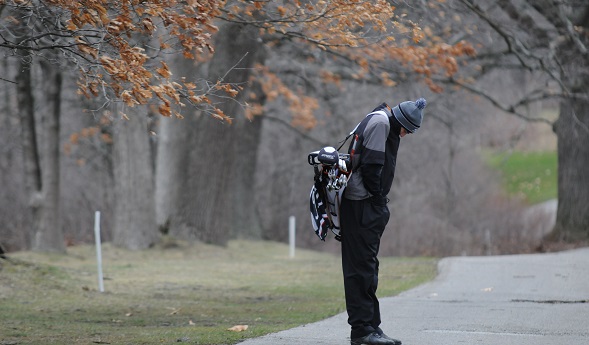
PHOTO: A golfer attempts to keep warm during a round on a dreary day earlier this season. (Click to see more at HighSchoolSportsScene.com.)

Pandemic Planning: Creating a Schedule
December 15, 2020

By Stacy Leatherwood Cannon, M.D.
Henry Ford Health System
With coronavirus continuing to grab headlines and physical distancing orders still in place, every day tends to feel the same.
More parents than ever are working from home, have reduced hours or may even be out of work due to the pandemic. Those who are working at full capacity may feel the strain of trying to balance work and childcare. Many schools and extracurricular programs have been moved online or canceled.
With both parents and kids feeling the stress of new daily routines, it's more important than ever to create a schedule that all family members can follow.
Staying On Schedule
When schedules are off (particularly sleep schedules), children and teens may be at greater risk for depression and anxiety. Younger children may act out because they have increased energy with no outlet. The good news: Creating a schedule — and sticking with it — can help everyone feel more grounded.
Children thrive with an understanding of the daily routine. Knowing what to expect and what they need to do reduces anxiety and helps kids feel more in control.
A few ways to achieve an effective schedule:
• Make it a family affair: Instead of drawing up a schedule and expecting everyone to stick to it, involve your children in the process. Call a family meeting where you come up with sleep and waking times, mealtimes and breaks. Kids are more likely to embrace a new schedule if they played a hand in creating it.
• Enforce bedtime: Children doing remote learning may not have to rise as early to make it to school on time. Even so, it's important to set a regular bedtime so they can remain on task during daylight hours. Your best bet: Establish a bedtime routine that includes calming activities (like a bath and reading) and ensure your children go to bed at an appropriate hour. School-aged kids should get about 9 to 10 hours of sleep each night.
• Stick to mealtimes: Keeping mealtime consistent allows for a structured break where kids and parents can reconnect and troubleshoot when necessary. This is especially important with older adolescents who may work independently during the school day. Unfortunately, what works for one family member may not work for another. Ideally, families should work together to establish mealtimes, then adjust based on each individual's needs and assignments.
• Encourage breaks: Kids and adults alike become zombie-like after sitting in front of a screen for extended periods. For children who are distance learning, frequent breaks are especially important. The younger the child is, the more breaks they need to stay engaged. That said, even older kids should take breaks every 30 minutes or so to walk around, get a snack and do some simple stretches. Better yet, take your breaks together and do some jumping jacks or share a snack as a family.
Successful Scheduling
Coming up with an effective schedule that the whole family can follow is not something you do at the last minute. Plan for the week ahead over the weekend. Sit down as a family and discuss what worked — and what didn't — the previous week. Then tweak as necessary.
Most important, be patient. These are unprecedented times for all of us. And while we have months of experience dealing with this pandemic, transitioning back to school has brought new challenges.
Try to shift your focus toward the perks of this experience. This is a rare moment in history when families can come together and spend a lot of quality time together. It could be a time of growth and transformation for your whole family.
Concerned about how your children are managing the pandemic? Help is available. To find a doctor or pediatrician at Henry Ford, visit henryford.com or call 1-800-HENRYFORD (436-7936).
Stacy Leatherwood Cannon, M.D., is a board-certified pediatrician and the physician champion for childhood wellness for Henry Ford LiveWell. She sees patients at Henry Ford Medical Centers in midtown Detroit and Sterling Heights. Learn more about Dr. Leatherwood Cannon
PHOTO: Novi's Abigail Pheiffer, a senior on the MHSAA Student Advisory Council, gets in some wall sits during a break in her day.