

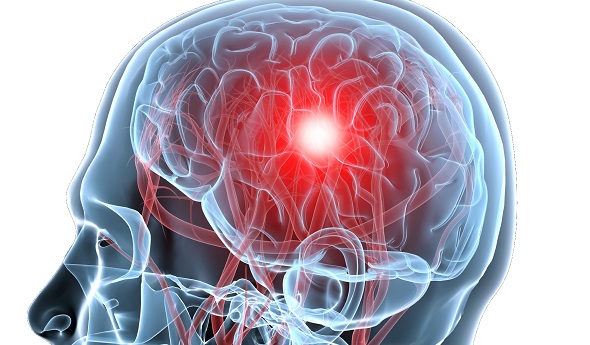
5 Concussion Myths Debunked
November 8, 2022
Awareness about the dangers of concussions is at an all-time high. In response, athletic organizations — from Pop Warner football (a nonprofit program for kids 5 to 16) to USA Hockey — have safe-play protocols in place. But misconceptions about injury — prevention, management and return to play — are still all too common.
 "It's great that parents, coaches and athletes are focused on the potential for concussions, but they also need to be aware of the complexities involved in evaluating, diagnosing and managing concussion," says Jeffrey Kutcher, M.D., a sports neurologist who treats athletes at the Henry Ford Kutcher Clinic for Concussion and Sports Neurology.
The best way to get the knowledge you need? Learn how to separate fact from fiction.
Separating Concussion Fact From Fiction
Here’s the truth behind five common concussion myths:
Myth #1: Concussions are only caused by blows to the head.
Concussions happen in response to force. While they often result from a blow to the head, they can also occur after a hit to the neck, shoulders or anywhere else on the body. To cause brain injury, the force of the impact only needs to cause the head to move rapidly back and forth (think whiplash from a car crash or a spill down the stairs).
Myth #2: Concussions always involve a loss of consciousness.
A very small percentage of all concussions, 10 percent or less, result in a loss of consciousness. For the remaining injuries, parents, coaches and medical providers should watch for additional symptoms such as:
· Confusion
· Balance problems
· Slurred speech
· Physical complaints including headache, nausea and vomiting.
Myth #3: You should keep a person awake overnight after a concussion has occurred.
It's important to observe and interact with a recently concussed person for the first few hours to recognize the potential signs of a more serious injury. However, if they are interacting normally after four hours, it’s okay to let them sleep. If you have any doubts or questions, always err on the side of caution and seek medical attention.
Myth #4: After a concussion, kids should avoid digital media until they feel better.
Unless digital activities or screen time significantly worsen symptoms, there's no reason to avoid them. "You shouldn't force people who have suffered a concussion to rest too much — or deprive them of sensory input — if they are comfortable engaging in activity," Dr. Kutcher says. What’s more, taking away activities that bring a person joy or keep them socially connected could end up prolonging their recovery by creating additional symptoms.
Myth #5: All physical activity should be avoided after a concussion.
It’s important to rest for the first two to three days after a concussion. However, you need to be careful not to rest too much or avoid all activity for too long.
Engaging in physical, mental and social activities can be beneficial. But knowing how much to do and when to take it easy can be difficult. If you have any questions, consult a sports neurologist for specific recommendations.
Ground Rules for Concussion Prevention and Management
When it comes to preventing concussion, common sense offers the greatest impact, Dr. Kutcher notes. He recommends starting with these four tenets:
- Whenever possible, limit the amount of contact in practices and games.
- Wear proper fitting and certified helmets or other head protection whenever appropriate.
- Spread contact drills out over time as much as possible.
- Practice good technique and play by the rules.
Athletes — especially those who play contact sports — should undergo an annual neurological evaluation that includes a comprehensive, focused neurological history and examination. This information provides a critical point of reference for medical professionals.
Knowing the truth about concussions — including what to watch for and what to do if one occurs — is really the best game plan.
Dr. Jeffrey Kutcher is a sports neurologist at the Henry Ford Concussion and Sports Neurology Clinic and the global director of the Kutcher Clinic.
Want to learn more? Henry Ford Health System sports medicine experts are treating the whole athlete, in a whole new way. From nutrition to neurology, and from injury prevention to treatment of sports-related conditions, they can give your athlete a unique game plan.
Visit henryford.com/sports or call (313) 972-4216 for an appointment within 24 business hours.
MHSAA Provides Heat & Hydration Reminders with 2026 Fall Practices Soon to Begin
By
Geoff Kimmerly
MHSAA.com senior editor
August 3, 2026
Multiple regions across Michigan approached record-high temperatures this summer, just another reminder of the importance of adhering to hot-weather precautions as schools and families prepare for the start of fall sports practices and competitions this month at Michigan High School Athletic Association member schools.
Each year, the MHSAA provides information to its member schools to help them prepare for hot-weather practice and game conditions during the late summer and early fall. Practices for all Fall 2026 sports – cross country, field hockey, football, Lower Peninsula girls golf, boys soccer, Lower Peninsula girls swimming & diving, Lower Peninsula boys and Upper Peninsula girls tennis, and girls volleyball – may begin Monday, Aug. 10.
The “Health & Safety” page of MHSAA.com has links to several information sources, including the MHSAA preseason publication Heat Ways, which is available for download and includes valuable information on heat management in addition to requirements and resources regarding head injuries, sudden cardiac arrest and emergency action plans.
Heat Ways also again includes a statement on air quality and its potential effects on activity, given conditions across the state especially over the last month resulting from wildfires and smoke they have created.
The first days of formal practices in hot weather should be more for heat acclimatization and instruction than the conditioning of athletes, and practices in such conditions need planning to become longer and more strenuous over a gradual progression of time. Schools also must consider moving practices to different locations or different times of day, or changing practice plans to include different activities depending on the conditions. Furthermore, football practice rules allow for only helmets to be worn during the first two days, only shoulder pads to be added on the third and fourth days, and full pads to not be worn until the fifth day of team practice.
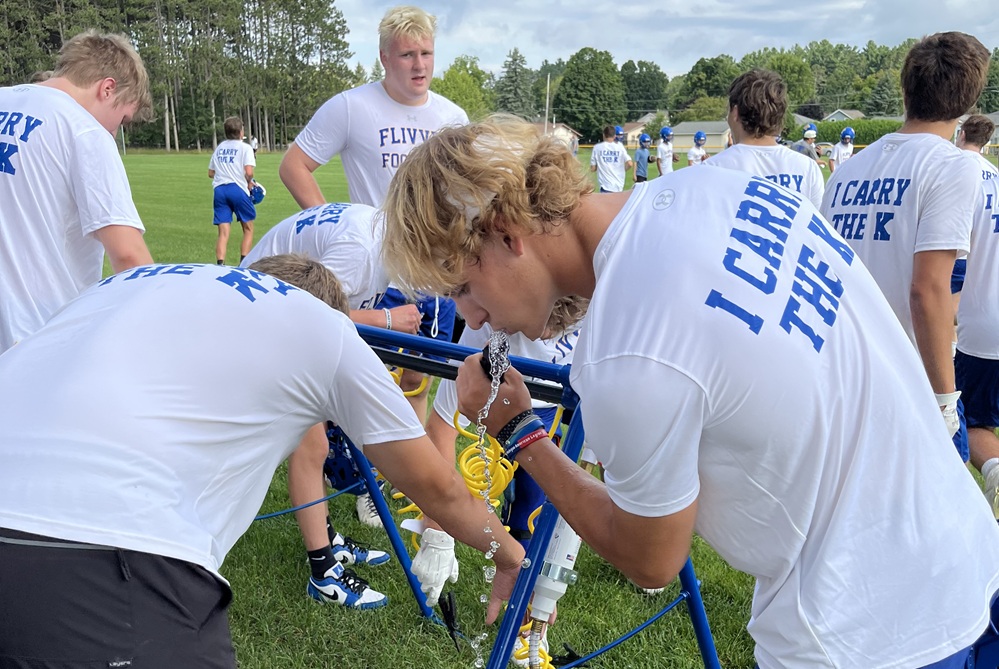
The MHSAA advises student-athletes to make sure to hydrate all day long – beginning before practice, continuing during and also after practice is done. Water and properly-formulated sports drinks are the best choices for hydration. The National Federation of State High School Associations (NFHS) advises that a 6-to-8 percent carbohydrate formulation is the maximum that should be utilized in a sports drink, while fruit juices with greater than 8-percent carbohydrate content and carbonated soda can both result in a bloated feeling and abdominal cramping.
A number of member schools follow the MHSAA’s Model Policy for Managing Heat & Humidity, which while not mandated for member schools was adopted as a rule for MHSAA postseason competition in 2013. The plan directs schools to begin monitoring the heat index at the activity site once the air temperature reaches 80 degrees and provides recommendations when the heat index reaches certain points, including ceasing activities when it rises above 104 degrees. (When the temperature is below 80 degrees, there is no combination of heat and humidity that will result in a need to curtail activity.)
The model heat & humidity policy is outlined in a number of places on the MHSAA Website, including as part of Heat Ways and the football-focused Safety Blitz preseason guide.
PHOTO Kingsford football players hydrate during last season's first day of practice. (Photo by Keith Dunlap.)