


Class D Schools Set Multi-Sport Participation Record, Overall Rate Remains Steady
By
Geoff Kimmerly
MHSAA.com senior editor
September 22, 2026
The MHSAA's eighth Multi-Sport Participation Survey, conducted last spring for the 2025-26 school year, showed just more than 45 percent of athletes at member high schools participated in more than one sport – for the most part consistent with past findings although the state’s smallest schools posted a record high rate of athletes playing more than one sport.
The annual Multi-Sport Participation Survey was inspired by the MHSAA’s Task Force on Multi-Sport Participation, which was appointed in 2016 to study early and intense sport specialization – a serious issue related to health and safety at all levels of youth sports – and to promote multi-sport participation as a way to help stave off overuse injuries and burnout among athletes that have been tied to chronic injuries and health-related problems later in life.
The 2025-26 Multi-Sport Participation Survey received responses from 73.8 percent of member high schools and showed 45.3 percent of athletes at those MHSAA member high schools participating in two or more sports, an almost identical percentage as in 2024-25. For 2025-26, 47.5 percent of male athletes and 42.6 percent of female athletes played multiple sports, again percentages nearly identical to the previous school year. The percentage of multi-sport athletes remains inversely proportional to schools’ enrollments, as Class D schools – the state's smallest – again enjoyed the highest percentage of multi-sport athletes at 64.2 percent, followed by Class C schools (59.5), Class B (49.0) and Class A (38.4).
Results for Class A, B and C schools have remained consistent over the lifetime of the multi-sport participation survey, showing small increases over the years but not overwhelming changes. However, Class D multi-sport participation reached a high in 2025-26, with that 64.2 percent of athletes participating in at least two sports an increase of 6.1 percent since 2017-18. During that time, Class A multi-sport participation is up 3.0 percent, Class B is up 2.3 and Class C is up 4.3.
Battle Creek Harper Creek and Grand Rapids Northview have appeared among the top 10 percent of their respective Classes (A/B/C/D) for multi-sport participation seven of the eight years the survey has been conducted. Three more schools have appeared among the top 10 percent of their respective Classes six of the eight years – Decatur, Detroit Cody and Warren Michigan Collegiate – while East Grand Rapids, Lake Leelanau St. Mary, Manton and Parma Western have appeared among the top 10 percent of their Classes five times apiece.
In Class A, Harper Creek (73.2 percent) posted the highest percentage of multi-sport athletes for 2025-26, followed by Saginaw United (72.7), Harper Woods (72.1) and Macomb L’Anse Creuse North (65.9) also reporting at least 65 percent of athletes playing multiple sports.
Detroit Denby led Class B schools at 83.6 percent of athletes playing more than one sport, followed by Warren Michigan Collegiate (83.3), Ecorse (78.1), Detroit Osborn (75.6), Dearborn Heights Robichaud (76.2) and Flint Hamady (76.1) all topping 75 percent. In Class C, Detroit Community reported all 72 of its athletes played multiple sports during the 2025-26 school year, followed by Galesburg-Augusta (82.7 percent), Kingston (82.1), Niles Brandywine (80.7) and Martin (80.4) reaching 80 percent.
Watersmeet also reported all 27 of its athletes were multi-sport participants, followed in Class D by Lake Leelanau St. Mary (95.5 percent), Carney-Nadeau (94.8), Onekama (92.5) and Atlanta (90.9) reaching 90 percent.
The full summary report on the Multi-Sport Participation Survey is available on the “Multi-Sports Benefits” page.
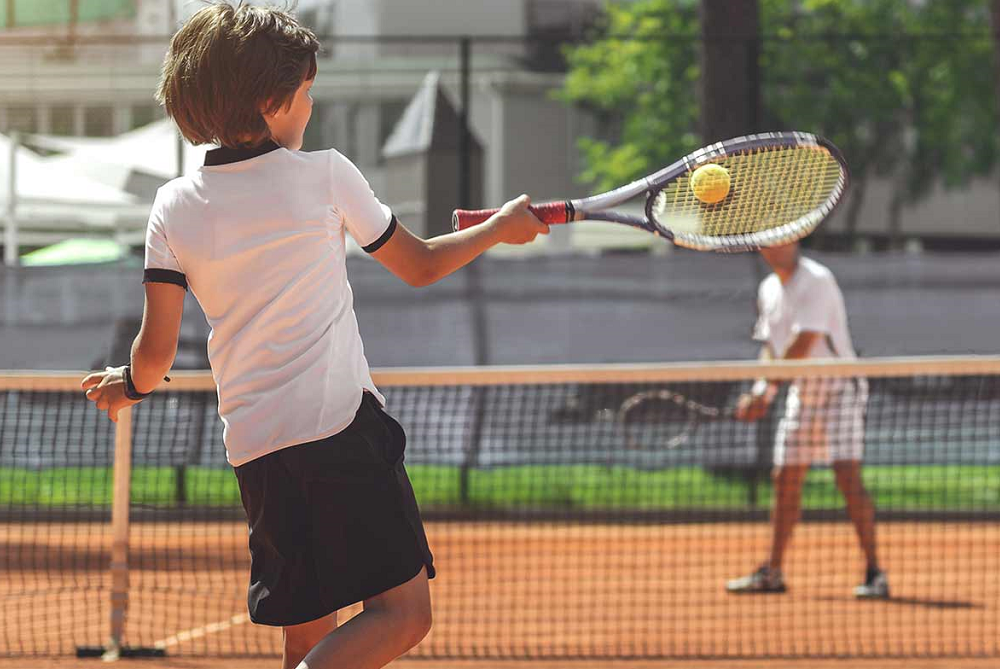
Can A Sports Physical Replace A Wellness Exam?
August 8, 2023
Before your child can take the field or hit the courts, their doctor must give the all-clear for them to play.
 Since the sports physical is a pre-requisite to organized activity, you may be tempted to skip your child’s annual well-visit. After all, do you really need to go to the doctor’s office twice if they’re healthy enough to play sports?
Of course, the answer is yes! Each type of visit to your pediatrician serves a different purpose, and one cannot replace the other.
Shoshana Gordon, D.O., a pediatrician for Henry Ford Health, explains the differences between the sports physical and regular wellness examination.
What Happens at a Wellness Exam
An annual wellness exam is a comprehensive visit that allows your child’s pediatrician to monitor all aspects of your child’s development. These appointments can vary quite a bit, depending on your child’s age.
“Your child grows so much early in life that we need to see them several times before their first birthday,” says Dr. Gordon. “As they get older, the conversations at these appointments evolve and expand to include topics like mental health and what to expect from puberty.”
Generally, many aspects of your child’s wellness exam will stay the same over time. Regardless of age, this appointment will include:
- Checking vitals (heart rate, blood pressure)
- A physical exam (to monitor physical growth)
- Discussing developmental milestones
- Developmental and emotional/behavioral screenings
- Conversations about nutrition and any physical activities your child is involved in
- Conversations about how your child is getting on at school
- An opportunity to discuss questions or concerns you or your child may have
One crucial part of the wellness exam is immunization. This appointment is the best time for you to talk with your child’s pediatrician to make sure that your child is up to date on necessary vaccines.
Additionally, wellness exams are the best way for you and your child to develop a relationship with their pediatrician. When you only take your child to the doctor when they are sick, it is harder for your pediatrician to set a baseline for their health.
“Regular wellness visits allow you and your child to get comfortable with asking your doctor questions,” says Dr. Gordon. “Once we develop a good patient-provider relationship, your child’s pediatrician will have an easier time recognizing when your child isn’t feeling like themselves and can better offer alternate approaches to care that best suit your child’s unique needs."
What Happens at a Sports Physical
Sports physicals are used to determine if your child is healthy enough to participate in organized sports. During this appointment, your child’s doctor will screen them for different sports-specific health concerns. They will be evaluating several things including:
- Heart function
- Lung function
- Mobility
- Reflexes
- Endurance
“During a sports physical, we’ll look at both your child’s and your family’s health history to make sure there aren’t any indicators that could impact your child’s ability to play,” says Dr. Gordon. “For example, if your child had COVID or if you have a family history of cardiovascular complications, additional tests may be necessary to make sure this isn’t affecting your child’s health.”
The biggest difference from a wellness exam? Sports physicals don’t include developmental screeners that are essential to your child’s growth.
“At the end of the day, a sports physical cannot take the place of your child’s annual wellness exam,” says Dr. Gordon. “However, when you go for your child’s wellness exam, talk to your child’s pediatrician about including a sports physical as part of the appointment.”
In addition to the developmental, social and emotional evaluations that take place at your child’s annual wellness exam, this is the best time for you and your child to get to know your pediatrician. Establishing yourself with your child’s doctor will make it easier to treat and care for your child as they continue to grow.
To find a pediatrician or make an appointment online, visit henryford.com or call 1-800-436-7936.
Dr. Shoshana Gordon is a pediatrician who sees patients at Henry Ford Medical Center-Royal Oak and Henry Ford Medical Center-Sterling Heights.