


Class D Schools Set Multi-Sport Participation Record, Overall Rate Remains Steady
By
Geoff Kimmerly
MHSAA.com senior editor
September 22, 2026
The MHSAA's eighth Multi-Sport Participation Survey, conducted last spring for the 2025-26 school year, showed just more than 45 percent of athletes at member high schools participated in more than one sport – for the most part consistent with past findings although the state’s smallest schools posted a record high rate of athletes playing more than one sport.
The annual Multi-Sport Participation Survey was inspired by the MHSAA’s Task Force on Multi-Sport Participation, which was appointed in 2016 to study early and intense sport specialization – a serious issue related to health and safety at all levels of youth sports – and to promote multi-sport participation as a way to help stave off overuse injuries and burnout among athletes that have been tied to chronic injuries and health-related problems later in life.
The 2025-26 Multi-Sport Participation Survey received responses from 73.8 percent of member high schools and showed 45.3 percent of athletes at those MHSAA member high schools participating in two or more sports, an almost identical percentage as in 2024-25. For 2025-26, 47.5 percent of male athletes and 42.6 percent of female athletes played multiple sports, again percentages nearly identical to the previous school year. The percentage of multi-sport athletes remains inversely proportional to schools’ enrollments, as Class D schools – the state's smallest – again enjoyed the highest percentage of multi-sport athletes at 64.2 percent, followed by Class C schools (59.5), Class B (49.0) and Class A (38.4).
Results for Class A, B and C schools have remained consistent over the lifetime of the multi-sport participation survey, showing small increases over the years but not overwhelming changes. However, Class D multi-sport participation reached a high in 2025-26, with that 64.2 percent of athletes participating in at least two sports an increase of 6.1 percent since 2017-18. During that time, Class A multi-sport participation is up 3.0 percent, Class B is up 2.3 and Class C is up 4.3.
Battle Creek Harper Creek and Grand Rapids Northview have appeared among the top 10 percent of their respective Classes (A/B/C/D) for multi-sport participation seven of the eight years the survey has been conducted. Three more schools have appeared among the top 10 percent of their respective Classes six of the eight years – Decatur, Detroit Cody and Warren Michigan Collegiate – while East Grand Rapids, Lake Leelanau St. Mary, Manton and Parma Western have appeared among the top 10 percent of their Classes five times apiece.
In Class A, Harper Creek (73.2 percent) posted the highest percentage of multi-sport athletes for 2025-26, followed by Saginaw United (72.7), Harper Woods (72.1) and Macomb L’Anse Creuse North (65.9) also reporting at least 65 percent of athletes playing multiple sports.
Detroit Denby led Class B schools at 83.6 percent of athletes playing more than one sport, followed by Warren Michigan Collegiate (83.3), Ecorse (78.1), Detroit Osborn (75.6), Dearborn Heights Robichaud (76.2) and Flint Hamady (76.1) all topping 75 percent. In Class C, Detroit Community reported all 72 of its athletes played multiple sports during the 2025-26 school year, followed by Galesburg-Augusta (82.7 percent), Kingston (82.1), Niles Brandywine (80.7) and Martin (80.4) reaching 80 percent.
Watersmeet also reported all 27 of its athletes were multi-sport participants, followed in Class D by Lake Leelanau St. Mary (95.5 percent), Carney-Nadeau (94.8), Onekama (92.5) and Atlanta (90.9) reaching 90 percent.
The full summary report on the Multi-Sport Participation Survey is available on the “Multi-Sports Benefits” page.
Why Spring Sports Injuries Are Common & How To Prevent Them
April 11, 2023
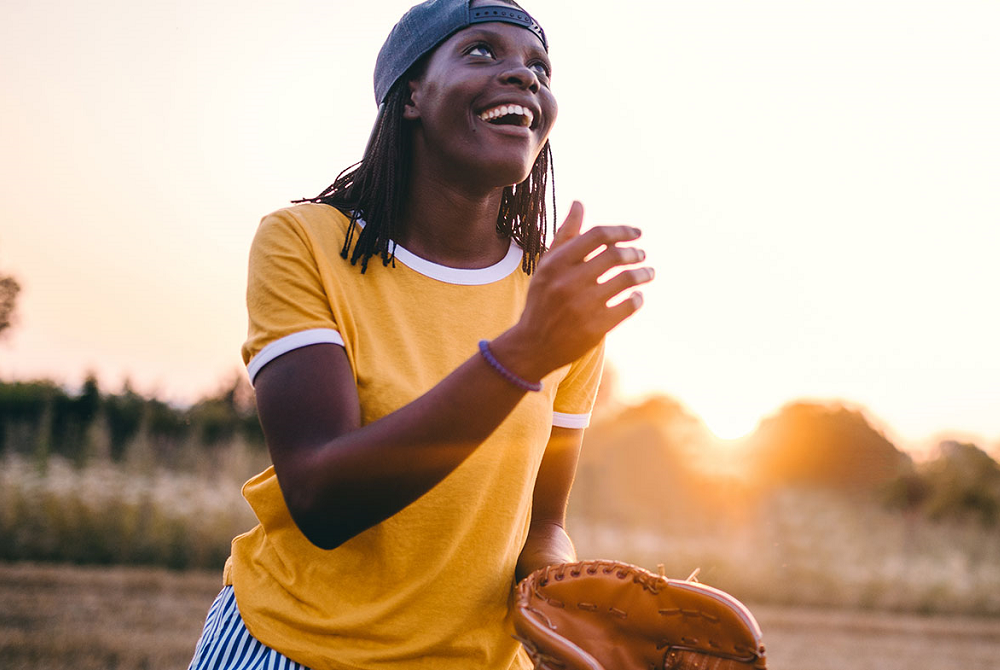
When spring is in the air, athletes of all ages head outdoors to play their favorite sports, including softball, baseball, tennis, lacrosse and track & field.
 Unfortunately, the change of season also ushers in injuries, says Joseph Medellin, M.D., a primary care sports medicine doctor at Henry Ford Medical Center-Jackson. A variety of factors can cause spring sports injuries, including:
► Too much or too little winter activity: With shorter days and colder temperatures, some athletes aren’t as active in winter. Even if you are going to the gym regularly, sport-specific muscles – like muscles in the chest and shoulder that help you throw a baseball – may weaken.
At the start of a new sports season, a sudden increase in the demand on these muscles can lead to injury. Taking steps to get ready for spring sports before the season starts can lower this risk. It’s also not uncommon for multi-sport athletes to have games and practices year-round with multiple practices in one day. Not allowing yourself enough downtime can lead to overuse injuries, including strains and sprains.
► Transitioning outdoors: Winter sports often take place on hard surfaces, like wood basketball courts, gyms and treadmills. These surfaces are flat, making it easier to maintain your footing. Spring sports involve soft running surfaces like grass and turf that are uneven. They can also be wet, muddy or icy due to spring weather. All these circumstances increase the risk of injury due to falls.
Cold weather can also be a factor. Early spring temperatures can still be quite cold. It takes longer for muscles to warm up, and they might not work as efficiently. This can be especially troublesome with sports like softball where there are lulls in activity between innings. Playing with cold muscles can increase the risk of sprains and strains.
► Sport-specific movements: Throwing, sprinting and kicking are moves that most people don’t do on a daily basis. They require powerful motions that can stress unconditioned muscles and joints. This is especially true if you haven’t been cross-training to strengthen supporting muscles or haven’t gradually increased your intensity.
A sprinter may experience hip pain from running at full speed around the curve of a track. Rotator cuff injuries can occur in sports that involve throwing, like the javelin, shot put, and baseball and softball. Soccer players can pull their groin from repeatedly taking long kicks.
If You Suspect A Sports Injury, Don’t Put Off Care
A doctor’s office is often the last place eager athletes want to be at the start of the season. But pain should not be a regular part of your training program. If you think you’ve sustained an injury, trying to push through often makes it worse.
Making time to see the doctor can be challenging, especially if you have to miss a practice or game for your appointment. But it’s worth it. “The sooner you get evaluated, the sooner we can get you on the path to recovery,” Dr. Medellin says.
The opposite can be said when treatments are delayed. “The longer you’ve had an injury, the longer it may take to heal,” explains Dr. Medellin. “And first-line treatments aren’t as likely to be successful, which can mean more time away from your sport.”
Sports Injury Treatments That Keep You In The Game
Seeing a doctor doesn’t always mean you’ll have to sit out the season. Treatment may include intermittent rest, as long as you don’t have a severe injury like a stress fracture or tendon tear. “We may recommend a return to sport at a lower intensity or with additional rest days to see if the pain goes away,” says Dr. Medellin.
Patients with minor injuries might also benefit from physical therapy between practices. Physical therapists can correct poor form. They can also help you safely stretch and strengthen injured muscles to promote healing. Conditioning through Henry Ford Health's sports performance program can also speed recovery and prevent injury.
“A sports medicine doctor’s goal is to keep athletes active and involved in the sport they love,” says Dr. Medellin. “That’s what I want for my patients.”
To find a sports medicine provider at Henry Ford Health, visit henryford.com/sportsmedicine or call 313-651-1969.
Joseph Medellin, M.D., is a primary care sports medicine doctor at Henry Ford Medical Center-Jackson.