


Class D Schools Set Multi-Sport Participation Record, Overall Rate Remains Steady
By
Geoff Kimmerly
MHSAA.com senior editor
September 22, 2026
The MHSAA's eighth Multi-Sport Participation Survey, conducted last spring for the 2025-26 school year, showed just more than 45 percent of athletes at member high schools participated in more than one sport – for the most part consistent with past findings although the state’s smallest schools posted a record high rate of athletes playing more than one sport.
The annual Multi-Sport Participation Survey was inspired by the MHSAA’s Task Force on Multi-Sport Participation, which was appointed in 2016 to study early and intense sport specialization – a serious issue related to health and safety at all levels of youth sports – and to promote multi-sport participation as a way to help stave off overuse injuries and burnout among athletes that have been tied to chronic injuries and health-related problems later in life.
The 2025-26 Multi-Sport Participation Survey received responses from 73.8 percent of member high schools and showed 45.3 percent of athletes at those MHSAA member high schools participating in two or more sports, an almost identical percentage as in 2024-25. For 2025-26, 47.5 percent of male athletes and 42.6 percent of female athletes played multiple sports, again percentages nearly identical to the previous school year. The percentage of multi-sport athletes remains inversely proportional to schools’ enrollments, as Class D schools – the state's smallest – again enjoyed the highest percentage of multi-sport athletes at 64.2 percent, followed by Class C schools (59.5), Class B (49.0) and Class A (38.4).
Results for Class A, B and C schools have remained consistent over the lifetime of the multi-sport participation survey, showing small increases over the years but not overwhelming changes. However, Class D multi-sport participation reached a high in 2025-26, with that 64.2 percent of athletes participating in at least two sports an increase of 6.1 percent since 2017-18. During that time, Class A multi-sport participation is up 3.0 percent, Class B is up 2.3 and Class C is up 4.3.
Battle Creek Harper Creek and Grand Rapids Northview have appeared among the top 10 percent of their respective Classes (A/B/C/D) for multi-sport participation seven of the eight years the survey has been conducted. Three more schools have appeared among the top 10 percent of their respective Classes six of the eight years – Decatur, Detroit Cody and Warren Michigan Collegiate – while East Grand Rapids, Lake Leelanau St. Mary, Manton and Parma Western have appeared among the top 10 percent of their Classes five times apiece.
In Class A, Harper Creek (73.2 percent) posted the highest percentage of multi-sport athletes for 2025-26, followed by Saginaw United (72.7), Harper Woods (72.1) and Macomb L’Anse Creuse North (65.9) also reporting at least 65 percent of athletes playing multiple sports.
Detroit Denby led Class B schools at 83.6 percent of athletes playing more than one sport, followed by Warren Michigan Collegiate (83.3), Ecorse (78.1), Detroit Osborn (75.6), Dearborn Heights Robichaud (76.2) and Flint Hamady (76.1) all topping 75 percent. In Class C, Detroit Community reported all 72 of its athletes played multiple sports during the 2025-26 school year, followed by Galesburg-Augusta (82.7 percent), Kingston (82.1), Niles Brandywine (80.7) and Martin (80.4) reaching 80 percent.
Watersmeet also reported all 27 of its athletes were multi-sport participants, followed in Class D by Lake Leelanau St. Mary (95.5 percent), Carney-Nadeau (94.8), Onekama (92.5) and Atlanta (90.9) reaching 90 percent.
The full summary report on the Multi-Sport Participation Survey is available on the “Multi-Sports Benefits” page.
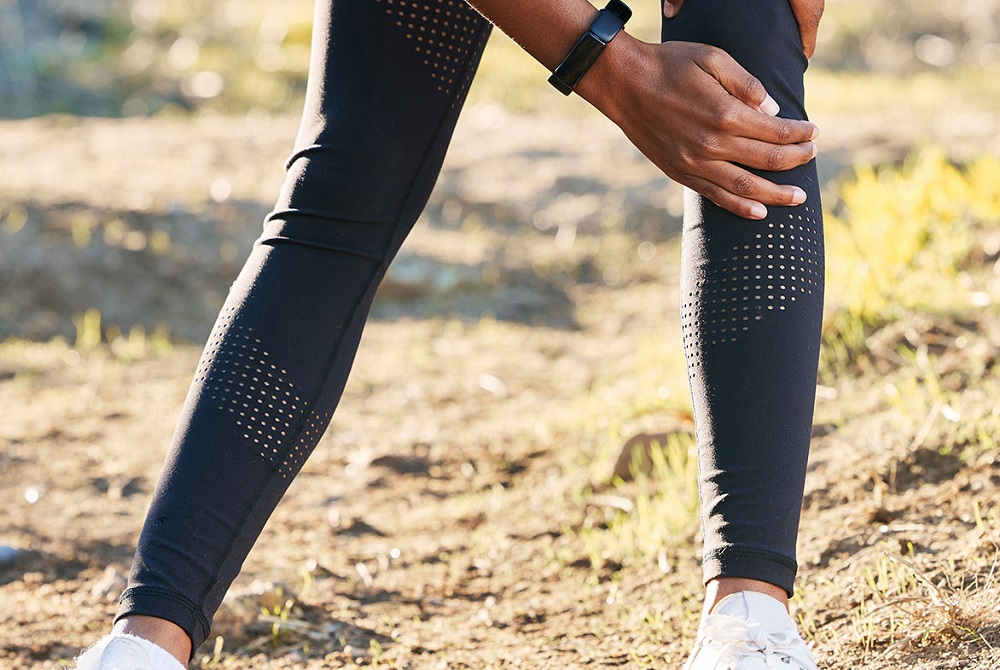
When Can I Walk Off Knee Pain — And When Should I See A Doctor?
June 7, 2022

Whether you wake up with a stiff knee, sustain an injury, or start feeling knee pain for seemingly no good reason, you might wonder what to do. Should you immediately rush off to the doctor? Can you just ignore it and hope it will get better? Can you treat it yourself? Knowing when you need a doctor’s intervention can be a tricky decision to make.
We see people at the start of injuries and after they’ve been ongoing,” says Nancy White, M.D., a sports medicine physician at Henry Ford Health. “While the sooner you see an expert, the better, there’s really no right or wrong to it. However, there are a few key signs that it’s a good idea to get it checked out.”
Dr. White recommends seeing a doctor if:
► You are waking up with consistent knee stiffness. If there’s no history of an injury involved, it could be due to osteoarthritis or rheumatoid arthritis.
► If your knee pain isn’t going away.
► Your knee is swollen and you can’t bear weight on it.
► You can’t fully flex or extend your knee.
► Your knee is warm to the touch. This could signal inflammation.
If your pain is mild — or you’re trying to decide whether to see someone — Dr. White recommends icing it on a scheduled basis. “That means two to three times a day,” she says. “Apply the ice to your knee. It will get cold. It will burn, then it will get numb. Remove the ice when it gets to the numb stage.”
She also recommends elevating your leg and putting a compression wrap or sleeve on your knee. If the pain is bad, you can try taking ibuprofen or naproxen for a few days.
Common Causes of Knee Pain
But if your knee is not getting better, it’s a good idea to see a doctor, as common causes of knee pain include:
► ACL sprains and tears. Short for anterior cruciate ligament, the ACL is one of four ligaments in the knee that allows it to flex and extend. The ACL can tear when your foot is firmly planted in place, and the knee locks and twists or pivots at the same time.
► MCL sprains and tears. Short for medial collateral ligament, the MCL connects your shinbone to your thighbone. It can tear when landing after a jump, or after an exterior blow to the knee (usually during contact sports). Luckily, most MCL injuries heal on their own.
► Meniscal tears. The menisci are your knee’s shock absorbers; they're two discs made of soft cartilage. Abrupt movements (like pivots, stops, turns, squats or lifts) can cause them to tear.
► Kneecap dislocation. A direct hit to the knee — or a sudden twist or pivoting of the leg — can make the kneecap can shift out of place.
► Patellar tendonitis. This is also known as Jumper’s Knee, as it’s a common injury in basketball and volleyball players. The patellar tendon connects the bottom of the kneecap to the top of the shinbone, and can become inflamed from overuse, excessive force or repetitive stress.
Knee bursitis. The bursa is a small, fluid-filled sac located near the knee joint. Knee bursitis occurs when the bursa becomes inflamed, often because of a knee injury or overuse from frequent kneeling.
How to Help Prevent Knee Pain
And if you want to help prevent knee pain in the future? “Exercise regularly so that you’re strengthening your quadriceps, hamstrings and gluteal muscles,” says Dr. White. “It’s also important to stretch to increase quadricep and hamstring flexibility.”
Wearing shoes with sturdy soles and proper arch support can also help ease pain and issues you may already have, says Dr. White. “I would say the top reasons people get into trouble with their knees are things they could prevent by changing lifestyle habits. This includes maintaining a healthy weight, as being overweight can also lead to increased wear and tear on the joints.
To learn more about your orthopedic condition or to find a provider, visit henryford.com/ortho.
Dr. Nancy White is a sports medicine physician at Henry Ford Health. She sees patients at Henry Ford Medical Center – Novi, and Henry Ford Medical Center — Bloomfield Township.