Class D Schools Set Multi-Sport Participation Record, Overall Rate Remains Steady
By
Geoff Kimmerly
MHSAA.com senior editor
September 22, 2026
The MHSAA's eighth Multi-Sport Participation Survey, conducted last spring for the 2025-26 school year, showed just more than 45 percent of athletes at member high schools participated in more than one sport – for the most part consistent with past findings although the state’s smallest schools posted a record high rate of athletes playing more than one sport.
The annual Multi-Sport Participation Survey was inspired by the MHSAA’s Task Force on Multi-Sport Participation, which was appointed in 2016 to study early and intense sport specialization – a serious issue related to health and safety at all levels of youth sports – and to promote multi-sport participation as a way to help stave off overuse injuries and burnout among athletes that have been tied to chronic injuries and health-related problems later in life.
The 2025-26 Multi-Sport Participation Survey received responses from 73.8 percent of member high schools and showed 45.3 percent of athletes at those MHSAA member high schools participating in two or more sports, an almost identical percentage as in 2024-25. For 2025-26, 47.5 percent of male athletes and 42.6 percent of female athletes played multiple sports, again percentages nearly identical to the previous school year. The percentage of multi-sport athletes remains inversely proportional to schools’ enrollments, as Class D schools – the state's smallest – again enjoyed the highest percentage of multi-sport athletes at 64.2 percent, followed by Class C schools (59.5), Class B (49.0) and Class A (38.4).
Results for Class A, B and C schools have remained consistent over the lifetime of the multi-sport participation survey, showing small increases over the years but not overwhelming changes. However, Class D multi-sport participation reached a high in 2025-26, with that 64.2 percent of athletes participating in at least two sports an increase of 6.1 percent since 2017-18. During that time, Class A multi-sport participation is up 3.0 percent, Class B is up 2.3 and Class C is up 4.3.
Battle Creek Harper Creek and Grand Rapids Northview have appeared among the top 10 percent of their respective Classes (A/B/C/D) for multi-sport participation seven of the eight years the survey has been conducted. Three more schools have appeared among the top 10 percent of their respective Classes six of the eight years – Decatur, Detroit Cody and Warren Michigan Collegiate – while East Grand Rapids, Lake Leelanau St. Mary, Manton and Parma Western have appeared among the top 10 percent of their Classes five times apiece.
In Class A, Harper Creek (73.2 percent) posted the highest percentage of multi-sport athletes for 2025-26, followed by Saginaw United (72.7), Harper Woods (72.1) and Macomb L’Anse Creuse North (65.9) also reporting at least 65 percent of athletes playing multiple sports.
Detroit Denby led Class B schools at 83.6 percent of athletes playing more than one sport, followed by Warren Michigan Collegiate (83.3), Ecorse (78.1), Detroit Osborn (75.6), Dearborn Heights Robichaud (76.2) and Flint Hamady (76.1) all topping 75 percent. In Class C, Detroit Community reported all 72 of its athletes played multiple sports during the 2025-26 school year, followed by Galesburg-Augusta (82.7 percent), Kingston (82.1), Niles Brandywine (80.7) and Martin (80.4) reaching 80 percent.
Watersmeet also reported all 27 of its athletes were multi-sport participants, followed in Class D by Lake Leelanau St. Mary (95.5 percent), Carney-Nadeau (94.8), Onekama (92.5) and Atlanta (90.9) reaching 90 percent.
The full summary report on the Multi-Sport Participation Survey is available on the “Multi-Sports Benefits” page.
HEARTSafe School Video Contest to Assist in Promoting Cardiac Awareness Month
By
Geoff Kimmerly
MHSAA.com senior editor
April 19, 2022
April is Michigan Student Athlete Cardiac Awareness Month, and the Kimberly Anne Gillary Foundation is partnering with the MHSAA to promote cardiac awareness – and providing an opportunity for students to join the effort and earn $5,000 for their school.
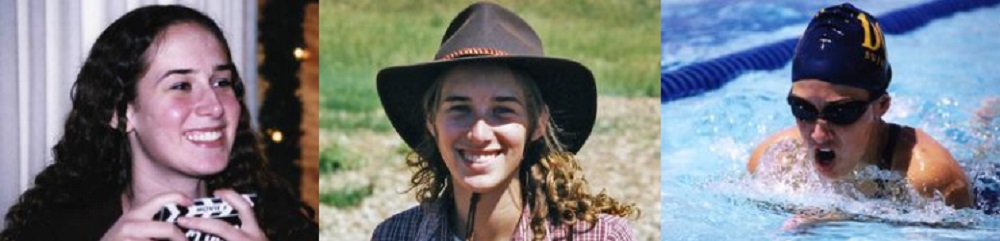
Michigan has lost at least 81 students to sudden cardiac arrest (SCA) and related causes since 1999, according to data compiled by the Kimberly Anne Gillary Foundation. Randy and Sue Gillary lost their daughter Kimberly to a cardiac arrest in a high school water polo game in April of 2000.
 The MI HEARTSafe School Video Contest will promote student-produced videos highlighting the importance of Michigan schools becoming a Mi HEARTSafe school. The winning entry will be chosen by Kimberly Gillary’s three sisters and will receive $5,000 for the winner’s school. Entries are due May 13; see the Kimberly Anne Gillary Foundation website for details.
Randy and Sue Gillary founded the Kimberly Anne Gillary Foundation, a 501 (c)(3) charitable foundation within days of losing Kimberly. The mission of the Foundation is to donate automated external defibrillators (AEDs) to Michigan high schools and to advocate cardiac screening and testing of Michigan high school student athletes.
A major drive of the foundation is for every Michigan school to become a MI-HEARTSafe School. This is a designation given by the Michigan Department of Health and Human Services (MDHSS) when a school has met the criteria to demonstrate it is prepared to respond to a cardiac emergency on school property. Schools receive a banner and other materials that can be displayed in the school to let those who attend and visit know that the school is a MI-HEARTSafe School.
“The goal of our Foundation is to try to prevent other parents from going through what we went through with the loss of our beloved Kimberly,” Randy Gillary said. “We are proud to be partnering with the MHSAA in promoting cardiac awareness for Michigan’s student athletes. The MHSAA has been a leader in helping to change the culture in the state of Michigan to make our Michigan high schools more focused on being prepared to respond to a cardiac emergency on school property.
The Kimberly Anne Foundation has raised more than $1.68 million and has donated more than 825 AEDs to Michigan high schools.
“We believe that the vast majority of Michigan high schools now have at least one AED,” Randy Gillary said. “Most high schools did not have an AED when we lost Kimmy in 2000. Michigan high schools are now in a much better position to respond to the sudden cardiac arrest of a student athlete. AEDs donated by the Kimberly Anne Gillary Foundation to Michigan schools have been used to provide defibrillation shocks to save at least nine lives.”