


Class D Schools Set Multi-Sport Participation Record, Overall Rate Remains Steady
By
Geoff Kimmerly
MHSAA.com senior editor
September 22, 2026
The MHSAA's eighth Multi-Sport Participation Survey, conducted last spring for the 2025-26 school year, showed just more than 45 percent of athletes at member high schools participated in more than one sport – for the most part consistent with past findings although the state’s smallest schools posted a record high rate of athletes playing more than one sport.
The annual Multi-Sport Participation Survey was inspired by the MHSAA’s Task Force on Multi-Sport Participation, which was appointed in 2016 to study early and intense sport specialization – a serious issue related to health and safety at all levels of youth sports – and to promote multi-sport participation as a way to help stave off overuse injuries and burnout among athletes that have been tied to chronic injuries and health-related problems later in life.
The 2025-26 Multi-Sport Participation Survey received responses from 73.8 percent of member high schools and showed 45.3 percent of athletes at those MHSAA member high schools participating in two or more sports, an almost identical percentage as in 2024-25. For 2025-26, 47.5 percent of male athletes and 42.6 percent of female athletes played multiple sports, again percentages nearly identical to the previous school year. The percentage of multi-sport athletes remains inversely proportional to schools’ enrollments, as Class D schools – the state's smallest – again enjoyed the highest percentage of multi-sport athletes at 64.2 percent, followed by Class C schools (59.5), Class B (49.0) and Class A (38.4).
Results for Class A, B and C schools have remained consistent over the lifetime of the multi-sport participation survey, showing small increases over the years but not overwhelming changes. However, Class D multi-sport participation reached a high in 2025-26, with that 64.2 percent of athletes participating in at least two sports an increase of 6.1 percent since 2017-18. During that time, Class A multi-sport participation is up 3.0 percent, Class B is up 2.3 and Class C is up 4.3.
Battle Creek Harper Creek and Grand Rapids Northview have appeared among the top 10 percent of their respective Classes (A/B/C/D) for multi-sport participation seven of the eight years the survey has been conducted. Three more schools have appeared among the top 10 percent of their respective Classes six of the eight years – Decatur, Detroit Cody and Warren Michigan Collegiate – while East Grand Rapids, Lake Leelanau St. Mary, Manton and Parma Western have appeared among the top 10 percent of their Classes five times apiece.
In Class A, Harper Creek (73.2 percent) posted the highest percentage of multi-sport athletes for 2025-26, followed by Saginaw United (72.7), Harper Woods (72.1) and Macomb L’Anse Creuse North (65.9) also reporting at least 65 percent of athletes playing multiple sports.
Detroit Denby led Class B schools at 83.6 percent of athletes playing more than one sport, followed by Warren Michigan Collegiate (83.3), Ecorse (78.1), Detroit Osborn (75.6), Dearborn Heights Robichaud (76.2) and Flint Hamady (76.1) all topping 75 percent. In Class C, Detroit Community reported all 72 of its athletes played multiple sports during the 2025-26 school year, followed by Galesburg-Augusta (82.7 percent), Kingston (82.1), Niles Brandywine (80.7) and Martin (80.4) reaching 80 percent.
Watersmeet also reported all 27 of its athletes were multi-sport participants, followed in Class D by Lake Leelanau St. Mary (95.5 percent), Carney-Nadeau (94.8), Onekama (92.5) and Atlanta (90.9) reaching 90 percent.
The full summary report on the Multi-Sport Participation Survey is available on the “Multi-Sports Benefits” page.
An Athletic Trainer's Guide To Winter Sports You Should Test Out This Year
February 15, 2022

Christina Eyers, Ed.D., AT, ATC, is the Director of Athletic Training & Community Outreach with Henry Ford Sports Medicine.
With the winter Olympics kicking off, you might be wondering which (if any) winter sports are safe for you to try.
In addition to favorite pastimes like skiing, snowshoeing and ice skating, athletes in the winter Olympics are shining a light on lesser-known sports that are worth checking out if you're feeling adventurous. (Curling anyone?)
Breaking Down Winter Olympic Sports
Whether you prefer snow or ice, there are plenty of cold-weather activities that offer a heart-pumping workout — and you don't have to be an Olympic athlete to join in the fun. A bonus: Many of these activities are easy on your joints and offer cross-training benefits.
Several favorites:
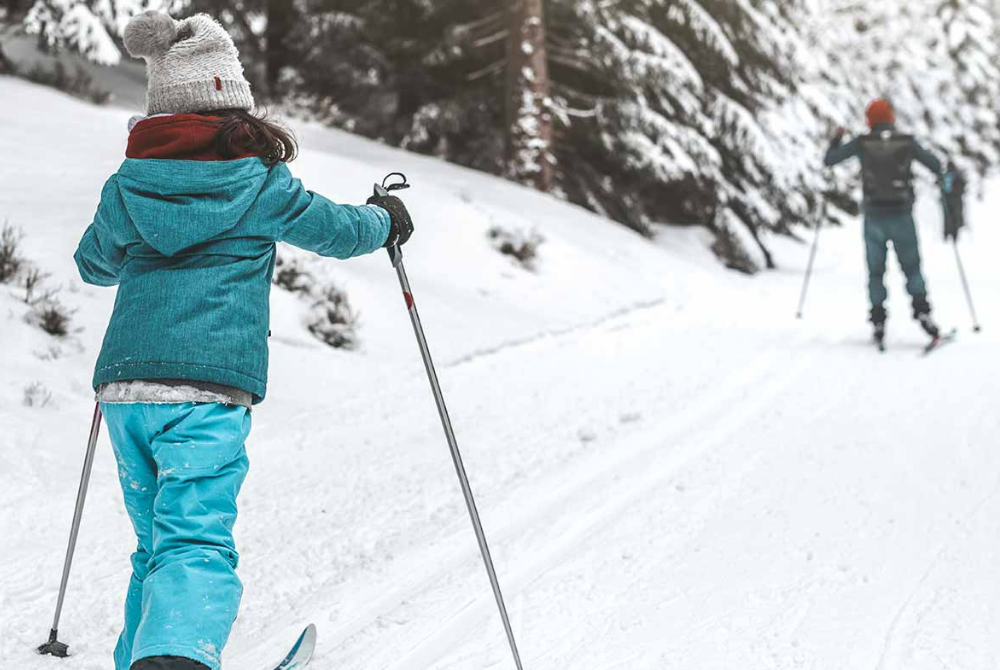
- Cross-country skiing. Cross-country skiing is a full-body, endurance pursuit similar to running. But since you're gliding through the snow, not pounding pavement, there's less stress and strain on your joints — and a lower risk of repetitive use injuries.
- Ice skating. Figure skating is among the most popular winter Olympic sports. It's also the oldest sport in the winter program. Even if you feel unsteady on ice skates (and what beginner doesn't?), taking an introductory lesson can help you glide safely while learning proper mechanics. Since falling is common for beginners, make sure you wear some extra padding and take your time as you master new maneuvers.
- Curling. A unique Olympic sport, curling is like shuffleboard on ice. While it may be one of the slower sports in the winter games, it's also a great game to play on the ice with your family.
- Skiing. Skiing is a fun activity for the whole family. But if you're an amateur skier, it's critical to be realistic about your abilities. Don't be afraid to take ski lessons to get the basics under your belt. A ski instructor not only gauges your skill level, but can also direct you to the slopes that are the best fit for your experience.
- Snowboarding. One of the newer Olympic sports on the circuit, snowboarding was first included at the 1998 Winter Olympics in Nagano, Japan. But since its introduction, snowboarding has become one of the most popular sports in the Games — and for winter recreation among nonathletes.
No matter which winter sports you choose, make sure you have appropriate equipment that fits. Winter sports gear can get pricey, but try secondhand stores or even rent equipment for weekend use. Just make sure to ask the experts for advice on things like length of skis, boots, bindings, figure skates or hockey skates. Most importantly, make sure to always wear a helmet for activities such as skiing and snowboarding (kids should wear helmets when ice skating too!).
Cold-Weather Sports Caveats
Winter sports can be engaging for everyone, no matter what their age or skill level. You can use the Olympics as inspiration or try one of the many non-Olympic sports that get your heart pumping during colder months. A few favorites:
► Sledding. Tubing and sledding require you to climb up the hill in order to ride your way down. Toboggan runs and sledding hills are a great way to enjoy local parks during the wintertime — and they're fun for the whole family.
► Snowshoeing. Like walking on sand, snowshoeing requires you to navigate uneven surfaces, which helps strengthen your leg and glute muscles.
► Hiking. If the weather is on the mild side, don't be afraid to get outdoors and explore. With newer materials and textiles, it's easier than ever to dress warmly and remove layers as you work your way up a hill or mountain.
Whatever winter activity you choose, keep in mind you’re not competing in the Olympics. If you’ve been mostly sedentary, it's important to start slow. Gradually increase your activity level and be sure to wear appropriate safety gear.To find a primary care or sports medicine specialist at Henry Ford, visit henryford.com or call 1-800-436-7936.