


Class D Schools Set Multi-Sport Participation Record, Overall Rate Remains Steady
By
Geoff Kimmerly
MHSAA.com senior editor
September 22, 2026
The MHSAA's eighth Multi-Sport Participation Survey, conducted last spring for the 2025-26 school year, showed just more than 45 percent of athletes at member high schools participated in more than one sport – for the most part consistent with past findings although the state’s smallest schools posted a record high rate of athletes playing more than one sport.
The annual Multi-Sport Participation Survey was inspired by the MHSAA’s Task Force on Multi-Sport Participation, which was appointed in 2016 to study early and intense sport specialization – a serious issue related to health and safety at all levels of youth sports – and to promote multi-sport participation as a way to help stave off overuse injuries and burnout among athletes that have been tied to chronic injuries and health-related problems later in life.
The 2025-26 Multi-Sport Participation Survey received responses from 73.8 percent of member high schools and showed 45.3 percent of athletes at those MHSAA member high schools participating in two or more sports, an almost identical percentage as in 2024-25. For 2025-26, 47.5 percent of male athletes and 42.6 percent of female athletes played multiple sports, again percentages nearly identical to the previous school year. The percentage of multi-sport athletes remains inversely proportional to schools’ enrollments, as Class D schools – the state's smallest – again enjoyed the highest percentage of multi-sport athletes at 64.2 percent, followed by Class C schools (59.5), Class B (49.0) and Class A (38.4).
Results for Class A, B and C schools have remained consistent over the lifetime of the multi-sport participation survey, showing small increases over the years but not overwhelming changes. However, Class D multi-sport participation reached a high in 2025-26, with that 64.2 percent of athletes participating in at least two sports an increase of 6.1 percent since 2017-18. During that time, Class A multi-sport participation is up 3.0 percent, Class B is up 2.3 and Class C is up 4.3.
Battle Creek Harper Creek and Grand Rapids Northview have appeared among the top 10 percent of their respective Classes (A/B/C/D) for multi-sport participation seven of the eight years the survey has been conducted. Three more schools have appeared among the top 10 percent of their respective Classes six of the eight years – Decatur, Detroit Cody and Warren Michigan Collegiate – while East Grand Rapids, Lake Leelanau St. Mary, Manton and Parma Western have appeared among the top 10 percent of their Classes five times apiece.
In Class A, Harper Creek (73.2 percent) posted the highest percentage of multi-sport athletes for 2025-26, followed by Saginaw United (72.7), Harper Woods (72.1) and Macomb L’Anse Creuse North (65.9) also reporting at least 65 percent of athletes playing multiple sports.
Detroit Denby led Class B schools at 83.6 percent of athletes playing more than one sport, followed by Warren Michigan Collegiate (83.3), Ecorse (78.1), Detroit Osborn (75.6), Dearborn Heights Robichaud (76.2) and Flint Hamady (76.1) all topping 75 percent. In Class C, Detroit Community reported all 72 of its athletes played multiple sports during the 2025-26 school year, followed by Galesburg-Augusta (82.7 percent), Kingston (82.1), Niles Brandywine (80.7) and Martin (80.4) reaching 80 percent.
Watersmeet also reported all 27 of its athletes were multi-sport participants, followed in Class D by Lake Leelanau St. Mary (95.5 percent), Carney-Nadeau (94.8), Onekama (92.5) and Atlanta (90.9) reaching 90 percent.
The full summary report on the Multi-Sport Participation Survey is available on the “Multi-Sports Benefits” page.
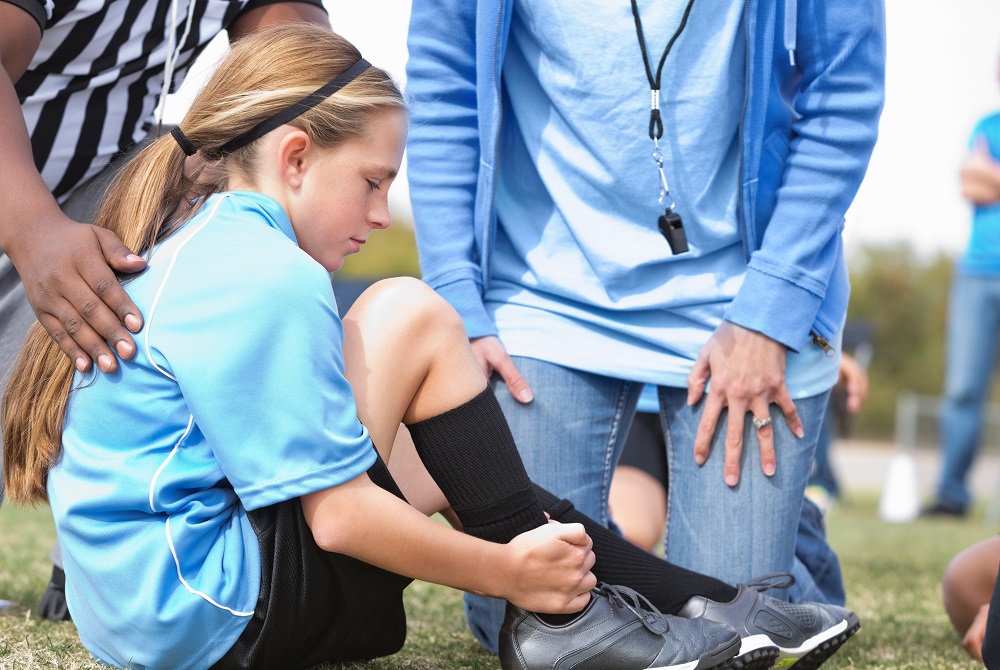
Is My Student Athlete's Pain More Than Just Growing Pains?
July 27, 2021

There are a few factors that can make student athletes prone to injury. They might be overusing their muscles (thanks to a more rigorous exercise regimen), and they might not yet have developed the proper technique for their sport.
“These factors, combined with the fact that student athletes have growing bodies that they’re still getting used to—especially after a growth spurt — can make them more prone to injury,” says Nancy White, M.D., a sports medicine physician with Henry Ford Health System.
However, just because your child is feeling pain doesn’t necessarily mean they’ve sustained an injury. There is such a thing as growing pains, although the term may be misleading. “Most experts feel that growth itself does not cause pain,” says Dr. White. “The most likely reason for ‘growing pains’ is overuse of the muscles, causing pain and soreness after an activity.”
These growing pains typically occur at the front of the thighs, the back of the knees and the calves, she says, and occur commonly in the late afternoon, evening, or night. If your child is experiencing pain outside of these areas or times of day, it might not be growing pains — and it’s a good idea to get it checked out by a doctor.
Tell-Tale Signs That Pain Should Be Examined
If the pain goes away by the next day — if your child has rested during night and feels better the next morning — there’s no need for concern. But you should head to the doctor if:
► the pain is lingering into the next day.
► the pain is also accompanied by bruising, swelling or redness.
► the pain is so intense that they’re unable to put weight on their legs.
“In these cases, don’t wait — the longer you wait, the more dangerous the injury can become,” says Dr. White.
How Student Athletes Can Help Prevent Injuries
Encourage your child to take proper precautions and maintain healthy habits, all of which can lower the likelihood that they’ll sustain an injury. Dr. White recommends the following tips:
- Maintain proper technique. “Knowing and understanding the movements needed for whatever sport they practice is so important,” says Dr. White. “Figure skating and gymnastics are two sports where I tend to see injuries more often during growth phases. These athletes are often learning difficult skills at a time in their lives when they’re going through a growth spurt, and that combination can lead to injury.”
- Stretch before and after playing a sport. “Try dynamic stretching — where you’re actually moving while stretching — instead of static stretching, where you’re holding the stretch,” says Dr. White. “Dynamic stretching is a great warm up. It can help improve flexibility and reduce the risk of injury.”
- Strength train, especially in the core and limbs. Doing so will help create stable, strong muscles to keep the body properly aligned and lessen the chances of injury.
- Eat a balanced diet and stay hydrated. While it’s normal for kids to have sugar every once in a while, filling the bulk of their diet with plenty of water, fresh fruits and vegetables, healthy protein, fats and carbohydrates will help them function to their best ability.
- Get enough rest each night. Sleep is necessary for health and well-being in general, but when it comes to athletes, rest is incredibly important to help their bodies recuperate. In general, kids need about 10 hours of sleep per night. So if your child plays a sport, you want to really be sure that they’re hitting that 10-hour mark, says Dr. White.
Dr. Nancy White is a sports medicine physician with Henry Ford Health System. She sees patients at Henry Ford Medical Center – Columbus in Novi, and Henry Ford Medical Center — Bloomfield Township.
Want to learn more? Henry Ford Health System sports medicine experts are treating the whole athlete, in a whole new way. From nutrition to neurology, and from injury prevention to treatment of sports-related conditions, they can give your athlete a unique game plan. To find a sports medicine physician at Henry Ford, visit henryford.com or call 1-800-436-7936.