


Class D Schools Set Multi-Sport Participation Record, Overall Rate Remains Steady
By
Geoff Kimmerly
MHSAA.com senior editor
September 22, 2026
The MHSAA's eighth Multi-Sport Participation Survey, conducted last spring for the 2025-26 school year, showed just more than 45 percent of athletes at member high schools participated in more than one sport – for the most part consistent with past findings although the state’s smallest schools posted a record high rate of athletes playing more than one sport.
The annual Multi-Sport Participation Survey was inspired by the MHSAA’s Task Force on Multi-Sport Participation, which was appointed in 2016 to study early and intense sport specialization – a serious issue related to health and safety at all levels of youth sports – and to promote multi-sport participation as a way to help stave off overuse injuries and burnout among athletes that have been tied to chronic injuries and health-related problems later in life.
The 2025-26 Multi-Sport Participation Survey received responses from 73.8 percent of member high schools and showed 45.3 percent of athletes at those MHSAA member high schools participating in two or more sports, an almost identical percentage as in 2024-25. For 2025-26, 47.5 percent of male athletes and 42.6 percent of female athletes played multiple sports, again percentages nearly identical to the previous school year. The percentage of multi-sport athletes remains inversely proportional to schools’ enrollments, as Class D schools – the state's smallest – again enjoyed the highest percentage of multi-sport athletes at 64.2 percent, followed by Class C schools (59.5), Class B (49.0) and Class A (38.4).
Results for Class A, B and C schools have remained consistent over the lifetime of the multi-sport participation survey, showing small increases over the years but not overwhelming changes. However, Class D multi-sport participation reached a high in 2025-26, with that 64.2 percent of athletes participating in at least two sports an increase of 6.1 percent since 2017-18. During that time, Class A multi-sport participation is up 3.0 percent, Class B is up 2.3 and Class C is up 4.3.
Battle Creek Harper Creek and Grand Rapids Northview have appeared among the top 10 percent of their respective Classes (A/B/C/D) for multi-sport participation seven of the eight years the survey has been conducted. Three more schools have appeared among the top 10 percent of their respective Classes six of the eight years – Decatur, Detroit Cody and Warren Michigan Collegiate – while East Grand Rapids, Lake Leelanau St. Mary, Manton and Parma Western have appeared among the top 10 percent of their Classes five times apiece.
In Class A, Harper Creek (73.2 percent) posted the highest percentage of multi-sport athletes for 2025-26, followed by Saginaw United (72.7), Harper Woods (72.1) and Macomb L’Anse Creuse North (65.9) also reporting at least 65 percent of athletes playing multiple sports.
Detroit Denby led Class B schools at 83.6 percent of athletes playing more than one sport, followed by Warren Michigan Collegiate (83.3), Ecorse (78.1), Detroit Osborn (75.6), Dearborn Heights Robichaud (76.2) and Flint Hamady (76.1) all topping 75 percent. In Class C, Detroit Community reported all 72 of its athletes played multiple sports during the 2025-26 school year, followed by Galesburg-Augusta (82.7 percent), Kingston (82.1), Niles Brandywine (80.7) and Martin (80.4) reaching 80 percent.
Watersmeet also reported all 27 of its athletes were multi-sport participants, followed in Class D by Lake Leelanau St. Mary (95.5 percent), Carney-Nadeau (94.8), Onekama (92.5) and Atlanta (90.9) reaching 90 percent.
The full summary report on the Multi-Sport Participation Survey is available on the “Multi-Sports Benefits” page.
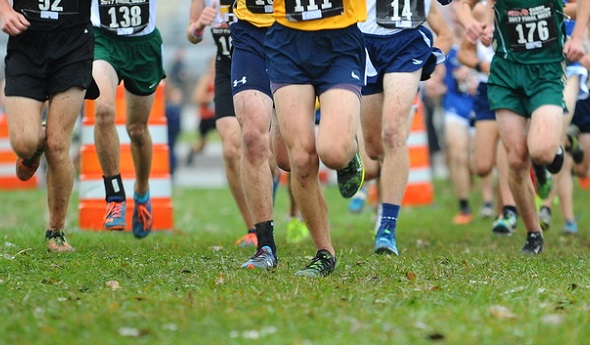
Put a Stop to Recurring Injuries
May 5, 2020
 By Nick Parkinson, M.Ed., AT, ATC, TSAC-F
Henry Ford Health System
Recurring injuries happen — and they're especially common among single-sport athletes or people who focus on one type of exercise, like runners. The reason: You're working the same muscles repeatedly. The end result: Your joints, muscles and tissues get worn out.
Breaking Down Recurring Injuries
Overuse injuries are a big deal. Continuing to re-injure the same muscle groups can take you out of the game entirely and limit your ability to participate in other activities. Here's what you need to know about these all-to-common ailments:
What are Recurring Injuries?
Recurring injuries, also called repetitive and overuse injuries, are injuries that happen repeatedly in the same location. Think along the lines of tendinitis, stress fractures, shin splints and even carpal tunnel syndrome. Common sites include ankles, knees, hips and shoulders.
Who is at Risk for Repetitive Injuries?
Overuse injuries can happen to anyone, but they're more likely to occur among workers who do repetitive motions and single-sport athletes. The risk of these injuries also increases with age. They're more likely to occur if you don't recognize the impact aging can have on your muscles, joints and tissues and modify your activities accordingly.
Why Do Recurring Injuries Happen?
Recurring injuries happen when you overuse the same muscles without sufficient recovery. It's simple body mechanics: If you continue using compromised muscles, you're more likely to get reinjured. And once you get stuck in that same biomechanic loop, it's nearly impossible to recover without changing your routine and learning new techniques.
How Can You Prevent Recurring Injuries?
All sports have a risk of injury. The key is paying attention to your body and taking the appropriate steps to minimize your risk. Here's how:
• Use appropriate gear. Make sure you're wearing appropriate protective gear for the activity you're participating in and choose the right footwear.
• Alternate muscle groups. Instead of focusing on one type of exercise, switch things up. Incorporate low-impact activities, such as swimming, biking and water sports, and make sure you're not overloading any particular muscle group.
• Take rest days. It's important to give your muscles, joints and tissues time to recover. Two days of rest each week is best. If you play a sport, plan to have at least one off day per week and at least one month off per year.
• Strengthen muscles. Conditioning exercises can help strengthen the muscles you need to perform various activities.
• Use proper form. Overuse injuries are sometimes related to improper form during activity. Work with a professional to ensure you're using proper body mechanics and get back to your usual activities gradually.
Play it Safe
The best way to avoid recurrent injuries is to not get injured in the first place. Recover during the season — even if it means missing out on some play. It's better to show up to a game healthy but undertrained than to power through an injury and risk reinjury.
Talk to your doctor before starting a new activity or ramping up your current routine. If you're at risk of developing a recurrent injury, a professional can provide you with a workout regimen that can help prevent injury.
Most important: Don't let an overuse injury prevent you from being physically active. Instead, listen to your body, consult a professional and pace yourself. Treatment may involve avoiding a specific activity for a period of time, along with hot and cold therapy, massage and focused rehabilitation.
Nick Parkinson, M.Ed., AT, ATC, TSAC-F, is the Supervisor of Athletic Training with Henry Ford Sports Medicine and also leads Sports Performance training at the William Clay Ford Center for Athletic Medicine. Learn more about Nick.
Want to learn more? Henry Ford Health System sports medicine experts are treating the whole athlete, in a whole new way. From nutrition to neurology, and from injury prevention to treatment of sports-related conditions, they can give your athlete a unique game plan.
Visit henryford.com/sports or call (313) 972-4216 for an appointment within 24 business hours.