


Keep on Coaching
February 1, 2013
By Geoff Kimmerly
Second Half editor
A few weeks ago, I finally got my first chance this season to watch a friend coach his basketball team. After guiding some others at the lower levels, this is his first time running the varsity – something he wasn't sure he wanted to do with a 1-year-old just learning to walk, but a challenge he ended up taking on to the benefit of all those involved.
Simply put, he’s good. I've seen a lot of teams and a lot of coaches over the past 15 years, and although I wouldn't know much of what to do if I were walking the sideline, I felt pretty qualified in telling him I was impressed – even if he didn't buy that I was offering an unbiased opinion. The best news is he’s gone from not sure about this a few months ago to talking about next season.
We know, at least anecdotally, that coaching continues to get more challenging. The time commitment has grown substantially to make running a program a year-round endeavor in a lot of sports at a lot of schools.
That commitment – especially for coaches with children of their own – was a main reason referred to in a New Haven Post-Chronicle story Saturday that noted 23 football coaching openings in Connecticut at one point this offseason. That state has 146 football teams – meaning roughly 15 percent will have new leaders this fall.
And that got me thinking about my friend, about how glad I am he’s given this a shot, and how I've seen so many others either not do so, or not stick around long despite having some pretty nice success.
A study published last winter in Interscholastic Athletic Administration magazine – a product of the National Interscholastic Athletic Administrators Association – noted some predictable results of a study that sought to determine the biggest challenges faced by first-year high school coaches.
The toughest according to the study was balancing the demands of coaching and teaching, experienced by nearly half the respondents – 98 percent of which coached high school teams and 81 percent of which are teachers.
The next six reasons all were noted by at least 30 percent of those in the study – personal fatigue, securing community support, securing and caring for facilities and equipment, parental contact, keeping non-starting players motivated, dealing with schedule interruptions and motivating athletes to achieve consistent, peak performance.
Nothing there is earth-shaking, and most if not all of these challenges are faced by high school coaches regardless of how long they've been in the field. But I got a little more perspective from some of the 32 items that ranked as least challenging to the first-year leaders – keeping in compliance with state and league regulations, dealing with substance abuse issues, teaching sport skills and creating a positive team atmosphere – things that seem most important, and yet appear to be easiest to do. I’m not sure what that tells us – but I think it tells us something.
Click to check out the entire three-page breakdown of the study, plus the researchers’ recommendations to remedy some of what first-year coaches face.
Giving back to Saginaw
I love reading about high-level athletes – like a star-studded group of alums from Saginaw – giving back to where they got their starts.
Pittsburgh Steelers star LaMarr Woodley made a big impact before the start of this school year by donating $60,000 to cover all participation fees for athletes in his former school district. The Saginaw News’ Hugh Bernreuter writes today about how Woodley (Saginaw High), the Philadelphia 76ers’ Jason Richardson (Saginaw Arthur Hill) and former Oakland Raiders standout Stu Schweigert (Saginaw Heritage) have combined to give more than $865,000 back to their home communities.
Bernreuter also mentions the non-monetary contributions of the Golden State Warriors’ Draymond Green (Saginaw High) and former Indianapolis Colts receiver Blair White (Saginaw Nouvel).
Click to read more about it.
Quote(s) of the Week
While rifling through more papers on my desk, I found an article from the Washington Post from Sept. 2011 titled “How high school sports save our schools.” I was drawn to it in part because I spent more than a decade in a newsroom, and it was a piece by a reporter covering education who instead of reporting on school boards and the like, delved into the importance of interscholastic athletics to education as a whole.
He spoke of how participation continues to grow even as resources dwindle, and of data supporting that extracurriculars like sports are more effective than academic classes in teaching leadership, teamwork, time management and “other skills crucial for success in the workplace.” Later, he mentioned a study noting that those who participate in extracurriculars earned more a decade later.
Click here to read the entre piece. These passages struck me most.
“Coaches might be the only faculty members still allowed by our culture and educational practice to get tough with students not making the proper effort. They have the advantage of teaching what are essentially elective non-credit courses. They can insist on standards of behavior that classroom teachers often cannot enforce because the stakes of dismissing or letting students drop their courses are too high. …
“Students do better in activities they choose. If we provide more of them, led by committed adults … that can make a difference. We know the bad news about education. Dropout rates are high. Achievement scores are stagnant. But sports participation is going up, despite pressure to cut it back. Let’s cheer about that and look for a way to draw in more students.”
Cass Tech Makes History, Hopes to Inspire Future City Teams with Finals Trip
By
Keith Dunlap
Special for MHSAA.com
October 26, 2023
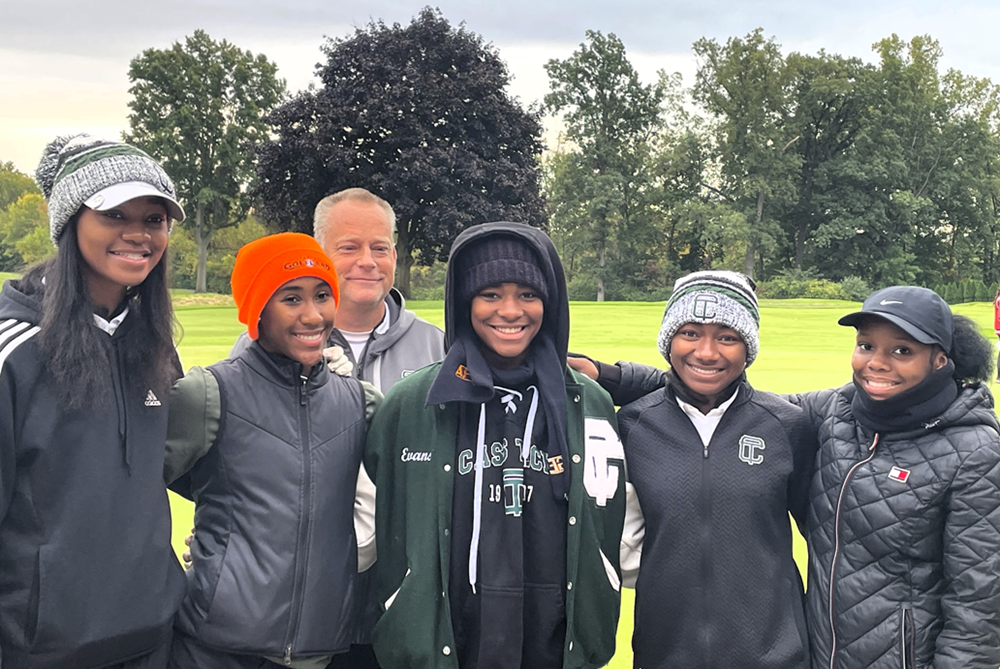
EAST LANSING – Players and coaches on the Detroit Cass Tech girls golf team did all they could to soak it in, but this had nothing to do with all the rain that plagued Forest Akers West during the MHSAA Lower Peninsula Division 1 Girls Golf Final over the weekend.
 Instead, everyone associated with the Technicians was doing all they could to soak in the experience and finish off a journey that not only illustrated how far the team had come, but also how far they want to go in the future.
It’s believed that Cass Tech sent the first high school girls golf team from the city of Detroit to qualify for an MHSAA Finals in the sport.
“It was very meaningful to make it as a team,” said Cass Tech senior Kennedy Watts. “It showed we can succeed, we are making progress and growing.”
The achievement was remarkable for a program that started just three years ago and still faces some obstacles.
The team doesn’t have a home course and has had to rely on alumni donations to purchase necessary equipment.
“It’s pretty hard for the girls to practice a bunker shot if they’ve never practiced a bunker shot before because we have no home course,” Cass Tech head coach Martin Siml said. “It’s like playing basketball without a basketball court. It’s like playing in somebody’s backyard and then showing up to compete on the basketball court.”
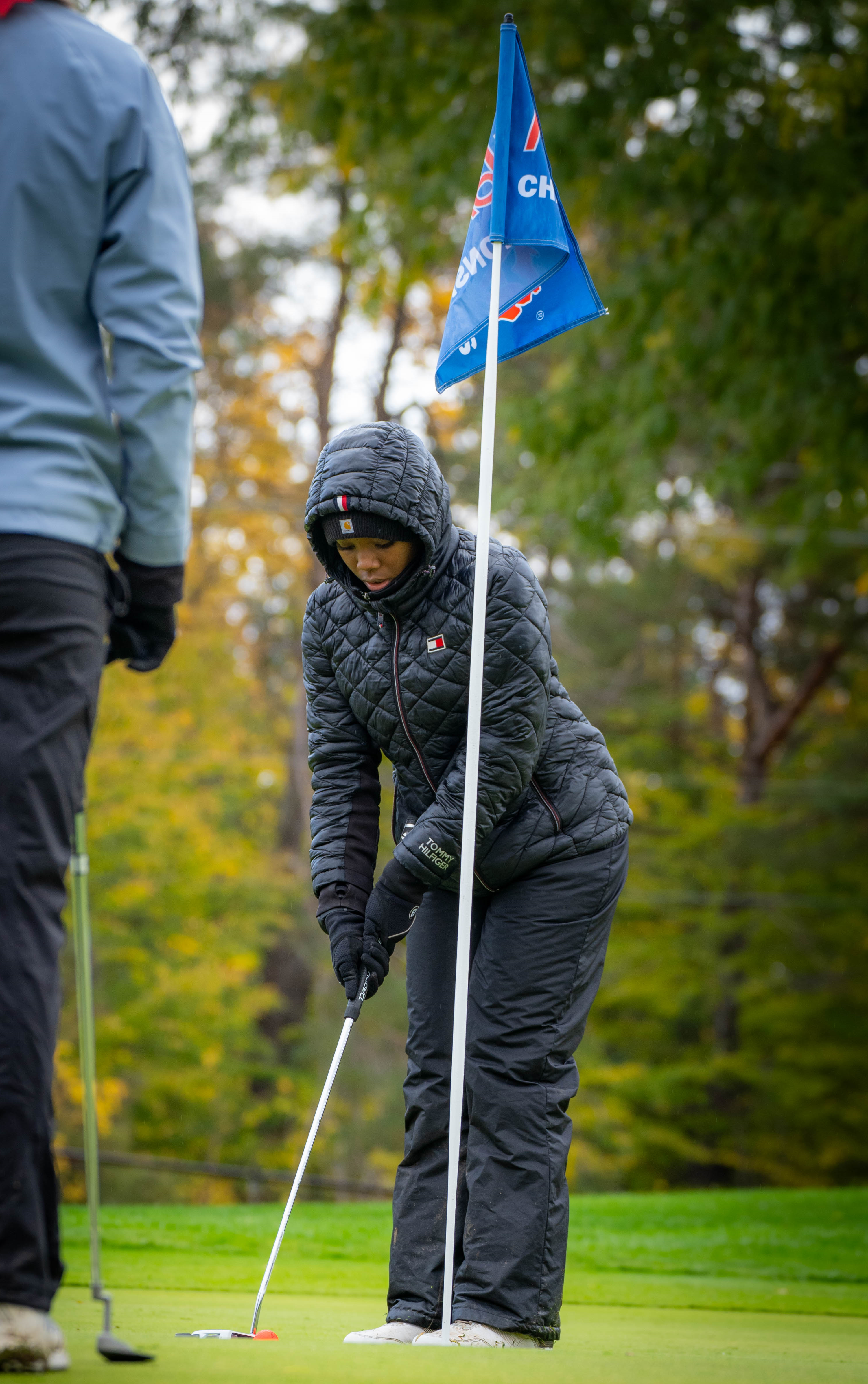 Cass Tech conducts practice sessions at the Royal Oak Golf Center, but was able to compete in various dual matches and tournaments throughout the year, including invitationals in Brighton, Rochester and Traverse City.
“Just not having the basic resources, but still being able to come and perform and be able to be here at states, is one of the best things,” said junior Sydney Evans.
The most memorable tournament obviously was the Regional at West Shore Golf & Country Club in Grosse Ile. The Technicians made history that day, punching their ticket to the Finals by finishing second with a score of 398. The top three teams at Regional events qualify.
From there, it was a whirlwind of preparation leading up to last weekend’s trip to East Lansing.
When word of the team’s accomplishment got out, the Detroit News and Detroit Free Press were among media to feature the team.
Retired Detroit Lions wide receiver and Pro Football Hall of Fame inductee Calvin Johnson even showed up at a practice to offer congratulations and support.
At the Final, Cass Tech finished 17th behind Watts, Evans, sophomore Sienna Hawkins, senior Kalista Bennett and junior Nyla Joseph.
More important than competing at the Final was the bar the team set going forward by simply being there.
Not only does the program hope future teams qualifying becomes the norm, but that other programs in the city and Detroit Public School League will be inspired.
“I think the girls coming after us, they are going to have that legacy to go behind,” Evans said. “It’s something to strive for as well.”
Siml for one doesn’t shy away from having lofty ambitions for the future.
“I told them I want to start a dynasty,” Siml said. “That’s my goal. At Cass Tech, we have dynasties. We have basketball, we have football. We try to make dynasties.”
 Keith Dunlap has served in Detroit-area sports media for more than two decades, including as a sportswriter at the Oakland Press from 2001-16 primarily covering high school sports but also college and professional teams. His bylines also have appeared in USA Today, the Washington Post, the Detroit Free Press, the Houston Chronicle and the Boston Globe. He served as the administrator for the Oakland Activities Association’s website from 2017-2020. Contact him at [email protected] with story ideas for Oakland, Macomb and Wayne counties
PHOTO The Detroit Cass Tech girls golf team celebrates qualifying for the MHSAA Final from its LPD1 Regional. (Middle) The Technicians' Nyla Joseph putts during the Final. (Top photo courtesy of Faye Watts. Middle photo by High School Sports Scene.)