


Keep on Coaching
February 1, 2013
By Geoff Kimmerly
Second Half editor
A few weeks ago, I finally got my first chance this season to watch a friend coach his basketball team. After guiding some others at the lower levels, this is his first time running the varsity – something he wasn't sure he wanted to do with a 1-year-old just learning to walk, but a challenge he ended up taking on to the benefit of all those involved.
Simply put, he’s good. I've seen a lot of teams and a lot of coaches over the past 15 years, and although I wouldn't know much of what to do if I were walking the sideline, I felt pretty qualified in telling him I was impressed – even if he didn't buy that I was offering an unbiased opinion. The best news is he’s gone from not sure about this a few months ago to talking about next season.
We know, at least anecdotally, that coaching continues to get more challenging. The time commitment has grown substantially to make running a program a year-round endeavor in a lot of sports at a lot of schools.
That commitment – especially for coaches with children of their own – was a main reason referred to in a New Haven Post-Chronicle story Saturday that noted 23 football coaching openings in Connecticut at one point this offseason. That state has 146 football teams – meaning roughly 15 percent will have new leaders this fall.
And that got me thinking about my friend, about how glad I am he’s given this a shot, and how I've seen so many others either not do so, or not stick around long despite having some pretty nice success.
A study published last winter in Interscholastic Athletic Administration magazine – a product of the National Interscholastic Athletic Administrators Association – noted some predictable results of a study that sought to determine the biggest challenges faced by first-year high school coaches.
The toughest according to the study was balancing the demands of coaching and teaching, experienced by nearly half the respondents – 98 percent of which coached high school teams and 81 percent of which are teachers.
The next six reasons all were noted by at least 30 percent of those in the study – personal fatigue, securing community support, securing and caring for facilities and equipment, parental contact, keeping non-starting players motivated, dealing with schedule interruptions and motivating athletes to achieve consistent, peak performance.
Nothing there is earth-shaking, and most if not all of these challenges are faced by high school coaches regardless of how long they've been in the field. But I got a little more perspective from some of the 32 items that ranked as least challenging to the first-year leaders – keeping in compliance with state and league regulations, dealing with substance abuse issues, teaching sport skills and creating a positive team atmosphere – things that seem most important, and yet appear to be easiest to do. I’m not sure what that tells us – but I think it tells us something.
Click to check out the entire three-page breakdown of the study, plus the researchers’ recommendations to remedy some of what first-year coaches face.
Giving back to Saginaw
I love reading about high-level athletes – like a star-studded group of alums from Saginaw – giving back to where they got their starts.
Pittsburgh Steelers star LaMarr Woodley made a big impact before the start of this school year by donating $60,000 to cover all participation fees for athletes in his former school district. The Saginaw News’ Hugh Bernreuter writes today about how Woodley (Saginaw High), the Philadelphia 76ers’ Jason Richardson (Saginaw Arthur Hill) and former Oakland Raiders standout Stu Schweigert (Saginaw Heritage) have combined to give more than $865,000 back to their home communities.
Bernreuter also mentions the non-monetary contributions of the Golden State Warriors’ Draymond Green (Saginaw High) and former Indianapolis Colts receiver Blair White (Saginaw Nouvel).
Click to read more about it.
Quote(s) of the Week
While rifling through more papers on my desk, I found an article from the Washington Post from Sept. 2011 titled “How high school sports save our schools.” I was drawn to it in part because I spent more than a decade in a newsroom, and it was a piece by a reporter covering education who instead of reporting on school boards and the like, delved into the importance of interscholastic athletics to education as a whole.
He spoke of how participation continues to grow even as resources dwindle, and of data supporting that extracurriculars like sports are more effective than academic classes in teaching leadership, teamwork, time management and “other skills crucial for success in the workplace.” Later, he mentioned a study noting that those who participate in extracurriculars earned more a decade later.
Click here to read the entre piece. These passages struck me most.
“Coaches might be the only faculty members still allowed by our culture and educational practice to get tough with students not making the proper effort. They have the advantage of teaching what are essentially elective non-credit courses. They can insist on standards of behavior that classroom teachers often cannot enforce because the stakes of dismissing or letting students drop their courses are too high. …
“Students do better in activities they choose. If we provide more of them, led by committed adults … that can make a difference. We know the bad news about education. Dropout rates are high. Achievement scores are stagnant. But sports participation is going up, despite pressure to cut it back. Let’s cheer about that and look for a way to draw in more students.”

'The Comeback is Always Better than the Setback'
By
Rob Kaminski
MHSAA benchmarks editor
November 12, 2021
Following is the publisher’s note and cover story from the Fall 2021 edition of benchmarks, which was published earlier this school year and highlighted changes coming to tournaments as MHSAA activities moved back toward normal.
Suffice it to say, as we stride into the 2021-22 school year, it is not just another year for the MHSAA, nor will it be business as usual as we continue to monitor the COVID clouds that can’t dissipate quickly enough. However, we do intend to make it as close to “business as usual” as possible.
From the Publisher: Not “Just Another Year” Ahead, But Here’s Hoping
After the disheartening cancelation of numerous winter tournaments and the entire spring seasons of 2020, together we navigated through a tumultuous 2020-21 athletic campaign with plenty of blood, sweat and tears to combat a multitude of obstacles.
The entire MHSAA staff owes a debt of gratitude to every individual who made last year possible, from our school administrators to ticket takers, literally thousands of contributors who made sure we reached the finish line against seemingly insurmountable odds.
There were many occasions during the pandemic when the easiest path would have been to give up and give in. School sports was the one thread of normalcy in many school communities, and it provided the important opportunity to remain physically active. Even more critical, it offered an in-person avenue for personal connections and relationships with a student’s coaches, teammates and even opponents during a time that was so virtual and distant in most other ways.
And, now we move forward, taking steps toward a better future.
One of my favorite quotes is “The comeback is always better than the setback.” There have been many setbacks for all of us over the past 16 months, and we look forward to working with your school and school community in finding more normalcy for our kids in this year of the great comeback.
Let’s continue to come together and support our young people during a time where school sports are needed now more than ever.
The end goal? Nothing new and earth-shattering. In fact, we’re shooting for the opposite.
– Mark Uyl, MHSAA Executive Director

Off and Running
With the school year in full swing, hopes are high that the only changes for this year and beyond will be membership-driven.
The 2020-21 MHSAA athletic year could best be described as both unforgettable and forgettable. Seasons began, and were halted. Some sports didn’t begin, then they did, then were put on hold. Testing was mandated and modified. Masks were part of the uniform at some venues, and not required at others.
Last school year began, from the standpoint of the MHSAA and its constituents around the state, with the first of what would be 37 updates concerning processes and procedures outlining everything from testing to tournament schedules in the most fluid and chaotic period of time anyone currently in school sports has experienced.
In the end, through the tremendous leadership and fortitude of athletic administrators, coaches, contest officials and parents – and the resilience and the enthusiasm of the student-athletes we serve – the year culminated last June in settings as close to normal as things have been since March 2020.
Although some clouds remain overhead, and eyes and ears continue to closely monitor developments which threaten the health of athletics and participants, here’s hoping for mostly sunny skies and a 2021-22 year that will return to normalcy.
With that in mind, there are a few new wrinkles to this Fall’s tournament season.
One of the most anticipated sport-related changes for Fall 2021 is the full implementation of the “enhanced strength-of-schedule” format for selecting the 256-team field for the 11-Player Football Playoffs. The new format eliminates automatic qualification based on win total and bases it solely on playoff-point average, which also is determined differently in that it now awards teams more for playing tougher schedules.
The new playoff-point formula was used in 2020 to seed teams at the District and Regional levels, but its use for qualification was put on hold as COVID-19 caused a one-season switch in playoff format that allowed all teams to qualify.
"Schools for years have struggled finding opponents during the regular season, especially those programs that have had some success over the years,” said MHSAA Executive Director Mark Uyl. “Now, qualification for the playoffs will be based strictly on playoff points, so schools will benefit by scheduling tough opponents, win or lose. This new approach will build excitement, and will address a scheduling problem that has occurred for many years."
Lower Peninsula Cross Country also will implement a change that was postponed last year when adjustments were made to thin the Finals field by running in “sessions” and spreading the Finals over two days.
This year, spectators will likely see more runners at Michigan International Speedway than ever before due to a potential increase in Regional qualifiers to the Final.
The Cross Country/Track & Field Committee in January 2019 recommended a change to allow a minimum of seven individual qualifiers to advance from each Regional race. The MHSAA Representative Council approved the idea for 2020, and the change will take effect this fall.
 “The Committee felt that in some years a Regional with a few strong teams limits or hinders the ability of individual runners not on those teams from advancing; meaning that if they weren’t in the top 15 they weren’t going to advance,” said MHSAA Assistant Director Cody Inglis, who oversees the Cross Country Tournament.
“Standardizing the amount of individual runners per race allows more competitors while also ‘guarding the gate’ against making the races too big in each division. This standardization of the individual qualifiers allows more kids to get a taste of the Finals while not limiting the strong teams that exist in several Regionals around the state in each Division.”
Previously, runners on teams that did not qualify as a whole could still advance to the Finals if they finished among the top 15 individuals at a Regional – but at some Regionals runners from the team qualifiers filled the great majority of those top 15 finishes. The seven individual qualifiers from each Regional this season will be the first seven finishers from teams that do not qualify as a whole, even if they finish outside of the top 15.
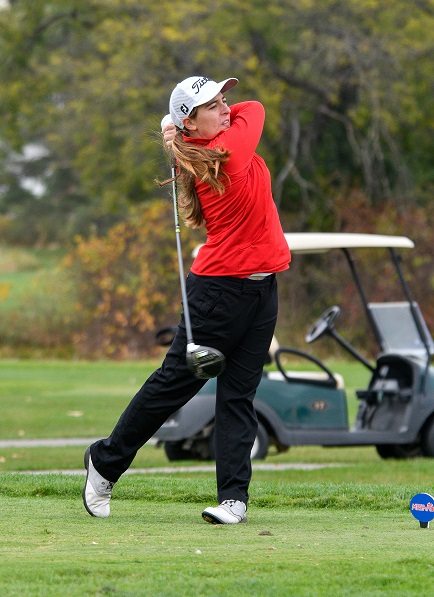
While COVID factors delayed action in most sports, the pandemic in fact expedited change in the sport of golf. The Golf Committee’s recommendation for live scoring in 2019 was implemented in tournaments during 2020-21, and now is required for regular-season events as well, beginning this school year.
“The state of the pandemic precipitated the move to the use of electronic scoring during the MHSAA Girls Golf Tournament in the fall of 2020, as eliminating the exchange of physical scorecards was a measure that decreased contact points between participants and helped ensure the safety of all at MHSAA events,” said Inglis, who also oversees all golf activities.
The scoring platform is made available through the MHSAA Golf app, which was created and is operated by iWanamaker and allows golfers, coaches and fans to chart scoring in real time.
“High school golf at times was one of the only sports where no one knew what the score was until after the round was completed, often times far too late to make any corrections or adjustments,” said MHSAA Project Coordinator Cole Malatinsky, who heads up the iWanamaker system. “The MHSAA Golf app and iWanamaker scoring platform allows people to track results in real time and helps the MHSAA better manage the logistics of tournaments, two aspects much needed in high school golf.”
Additionally, the system provides increased accountability and fair play.
 “This system not only provides coaches and tournament managers an easy and efficient means of setting up and scoring tournaments, but helps to increase scoring integrity,” Inglis said. “Recording only your score for each hole on a scorecard (electronic or paper) was defined as a deficiency in the scoring process for high school golf. While no system replaces integrity – which you either have or don’t have – iWanamaker allows more ‘eyeballs’ on all scores during the course of a match.”
Along the lines of competitive integrity, a change also has been made for the MHSAA Tennis Finals. If a seeded player withdraws on the day of the MHSAA Final, all seeded players below that withdrawing player (including the provisional seed in that flight) will move up and be placed on the proper line for that new seed. Playing against the same team more than twice at the Finals is permitted in this instance.
“The Tennis Committee felt that this was a logical solution to situations that sometimes arise on the day of the event,” said MHSAA Assistant Director Dan Hutcheson, who coordinates tennis events. “This way, individuals who have worked hard to earn seeded positions will be elevated to the next position on the brackets.”