


Keep on Coaching
February 1, 2013
By Geoff Kimmerly
Second Half editor
A few weeks ago, I finally got my first chance this season to watch a friend coach his basketball team. After guiding some others at the lower levels, this is his first time running the varsity – something he wasn't sure he wanted to do with a 1-year-old just learning to walk, but a challenge he ended up taking on to the benefit of all those involved.
Simply put, he’s good. I've seen a lot of teams and a lot of coaches over the past 15 years, and although I wouldn't know much of what to do if I were walking the sideline, I felt pretty qualified in telling him I was impressed – even if he didn't buy that I was offering an unbiased opinion. The best news is he’s gone from not sure about this a few months ago to talking about next season.
We know, at least anecdotally, that coaching continues to get more challenging. The time commitment has grown substantially to make running a program a year-round endeavor in a lot of sports at a lot of schools.
That commitment – especially for coaches with children of their own – was a main reason referred to in a New Haven Post-Chronicle story Saturday that noted 23 football coaching openings in Connecticut at one point this offseason. That state has 146 football teams – meaning roughly 15 percent will have new leaders this fall.
And that got me thinking about my friend, about how glad I am he’s given this a shot, and how I've seen so many others either not do so, or not stick around long despite having some pretty nice success.
A study published last winter in Interscholastic Athletic Administration magazine – a product of the National Interscholastic Athletic Administrators Association – noted some predictable results of a study that sought to determine the biggest challenges faced by first-year high school coaches.
The toughest according to the study was balancing the demands of coaching and teaching, experienced by nearly half the respondents – 98 percent of which coached high school teams and 81 percent of which are teachers.
The next six reasons all were noted by at least 30 percent of those in the study – personal fatigue, securing community support, securing and caring for facilities and equipment, parental contact, keeping non-starting players motivated, dealing with schedule interruptions and motivating athletes to achieve consistent, peak performance.
Nothing there is earth-shaking, and most if not all of these challenges are faced by high school coaches regardless of how long they've been in the field. But I got a little more perspective from some of the 32 items that ranked as least challenging to the first-year leaders – keeping in compliance with state and league regulations, dealing with substance abuse issues, teaching sport skills and creating a positive team atmosphere – things that seem most important, and yet appear to be easiest to do. I’m not sure what that tells us – but I think it tells us something.
Click to check out the entire three-page breakdown of the study, plus the researchers’ recommendations to remedy some of what first-year coaches face.
Giving back to Saginaw
I love reading about high-level athletes – like a star-studded group of alums from Saginaw – giving back to where they got their starts.
Pittsburgh Steelers star LaMarr Woodley made a big impact before the start of this school year by donating $60,000 to cover all participation fees for athletes in his former school district. The Saginaw News’ Hugh Bernreuter writes today about how Woodley (Saginaw High), the Philadelphia 76ers’ Jason Richardson (Saginaw Arthur Hill) and former Oakland Raiders standout Stu Schweigert (Saginaw Heritage) have combined to give more than $865,000 back to their home communities.
Bernreuter also mentions the non-monetary contributions of the Golden State Warriors’ Draymond Green (Saginaw High) and former Indianapolis Colts receiver Blair White (Saginaw Nouvel).
Click to read more about it.
Quote(s) of the Week
While rifling through more papers on my desk, I found an article from the Washington Post from Sept. 2011 titled “How high school sports save our schools.” I was drawn to it in part because I spent more than a decade in a newsroom, and it was a piece by a reporter covering education who instead of reporting on school boards and the like, delved into the importance of interscholastic athletics to education as a whole.
He spoke of how participation continues to grow even as resources dwindle, and of data supporting that extracurriculars like sports are more effective than academic classes in teaching leadership, teamwork, time management and “other skills crucial for success in the workplace.” Later, he mentioned a study noting that those who participate in extracurriculars earned more a decade later.
Click here to read the entre piece. These passages struck me most.
“Coaches might be the only faculty members still allowed by our culture and educational practice to get tough with students not making the proper effort. They have the advantage of teaching what are essentially elective non-credit courses. They can insist on standards of behavior that classroom teachers often cannot enforce because the stakes of dismissing or letting students drop their courses are too high. …
“Students do better in activities they choose. If we provide more of them, led by committed adults … that can make a difference. We know the bad news about education. Dropout rates are high. Achievement scores are stagnant. But sports participation is going up, despite pressure to cut it back. Let’s cheer about that and look for a way to draw in more students.”
Preview: Finals Forecast Includes Potential Career Sweeps, 1st-Time Team Opportunities
By
Geoff Kimmerly
MHSAA.com senior editor
November 19, 2025
A pair of seniors seeking to complete MHSAA Finals championship sweeps and a favorite pursuing a first team title are among storylines heading into this weekend’s Lower Peninsula Girls Swimming & Diving Finals.
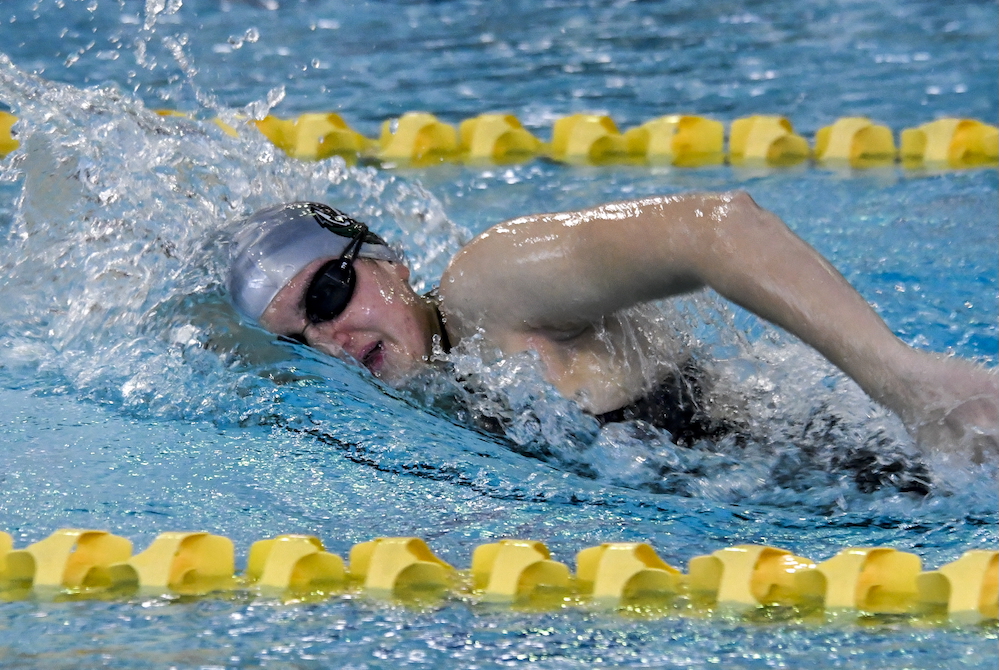
West Bloomfield star Elizabeth Eichbrecht in Division 1 will attempt to finish her career with four championships in both the 200 and 500-yard freestyle races. In Division 3, Dearborn Divine Child standout Ella Dziobak is swimming for a fourth title in the 500 as well.
The team competitions also have familiar favorites, as Ann Arbor Pioneer, Farmington Hills Mercy and East Grand Rapids all are seeking to add to multi-year title streaks – but in Division 2, Grosse Pointe South may have the lineup to outpace Mercy and earn a first championship.
Due to facility repairs beginning Friday evening, the Division 1 Finals at Oakland University will begin Thursday and conclude Friday afternoon, with Division 2 and 3 following the traditional Friday-Saturday schedule.
Competition begins at noon for first-day preliminaries and the following day’s championships at all three sites. Tickets cost $11 both days, and all three Finals will be streamed live on MHSAA.tv. Click for information on purchasing tickets, plus schedules and qualifiers for all three meets.
Lower Peninsula Division 1 at Oakland University
Reigning champion: Ann Arbor Pioneer
2024 runner-up: Jenison
2025 top-ranked: 1. Ann Arbor Pioneer, 2. Northville, 3. Jenison.
Pioneer will be looking to claim a sixth-straight Division 1 title – which would tie it with East Grand Rapids (1981-86) and East Lansing (1973-78) for the third-longest championship streak in MHSAA girls swimming & diving history. The Pioneers’ mix of stars and depth will be tough to catch, with three relays and 22 individual entries seeded to score plus a diver competing. Northville finished third last season and is seeking its first championship to go with a runner-up finish in 2022. All three Mustangs relays and eight individuals are seeded to score, with three divers making that a strength as well. Jenison has finished a Finals runner-up two of the last four years – second in Division 2 in 2022 and then right behind Pioneer last fall. The Wildcats have all three relays and 11 individuals seeded to score, with two divers competing.
Kia Alert, Ann Arbor Pioneer freshman: She’ll make her Finals debut top-seeded in the 50-yard freestyle (23 seconds) and 100 breaststroke (1:04.16) and likely to swim on the top-seeded 200 freestyle and second-seeded 200 medley relays.
Dalila Brown, Jenison sophomore: She debuted by swimming on the winning 200 medley relay and finishing sixth in the backstroke last year while also competing in two more events, and this week she’s seeded first in the backstroke (55.37), seventh in the butterfly and likely to swim on the top-seeded medley and second-seeded 400 freestyle relays.
Elizabeth Eichbrecht, West Bloomfield senior: One of the most accomplished swimmers in MHSAA history will look to finish career Finals sweeps in the 200 and 500 freestyles, seeded first in both in 1:45.48 and 4:41.54, respectively – times that would break all-Finals records.
Madison Ensing, Zeeland senior: The reigning champion in the 50 and 100 freestyles is this time seeded first in the 100 (50.75) second in the 50 (23.22) and slated to swim on two top-three seeded relays.
Natalie Mazur, Brighton sophomore: She’s seeded first in the 100 butterfly (56.69), 10th in the 200 individual medley and slated to swim on two top-five seeded relays, after swimming the backstroke and as part of two relays last season.
Cecilia Walusek, Ann Arbor Pioneer junior: She finished sixth in the 500 and seventh in the 200 freestyle last season and also swam on the runner-up 200 medley relay. She returns as the top seed in the IM (2:05.24), third seed in the backstroke (56.86) and slated to swim on the top-seeded 200 free and second-seeded medley relays.
Ann Arbor Pioneer 200 freestyle relay: A potential group of Alert, Walusek, sophomore Yahanna Silva Castro and senior Katelyn Van Ryn could make a run at the LPD1 (1:32.85) and all-Finals (1:32.77) records in this race, entering with a seed time of 1:32.97. Van Ryn was part of last year’s champion.
Kiya Bowman, Kalamazoo Central senior: She finished eighth in diving last season but third among non-seniors and enters this meet having posted the highest Division 1 Regional qualifier score of 408.95 points.
Lower Peninsula Division 2 at Eastern Michigan University
Reigning champion: Farmington Hills Mercy
2024 runner-up: Grosse Pointe South
2025 top-ranked: 1. Grosse Pointe South, 2. Farmington Hills Mercy, 3. Birmingham Seaholm.
South has finished Division 2 runner-up three of the last six seasons and is seeking its first championship, but against familiar rivals. The Blue Devils are seeded first this weekend in all three relays and with 15 individual entries seeded to score – with five top seeds – plus a top diving contender. Mercy has won the last two championships, including last season 120.5 points ahead of South. The Marlins have three relays and 16 individuals seeded to score, and eight divers competing. Seaholm was the Division 2 runner-up in 2023 and third last year, just 11 points behind GPS. The Maples have three relays and eight individuals seeded to score, plus a diver.
Caroline Bryan, Grosse Pointe South sophomore: The reigning champion in the butterfly and as part of the medley relay is seeded first in both the butterfly (54.15) and IM (2:05.19) and could swim on any of the team’s three top-seeded relays. Her butterfly seed time is only 19 hundredths of a second off the Division 2 meet record.
Mischa Eng, Grosse Pointe South sophomore: She placed fifth in the butterfly and third in the backstroke and swam on the winning medley relay as well last year. She’s seeded first in the backstroke (56.89) and second in the butterfly (57.11) this weekend.
Whitney Handwork, Grosse Pointe South senior: She’s seeded first in the 50 (23.48) and 100 (51.19) freestyles and also is a candidate for all three relay favorites after winning the 50, finishing fifth in the 100 and swimming on the runner-up 200 free relay in 2024.
Amelia Malarz, Midland Dow sophomore: The reigning champion in the breaststroke and fourth-place finisher in the IM is seeded first in the breaststroke (1:02.64), third in the IM (2:06.67) and likely to swim two relays.
Adrienne Schadler, Ann Arbor Skyline junior: She’s won the 200 freestyle the last two seasons and added the 500 freestyle title a year ago, and is seeded first in both races in 1:47.10 and 4:51.08, respectively, while also likely to swim on two relays.
Campbell Shore, Farmington Hills Mercy junior: She’s been part of freestyle relay championships her first two seasons and won the 100 and finished sixth in the 50 last year as well. She’ll swim both individual races and potentially two relays this weekend.
Morgan Rea, Rochester Adams junior: She outpaced the entire Division 2 field with a Regional score of 433.20 and will be making her second Finals appearance after also competing as a freshman.
Aubrey Yarger, Hastings sophomore: She clinched last season’s diving championship as a freshman by 1.9 points and will return after winning her Regional by more than 27 with a score of 398.85.
Lower Peninsula Division 3 at Holland Aquatic Center
Reigning champion: East Grand Rapids
2024 runner-up: Bloomfield Hills Marian
2025 top-ranked: 1. East Grand Rapids, 2. Bloomfield Hills Marian, 3. Hudsonville Unity Christian
East Grand Rapids has won four straight Finals championships – including the last two in Division 3 – and can reach five consecutive for the fifth time in program history. That’s likely the expectation as the Pioneers have all three relays and 21 individual entries seeded to score, plus three divers in contention. Marian finished second a year ago and in 2021 and won the championship in 2022 when EGR competed in Division 2. The Mustangs have all three relays and 14 individuals seeded to score, and four divers. Unity Christian is a new addition to the contenders after finishing sixth a year ago. The Crusaders are seeking their first top-two Finals finish and bringing three relays and 10 individuals seeded to score.
Ellery Chandler, East Grand Rapids senior: She heads into her last Finals with three individual titles and four relay championships, with wins in the breaststroke, butterfly and as part of two relays a year ago. She’s seeded first in the butterfly (56.40) and breaststroke (1:04.54) and likely will swim on the top-seeded 200 free and second-seeded medley relays.
Ella Dziobak, Dearborn Divine Child senior: She’s pursuing a career Finals sweep in the 500 and is seeded fourth (5:22.70) in that race and fourth as well in the 200 free (1:59.50) – in which she placed third in 2024.
Addie Hein, East Grand Rapids junior: The reigning champion in the IM also finished third in the breaststroke and swam on the winning medley relay a year ago. She’s seeded third in the IM (2:10.87), fourth in the breaststroke (1:08.89) and could swim on two top-two seeded relays.
Quinn Norlander, Detroit Country Day junior: She’s looking to add to third-place finishes in both the IM and backstroke from last season, seeded first in the 100 freestyle (52.34), second in the backstroke (55.11) and also swimming on two relays.
Sophia Pierangeli, St. Joseph junior: The top seed in the IM (2:06.64) and third seed in the backstroke (57.33) finished fifth in the IM, sixth in the backstroke and swam on two runner-up relays last season. Two of her potential relays this weekend are top-seeded.
Camryn Siegers, Holland Christian junior: She’s won three Finals titles so far – two in the backstroke and also the 50 last year – and she’s seeded first this weekend in the 50 (23.01) and backstroke (54.46) with the latter only three hundredths of a second off the meet record. She’ll also likely swim on two third-seeded relays.
Alyssa Volkers, Hamilton junior: She could make significant jumps from sixth in the 200 freestyle and fourth in the 500 last year, seeded first in both races in 1:54.60 and 5:11.29, respectively.
Anna McAllister, Chelsea junior: She won last season’s diving championship by nearly 43 points and her Regional last week by 40 with a score of 384.25.
Josi Popma, Hamilton junior: She posted the highest Division 3 Regional score of 397.25, winning her site by 42 points after placing third at last year’s Final.
PHOTO West Bloomfield's Elizabeth Eichbrecht swims the 500 freestyle at last season's Lower Peninsula Division 1 Finals. (Click for more from High School Sports Scene.)