Let's Play 2 (or 3, or 4)
February 16, 2012
A few conversations I had at last week's Women In Sports Leadership conference further affirmed a point I've been making for years -- high school athletes, if they'd like, shouldn't hesitate to play multiple sports.
Doing so does not hurt, but might just help their chances at landing that prized college scholarship -- on top of adding another layer to the high school sports experience.
Reaffirming this for me last week was Michigan State softball coach Jacquie Joseph, who spoke on that subject at the WISL conference. She's heading into her 24th season as a head coach at the Division I college level -- so she's been around for some of the evolution of both high school sports specialization and college recruiting. Plus, she coaches a sport that sees its share of athletes playing just that one.
Later, I spoke with a high school coach who leads teams in three sports and also played one at the Division I college level. She's a believer in this as well.
Some of the things I've been told over the years about playing more than one sport:
- It allows an athlete to learn more skills and hone more parts of his or her athleticism.
- Using another range of movement further helps condition an athlete's body and make it more resistant to injury.
- It's hardly rare to see a college football coach watching a prospect's basketball game -- coaches like to see how athleticism transfers across sports, and sometimes will see something from an athlete playing basketball that he didn't show on the football field. (Football and basketball are used in this example, but the same applies to a number of similar situations.)
- Athletes get an opportunity to play whatever they'd like only this once (unless they turn out to be that rare college athlete who takes on more than one sport at that level).
These are hardly new arguments. But they are always worth repeating -- especially when the people frequently making them (college coaches) are the ones single-sport athletes often are trying to impress.
HEARTSafe School Video Contest to Assist in Promoting Cardiac Awareness Month
By
Geoff Kimmerly
MHSAA.com senior editor
April 19, 2022
April is Michigan Student Athlete Cardiac Awareness Month, and the Kimberly Anne Gillary Foundation is partnering with the MHSAA to promote cardiac awareness – and providing an opportunity for students to join the effort and earn $5,000 for their school.
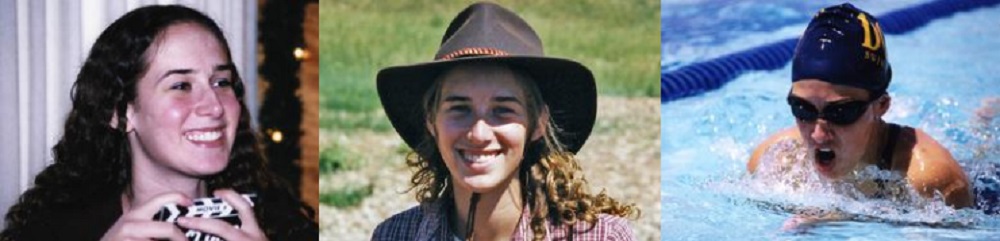
Michigan has lost at least 81 students to sudden cardiac arrest (SCA) and related causes since 1999, according to data compiled by the Kimberly Anne Gillary Foundation. Randy and Sue Gillary lost their daughter Kimberly to a cardiac arrest in a high school water polo game in April of 2000.
 The MI HEARTSafe School Video Contest will promote student-produced videos highlighting the importance of Michigan schools becoming a Mi HEARTSafe school. The winning entry will be chosen by Kimberly Gillary’s three sisters and will receive $5,000 for the winner’s school. Entries are due May 13; see the Kimberly Anne Gillary Foundation website for details.
Randy and Sue Gillary founded the Kimberly Anne Gillary Foundation, a 501 (c)(3) charitable foundation within days of losing Kimberly. The mission of the Foundation is to donate automated external defibrillators (AEDs) to Michigan high schools and to advocate cardiac screening and testing of Michigan high school student athletes.
A major drive of the foundation is for every Michigan school to become a MI-HEARTSafe School. This is a designation given by the Michigan Department of Health and Human Services (MDHSS) when a school has met the criteria to demonstrate it is prepared to respond to a cardiac emergency on school property. Schools receive a banner and other materials that can be displayed in the school to let those who attend and visit know that the school is a MI-HEARTSafe School.
“The goal of our Foundation is to try to prevent other parents from going through what we went through with the loss of our beloved Kimberly,” Randy Gillary said. “We are proud to be partnering with the MHSAA in promoting cardiac awareness for Michigan’s student athletes. The MHSAA has been a leader in helping to change the culture in the state of Michigan to make our Michigan high schools more focused on being prepared to respond to a cardiac emergency on school property.
The Kimberly Anne Foundation has raised more than $1.68 million and has donated more than 825 AEDs to Michigan high schools.
“We believe that the vast majority of Michigan high schools now have at least one AED,” Randy Gillary said. “Most high schools did not have an AED when we lost Kimmy in 2000. Michigan high schools are now in a much better position to respond to the sudden cardiac arrest of a student athlete. AEDs donated by the Kimberly Anne Gillary Foundation to Michigan schools have been used to provide defibrillation shocks to save at least nine lives.”