


Let's Play 2 (or 3, or 4)
February 16, 2012
A few conversations I had at last week's Women In Sports Leadership conference further affirmed a point I've been making for years -- high school athletes, if they'd like, shouldn't hesitate to play multiple sports.
Doing so does not hurt, but might just help their chances at landing that prized college scholarship -- on top of adding another layer to the high school sports experience.
Reaffirming this for me last week was Michigan State softball coach Jacquie Joseph, who spoke on that subject at the WISL conference. She's heading into her 24th season as a head coach at the Division I college level -- so she's been around for some of the evolution of both high school sports specialization and college recruiting. Plus, she coaches a sport that sees its share of athletes playing just that one.
Later, I spoke with a high school coach who leads teams in three sports and also played one at the Division I college level. She's a believer in this as well.
Some of the things I've been told over the years about playing more than one sport:
- It allows an athlete to learn more skills and hone more parts of his or her athleticism.
- Using another range of movement further helps condition an athlete's body and make it more resistant to injury.
- It's hardly rare to see a college football coach watching a prospect's basketball game -- coaches like to see how athleticism transfers across sports, and sometimes will see something from an athlete playing basketball that he didn't show on the football field. (Football and basketball are used in this example, but the same applies to a number of similar situations.)
- Athletes get an opportunity to play whatever they'd like only this once (unless they turn out to be that rare college athlete who takes on more than one sport at that level).
These are hardly new arguments. But they are always worth repeating -- especially when the people frequently making them (college coaches) are the ones single-sport athletes often are trying to impress.
Be the Referee: Protocols & Mechanics
By
Geoff Kimmerly
MHSAA.com senior editor
August 26, 2021
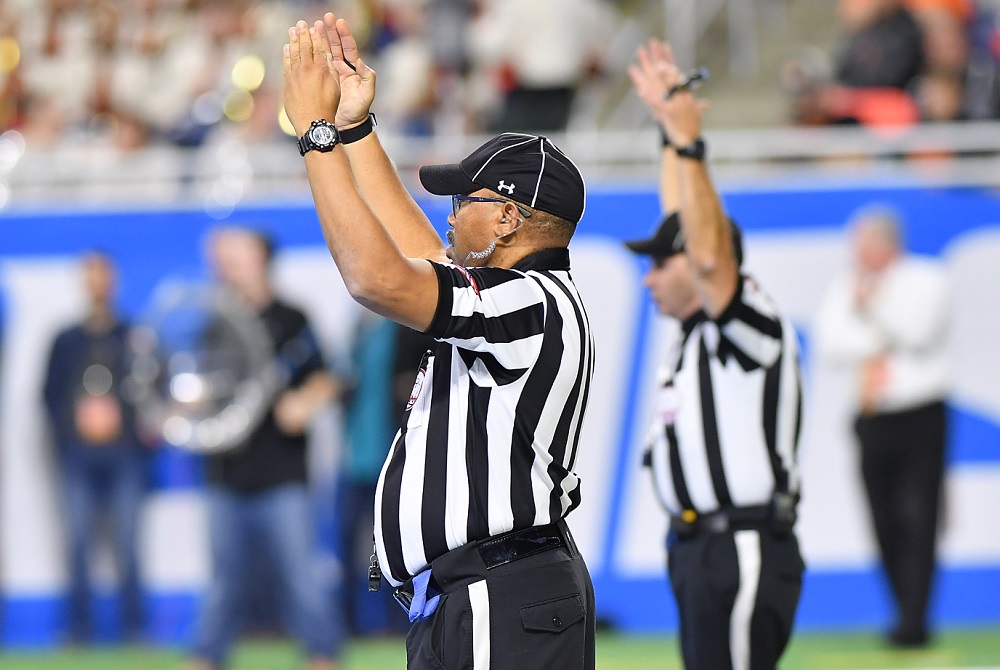
“Be the Referee” is back for 2021-22 with MHSAA assistant director Brent Rice explaining how rules have reverted or been modified due to last year’s COVID-19 adjustments.
Be The Referee is a series of short messages designed to help educate people on the rules of different sports, to help them better understand the art of officiating, and to recruit officials.
Below is this week's segment – Protocols and Mechanics – Listen
Other than a few select instances, all MHSAA protocols, procedures and playing rules have returned to what they were pre-COVID.
This means that football team boxes will return to the area between the 25-yard lines, traditional ball-handling and other officials mechanics will return in all sports and postgame handshakes will be permitted as each school sees fit.
Additionally, there will be some rules modifications that were adopted during the pandemic that will likely be kept as part of the normal playing rules moving forward. The one that stands out for this upcoming fall season is that in volleyball, teams will not switch benches or sides of the net unless the referee determines that a team is at a disadvantage due to the layout of the facilities and obstructions.