


Let's Play 2 (or 3, or 4)
February 16, 2012
A few conversations I had at last week's Women In Sports Leadership conference further affirmed a point I've been making for years -- high school athletes, if they'd like, shouldn't hesitate to play multiple sports.
Doing so does not hurt, but might just help their chances at landing that prized college scholarship -- on top of adding another layer to the high school sports experience.
Reaffirming this for me last week was Michigan State softball coach Jacquie Joseph, who spoke on that subject at the WISL conference. She's heading into her 24th season as a head coach at the Division I college level -- so she's been around for some of the evolution of both high school sports specialization and college recruiting. Plus, she coaches a sport that sees its share of athletes playing just that one.
Later, I spoke with a high school coach who leads teams in three sports and also played one at the Division I college level. She's a believer in this as well.
Some of the things I've been told over the years about playing more than one sport:
- It allows an athlete to learn more skills and hone more parts of his or her athleticism.
- Using another range of movement further helps condition an athlete's body and make it more resistant to injury.
- It's hardly rare to see a college football coach watching a prospect's basketball game -- coaches like to see how athleticism transfers across sports, and sometimes will see something from an athlete playing basketball that he didn't show on the football field. (Football and basketball are used in this example, but the same applies to a number of similar situations.)
- Athletes get an opportunity to play whatever they'd like only this once (unless they turn out to be that rare college athlete who takes on more than one sport at that level).
These are hardly new arguments. But they are always worth repeating -- especially when the people frequently making them (college coaches) are the ones single-sport athletes often are trying to impress.
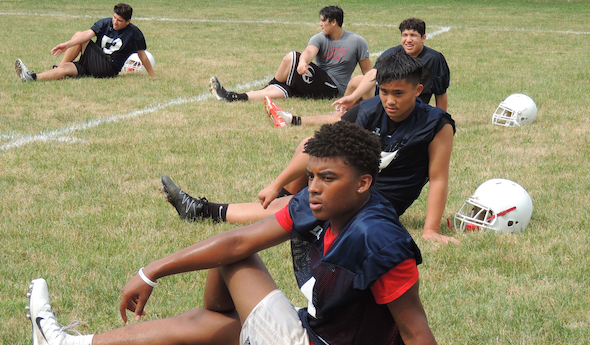
Add Rest Days to Your Workout Routine
June 2, 2020

Henry Ford Health System
Whether you're new to exercise or a seasoned enthusiast, it's tempting to adopt an all-go, no-quit attitude. This is especially common when you're are trying to achieve a fitness goal. Maybe you want to run a 5K, or maybe you have 10 pounds you want to shed before going on vacation.
"Whatever the driver, it's important to remember that scheduling time for rest and rejuvenation is a critical component of any workout regimen," says James Moeller, M.D., a sports medicine specialist at Henry Ford Health System.
Building in Rest Days
From high-intensity interval training (HIIT) and spin to barre and Zumba, popular workouts increasingly push exercisers to go faster, longer, stronger. This prolonged physical stress can lead to overuse injuries, such as stress fractures, muscle strains and joint pain. Excessive exercise can also lead to hormonal changes, disrupted sleep patterns, decreased immunity and mood swings.
“Working out, especially resistance training, breaks tissues down, causing microscopic damage,” Dr. Moeller says. "Rest days allow your muscles time to rebuild."
So how much rest do you really need? There isn't a one-size-fits-all prescription. Factors like your age, fitness level, the intensity of your workout and the amount of training you do weekly will impact the amount of recovery time you need. But there are some basic guidelines for rest days:
1. Go easy: Rest is a relative term. "It's not just sitting on the couch with an iced tea," says Dr. Moeller. "You may still be exercising on 'rest' days, but at a lower intensity." Maybe you go for a brisk walk or ride your bike to work. Take a yoga class or do some dynamic stretching. The key is to make sure you're not overworking the same body parts.
2. Get sufficient sleep: Sleep is a key component of muscle repair and rebuilding. During sleep, your body’s production of growth hormone increases. Not getting quality shuteye thwarts your body's production of growth hormone and can impact your performance.
3. Give overtaxed muscles a break: You don't need to skip the gym on specific days each week, but you do need to rotate which body parts you're working. The general rule is to give muscles 48 hours to recover after a workout. So it's a good idea to take two to three days off before working the same muscle groups again.
4. Stay hydrated: Make sure to restore lost fluids before, during and after a workout. Dehydration can lead to overheating, headaches and muscle fatigue, among other ailments. You don’t need a sports drink; water is best. "Sports drinks aren't required unless you're getting into very high intensity activity, or exercising for more than one hour at a time," Dr. Moeller says.
5. Pay attention to your body: A lot of people try to work out through pain and fatigue. If there's a heaviness to your movements, or if you feel like your muscles are not responding appropriately to the stress you're providing, take a time out. "It's really about learning to read your body's signals," says Dr. Moeller.
Health authorities and news headlines widely publicize the health benefits of exercise — and the consequences of inactivity. The American Heart Association recommends that adults get at least 150 minutes of moderate-intensity exercise per week, plus strength training two or three days per week. Less discussed are the negative effects of not allowing your body sufficient time to rest.
Getting sufficient rest between workouts is just as important as participating in regular exercise. "Both are part of the total process required to build strength, endurance and muscle mass," Dr. Moeller says.
Want to learn more? Henry Ford Health System sports medicine experts are treating the whole athlete, in a whole new way. From nutrition to neurology, and from injury prevention to treatment of sports-related conditions, they can give your athlete a unique game plan.
Visit henryford.com/sports or call (313) 972-4216 for an appointment within 24 business hours.