

MHSAA Historian Picks 10 to Remember
August 9, 2016
By Rob Kaminski
MHSAA benchmarks editor
It sounded simple and fun, the theme for the MHSAA's spring issue of benchmarks: a history of MHSAA tournaments.
It certainly was the latter, but simple? Not so much.
There’s no way to do justice to nearly a century’s worth of history in some sports. Complicating matters was the abundance of information and photographs for some, and the scant amount of detailed data and images for others.
MHSAA historian Ron Pesch was given an equally challenging task: recount a “Top 10” list from his days covering various MHSAA Finals. He shares them here and, he adds, they are in no order of favorites.
The Shot: 1986 Class B Boys Basketball Final at Crisler Arena – Saginaw Buena Vista’s Chris Coles’ desperation shot, launched at the buzzer from well beyond half court, dropped through the hoop to give the Knights a 33-32 win over defending champion Flint Beecher in a rematch of the 1985 Class B title game. The shot was Coles’ first of the second half and his only points in the contest.
The Smurfs: 1986 Class A Football Final at the Pontiac Silverdome – The "Smurfs" – Muskegon Coach Dave Taylor's nickname for his small, quick swarming defensive linemen – limited heavily favored Sterling Heights Stevenson to four yards rushing and 73 yards of total offense in a 10-0 win. As a 1979 graduate of Muskegon High School, I was elated.
The Drive: 1989 Class B Football Final at the Pontiac Silverdome – I slid down from the press box into the stands at the Silverdome for the end of this one. With 2:20 remaining, the atmosphere was simply electric, as Farmington Hills Harrison’s lauded quarterback Mill Coleman took the reins with his team down 27-21 to DeWitt. The senior executed a flawless two-minute drill, guiding his team to the DeWitt 9 before scampering into the end zone for the tying points. Steve Hill added his fourth PAT for the lead, then secured the victory with an interception on the next series.
King Kool: 2005 Class B Boys Basketball Final, Breslin Center, East Lansing – David Kool was a flawless 20 for 20 from the free-throw line and scored 43 points as Grand Rapids South Christian downed Muskegon Heights 67-60.
The Parade: 2004 Individual Wrestling Finals, The Palace of Auburn Hills – In 2004, I traveled to Auburn Hills to watch the MHSAA Individual Wrestling Finals for the first time. The pageantry of the Grand March, the skills on display, the roar of the massive crowd, and the ensuing beauty and chaos of a wrestling extravaganza of this scale is truly a sight to see.
 A Marathon: 2007 Division 3 Football Final, Ford Field, Detroit – East Grand Rapids and Orchard Lake St. Mary’s ended regulation tied 14-14, and this would turn into a five overtime battle that required an extra hour of play. No previous football playoff game, from Districts up, had ever gone beyond four overtimes. After exchanging field goals, touchdowns, extra points and two-point conversions, East Grand Rapids emerged with a 46-39 victory.
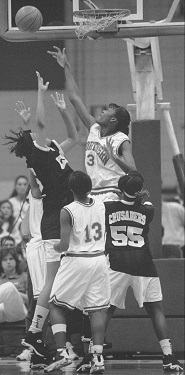
Tawana Towers: 1994 Class A Girls Basketball Final at Kellogg Arena, Battle Creek – Flint Northern, coached by Leteia Hughley and led by 6-4 freshman Tawana McDonald, defeated 1993 runner-up Detroit Martin Luther King, 46-32, for the Class A championship. McDonald batted down an MHSAA-record 10 shots, pulled down 13 rebounds and added five points and seven assists in a stellar performance.
Never Quit: 2008 Division 2 Football Semifinal, Spartan Stadium, East Lansing – Unbeaten, No. 1-ranked and heavily favored Muskegon trailed Davison by 22 late in the third quarter and 16 with less than five minutes to play. In perhaps the greatest comeback in playoff history, Muskegon recovered two onside kicks and scored 19 points in the final 4:31 to escape with a 38-35 victory and its third trip in five years to an MHSAA Final.
MHSAA Legends: 1998-2008 – For 10 years, the MHSAA showcased great teams from the past with their Legends of the Game series. From a historian’s perspective it was a chance to meet and learn more about folks I had often known only from the pages of microfilm. It was quite the treat to see years fall away as coaches, team managers and players reunited, in many cases for the first time after decades apart.
The MHSAA Record Books: Online, 1994 – One of my first efforts as state historian was to expand the record books beyond their primary focus on football, basketball, track & field and swimming & diving. With the arrival of the internet, an enhanced version of the record books was brought online. Coaches and fans were quick to respond with letters and e-mails, happily listing entries that had been “missed.” Soon, five category headings in a sport grew to 20, then to 50 and beyond.
Kids: 2004 Football Finals, Pontiac Silverdome – (OK, this is No. 11 ... consider it an extra point). For the first time, my sons joined me for my annual excursion to Metro Detroit for a Thanksgiving Day football weekend. They got to see the Silverdome before the move of the MHSAA Football Finals to beautiful Ford Field. Future Big Reds, they also got to see their future alma mater win another title.
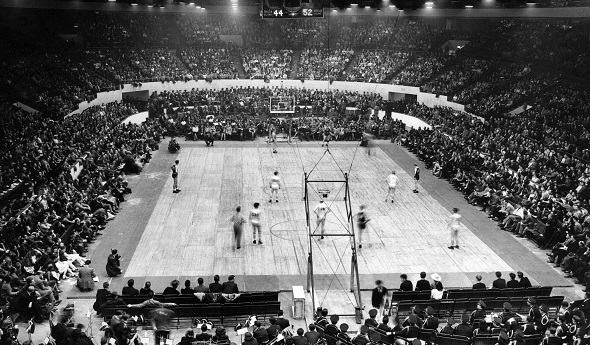
PHOTOS: (Top) An MHSAA boys basketball tournament game is played at Olympia Stadium in Detroit. (Middle) Flint Northern's Tawana McDonald blocks a shot during the 1994 Class A Final.
How Exercise Can Help Reduce Your Anxiety
January 6, 2022

Stress and anxiety at any level can be hard to manage. If you’re searching for relief, try turning to exercise. Even the smallest amount of physical activity can make a significant difference and reduce stress.
“Anxiety affects our minds and bodies. Exercise can serve as a natural antidepressant, boosting our mood at the same time it improves our health,” said Megan LaDrigue, ATC CSCS, an athletic trainer at Henry Ford Health System. “You don’t need to join a gym to exercise. The world is full of opportunities to be more active. You can add in short exercise sessions throughout the day to recharge your mood and energy.”
How Anxiety Impacts Your Health
If not addressed, anxiety can impact your mental and physical health. “Anxiety causes an imbalance in the chemicals and hormones that support our brain, immune system, digestive health and sleep,” said LaDrigue.
Chronic stress can lower our feel-good hormones – serotonin, dopamine and epinephrine. At the same time, the stress hormone cortisol increases when we’re under pressure or anxious. As a result of these shifts, you may experience:
► Trouble concentrating and loss of productivity at work or school
► Irritability and moodiness
► Difficulty sleeping
► Weight gain and digestive problems
► High blood pressure and increased risk for other diseases
How Exercise Can Break The Stress Cycle
“By adding exercise into your daily routine, you can begin to manage anxiety and improve your overall health,” said Ladrigue. Exercise offers many benefits, including:
► Shifting your focus: Focusing on your physical activity is a chance to take a mental break from daily tasks and recharge.
► Improving mood and confidence: When you exercise, your heart contracts more frequently, increasing blood flow to the brain and triggering changes in those feel-good chemicals. These changes improve mood and confidence. Over time, exercise can also help build resilience by increasing your ability to tolerate stress.
► Enhancing concentration and productivity: Exercise activates the areas in the brain that control how we think and act. For example, physical activity can improve your ability to plan, organize and monitor behavior and tasks.
► Improving sleep: Fatigue can increase feelings of stress and anxiety, which increase your risk for insomnia or poor sleep. Exercise improves your ability to get the quality, restorative sleep that you need to recharge your mind and body.
3 Steps To Starting An Anxiety-Fighting Exercise Routine
The U.S. Department of Health and Human Services recommends adults get 150 minutes of moderate exercise per week. “But you don’t need to do all of that exercise at once. If you’re just getting started, gradually build exercise into your daily routine to create a healthy habit,” LaDrigue said.
Ladrigue recommends these three steps to build an anxiety-busting fitness routine:
- Make it fun: Whether it’s walking or weightlifting, if exercise doesn’t inspire you and make you feel good, it won’t help you manage anxiety. If being social helps motivate you, find a workout buddy and encourage each other to keep moving. Explore new types of exercise by taking an online or in-person fitness class.
- Create a flexible schedule: If finding time in your day to exercise adds to your stress, try working in shorter activity periods. Do some stretches while you’re waiting for the coffee to brew. Take a walk during lunch or while you’re talking on the phone. Use the stairs instead of the elevator. Park your car farther away from your destination and walk the extra distance.
- Set goals: Start by setting short-term goals for your fitness routine. Record your progress to stay focused and motivated. As exercise becomes a daily habit, set longer-term goals. For example, try a community walk or run, join a hiking club or participate in a local sports league.
Build An Effective Workout Plan
If you’re new to exercise or have an underlying health condition, check with your primary care physician before starting a fitness routine. Had an injury in the past? See a physical therapist or sports medicine provider to avoid future injuries.
If you’ve taken a break from exercise or are exercising for the first time, start slowly. Over time, you can gradually increase the time and intensity of your workout to meet your goals.
When picking an exercise program, Ladrigue suggests including these elements:
► Warm up: Start with five minutes of activity like jumping jacks or running in place to increase the blood flow to your muscles.
► Dynamic stretching: Gently move through small or large ranges of motion to elongate the muscle tissue. For example, you can try arm circles or walking quad stretches to get your muscles warmed up.
► Strength training: If you’re new to strength training, start with light weights. You can start with three sets of 10 repetitions for each muscle group. Combine sets for a muscle group on the front of the body immediately followed with a set for a muscle group on the back of the body, like biceps and triceps. This approach is called “super-setting.” It keeps your heart rate elevated while giving the working muscle group time to recover. It also increases your metabolic burn, the rate at which you burn calories during exercise.
► Aerobic activity: Choose from a variety of activities, like walking, running, biking, swimming or dancing. Light- to moderate-intensity exercise can help you recover at the end of a strength training workout while increasing oxygen and blood flow to the working tissues.
► Cool down: Hold stretches for 20 to 30 seconds to elongate the muscle tissue used in your workout. This type of stretching helps prevent or minimize soreness.
“While starting a new habit like exercise can seem daunting, stay positive. Feel empowered – you’re taking steps that will improve your overall mental and physical health for years to come,” said LaDrigue.
To find a primary care or sports medicine specialist at Henry Ford, visit henryford.com or call 1-800-436-7936.
Megan LaDrigue is an athletic trainer who works with the Henry Ford Sports Medicine Sports Performance Program.