

2025 Scholar-Athlete Award Recipients Announced in Class A
By
Geoff Kimmerly
MHSAA.com senior editor
February 18, 2025
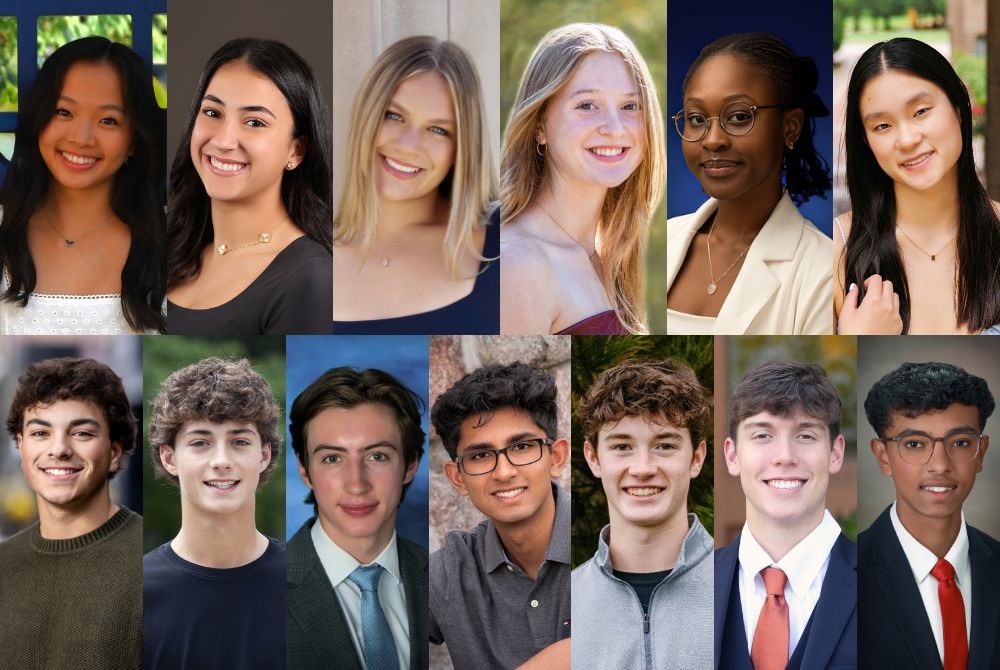
The Michigan High School Athletic Association has selected 13 student-athletes from Class A member schools to receive scholarships through the MHSAA/Farm Bureau Insurance Scholar-Athlete Award program.
 Farm Bureau Insurance, in its 36th year of sponsoring the award, will give $2,000 college scholarships to 32 individuals who represent their member schools in at least one sport in which the Association sponsors a postseason tournament. The first 30 scholarships are awarded proportionately by school classification and the number of student-athletes involved in those classes; also, there are two at-large honorees who can come from any classification.
Students applying for the Scholar-Athlete Award must be carrying at least a 3.5 (on a 4.0 scale) grade-point average and have previously won a letter in a varsity sport in which the Michigan High School Athletic Association sponsors a postseason tournament. Other requirements for the applicants were to show active participation in other school and community activities and produce an essay on the importance of sportsmanship in educational athletics.
The 32 scholarship recipients will be recognized March 15 during the MHSAA Boys Basketball Finals at the Breslin Student Events Center in East Lansing.
The Class A Scholar-Athlete Award honorees are Madeline Day, Bloomfield Hills Cranbrook Kingswood; Nadine Fayad, Dearborn; Ella Gifford, Birmingham Seaholm; Grace Johnson-Sears, Birmingham Seaholm; Chikanma Okoisor, Midland Dow; Sophia Tang, Bloomfield Hills Cranbrook Kingswood; Noah Kaplan, Bloomfield Hills; Asher Langwell, Bloomfield Hills; Nick Leiter, Detroit Catholic Central; Nimai Patel, Midland Dow; Brady Scheidt, West Bloomfield; Sean Wesolek, Bay City John Glenn; and Gruhith Yerramalli, Grosse Pointe North.
Overviews of the scholarship recipients of the Class A Scholar-Athlete Award follow. A quote from each recipient's essay also is included:
 Madeline Day, Bloomfield Hills Cranbrook Kingswood
Played two seasons of varsity volleyball, playing fourth of varsity basketball and will play third of varsity tennis this spring. Earned all-region in volleyball and all-league in basketball, and was part of Tennis Finals doubles flight champion as junior and team champion as sophomore. Served or will serve as captain of all three teams. Named National Merit Scholarship semifinalist and AP Scholar with Distinction. Serving as veteran leader of school’s Athletic Leadership Academy and second years as president of school’s Business and Gold Key clubs. Co-founded and serves as president of school’s Global Outreach Club and serving on senior advisory board in second year participating in Generation of Promise social justice youth program. Participated in service efforts locally and in Thailand. Will attend Harvard College and study computer science and sociology.
Essay Quote: “For me, basketball has become a reflection of life’s complexities. Success on the court does not always mean scoring the most points; it’s about adapting to challenges, communicating effectively, and responding to unfolding situations with resilience. … Good sportsmanship, rooted in respect, empathy, and compassion, has become a guiding principle for me – offering a model for navigating both the court and the world beyond.”
 Nadine Fayad, Dearborn
Played four seasons of varsity golf and will play her third of varsity soccer this spring, and also played junior varsity basketball as a freshman. Earned all-academic recognition in soccer and helped team to District championship. Served as golf team captain the last two seasons. Serving fourth year in student government and second year on principal’s student advisory council, and participating in second year of National Honors Society. Raised funds as part of student government, Amity Foundation and UNICEF efforts and founded and served as president of school’s UNICEF club. Also serving second year as president of school’s social justice club and secretary for Lebanese Student Association. Participating in second year of Business Professionals of America and as treasurer. Will attend University of Michigan and study business administration and international studies.
Essay Quote: “Soccer has taught me countless lessons, but the one that resonates most is the importance of respect — for teammates, opponents, and the game itself. Respect ensures that the competitive environment remains positive, fostering growth rather than hostility. Whether it's helping an opponent up after a fall or applauding their skill during a tough match, small acts of sportsmanship highlight the values of humility and empathy, both on and off the field.”
 Ella Gifford, Birmingham Seaholm
Competed four seasons on varsity swimming & diving team and playing her second season of varsity basketball. Also will play fourth season of water polo in the spring. Advanced to MHSAA Finals scoring heats in swimming her final two seasons and helped team to Lower Peninsula Division 2 championship as freshman. Helped basketball team to league title and earned all-state honorable mention last year in water polo. Earned academic all-state in water polo and served as captain of water polo and swim teams and junior varsity basketball team. Earned AP Scholar recognition and is participating in second year of National Honor Society and third year of Spanish Honor Society. Participating in second year of triathlon club and has served as president, and participating in second year of school’s Big Brothers Big Sisters program. Taught swim lessons throughout high school and served as assistant coach for junior high swim team three years. Participating as Wyld Life Youth Group leader as a senior. Will attend University of Michigan and study business administration.
Essay Quote: “Great teams prioritize collective goals over individual achievements. I’ve been fortunate to be on several championship-level teams, and I’ve seen first-hand how sportsmanship can shift the culture of a team, making the team simultaneously more successful and more enjoyable.”
 Grace Johnson-Sears, Birmingham Seaholm
Ran three seasons of varsity cross country and will compete in fourth of track & field this spring. Earned league scholar-athlete awards three years for both sports and served as captain of both teams. Named AP Scholar with Honor. Participating in second years of National Honor Society and National Science Honor Society and as executive board member of latter, and also serving as president in third year in chemistry club. Participating in fourth years in Seaholm’s jazz, marching and pep bands and played three years in school symphony and four years as part of Detroit Metropolitan Youth Symphony. Serving as vice president of band council and founded and directed school flute choir. Earned district and state level superior ratings for solo and ensemble from Michigan School Band and Orchestra Association. Has not decided where she will attend college but intends to study chemistry or chemical engineering.
Essay Quote: “As soon as you leave practice and enter a race, cross country changes from physical to mental. Without constantly being pushed to my limits by those around me, I would have never found what I was capable of. I make it my priority to do the same for others in all aspects of my life, giving my all, not out of combativeness, but respect.”
 Chikanma Okoisor, Midland Dow
Will compete in her third season of track & field this spring and competed two seasons on swimming & diving team. Earned league all-academic recognition multiple seasons. Founded and serving as executive director of Aspire United Education that has impacted children with mentorship and donations across four continents. Participating in third year of Key Club International and as trustee, and previously served as district lieutenant governor. Participating in third year as coach intern with Coderina Edtech Foundation and served as FIRST Robotics Challenge electrical subteam lead. Serving third year on Midland Area Youth Action Council, this year as vice president. Served as Black Student Alliance president and co-chairperson of Black Youth of Midland. Named AP Scholar, participating in second year of National Honor Society and received national award from National Center for Women in Information Technology (NCWIT). Will attend Rice University in Texas and study electrical and computer engineering.
Essay Quote: “As the dust settles on the track, I realize that sportsmanship is more than just fair play — it's the heartbeat of our shared human experience. In every stride, every cheer, and every outstretched hand, we write a story of unity that transcends the finish line. This spirit, born on the track, now races through every aspect of my life, propelling me forward with the knowledge that true victory lies not in gold medals but in lifting others as we run together.”
 Sophia Tang, Bloomfield Hills Cranbrook Kingswood
Played four seasons of varsity volleyball, is playing her third of varsity basketball and also played junior varsity soccer as a freshman. Earned all-region and all-league in volleyball and served as captain of volleyball varsity and junior varsity basketball teams. Competing third year on robotics team and reached world championship division quarterfinals and state semifinals in 2024. Founded and serves as president of U2H medical supply shipping nonprofit. Served on school newspaper staff throughout high school and earned sports journalism award. Participated in Global Outreach Club throughout high school and served as president and volunteer coordinator. Developed physical therapy app as part of General Motors Safety Department internship. Is undecided where she will attend college but intends to study molecular biology and biomedical engineering.
Essay Quote: “For me, sportsmanship is clapping after a girl gets up from the floor following a hard fall because that injury just ended her season. Sportsmanship is crying tears of joy when your injured teammate gets 50 cycles on the exercise bike because you know how much every little milestone means. Sportsmanship is driving a teammate to her first therapy session because her knee injury has become the hardest opponent she’s ever been up against, and because you were her two years ago.”
 Noah Kaplan, Bloomfield Hills
Played four seasons of varsity tennis and will play third of varsity lacrosse this spring. Advanced to MHSAA Tennis Finals flight semifinals and earned all-state recognition in doubles, and helped team to three straight Finals team titles. Earned league scholar-athlete awards multiple seasons in both sports. Served as tennis team captain. Participating in fourth year of DECA, earned state championship, and served as president of career development. Participating in National Honor Society and third year in community service club. Serving second year on school’s athletics booster student board and as events and fundraising chairperson, and serving as ClubLink communications director. Served as youth basketball coach throughout high school and also as football referee and tennis and lacrosse instructor. Is undecided where he will attend college but intends to study business with a focus on real estate.
Essay Quote: “Sportsmanship isn’t about rules or rankings; it’s about humanity. It’s recognizing that the person across the net is more than just an opponent — they’re human beings with struggles and emotions. It’s about standing up for what’s right, even when it costs you personally. … (E)ducational athletics isn’t just about competing; it’s about building character.”
 Asher Langwell, Bloomfield Hills
Played four seasons of varsity tennis and will play third of varsity golf this spring. Earned all-state at No. 1 doubles this past fall after winning Finals flight championship, and also was part of No. 4 doubles flight winner as junior. Helped tennis team to three straight Finals team titles. Earned all-state honorable mention last spring after reaching MHSAA Golf Finals for second time and tying for 13th in Lower Peninsula Division 1. Served or will serve as captain of both teams. Participating in fourth year of DECA, won state championship and served as vice president of marketing. Serving third year on student booster board as athletes in action/community service chairperson, and participating in third year of National Honor Society. Also participating in third year of community service club and has volunteered with Friendship Circle throughout high school. Will attend University of Michigan but has not decided what he will study.
Essay Quote: “Your actions on the (golf) course reflect not just your own character but also the school you represent. Sportsmanship isn’t just about being a good sport, it’s about doing the right thing, even when no one else is watching. It’s about honesty, integrity and respect, which are all values I will take with me once I leave high school.”
 Nick Leiter, Detroit Catholic Central
Playing third season of varsity ice hockey and has helped team to two straight Division 1 championships. Serving as captain this season. Named National Merit Scholarship Commended Student and participating in National Honor Society for second year and was chosen to speak during his chapter’s 2024 NHS induction ceremony. Participated in DECA throughout high school, earning state and national championships and serving on chapter’s board. Serving third year on student government and has participated with various community service organizations throughout high school, including this year the Oakland County Foster Closet clothing drive – leading as a project manager. Served as a tutor throughout high school. Will attend University of Michigan and study business and accounting.
Essay Quote: “Contrary to its name, sportsmanship isn’t confined to sports – it extends to every competitive aspect of life. It’s easy to think of sportsmanship as just a handshake after a game, but I believe it’s much more. Sportsmanship is a conscious, empathetic response to situations where people stand to gain or lose something. It’s not just about the winners or losers; it’s about how everyone involved conducts themselves.”
 Nimai Patel, Midland Dow
Played four seasons of varsity tennis, helped team to two Lower Peninsula Division 2 Finals championships and won No. 4 singles flight titles as sophomore and junior. Earned all-state as a junior and honorable mention as a sophomore, and served as team co-captain as a senior. Named AP Scholar with Distinction and participating in second year of National Honor Society. Served on Midland Area Youth Action Council throughout high school and as senior serving as school district’s Engineering Board student representative. Serving as robotics team director in fourth year of competition. Also has participated in school’s Space Farmers program throughout high school, earning first place at NASA & Growing Beyond Earth student research symposium. Finished among 32 finalists for Buildspace Competition. Is undecided where he will attend college, but intends to study industrial engineering.
Essay Quote: “As I progressed through high school tennis, I began to adopt practices from my coaches, people who I truly look up to as role models. I saw every practice, match and interaction as a chance to foster new connections with other teams. … My perspective shifted – I no longer viewed my opponent as a rival, but as someone who shared the same love for the game, made the same sacrifices and had the same dreams.”
 Brady Scheidt, West Bloomfield
Playing third season of varsity hockey, will play third season of varsity baseball this spring and also played junior varsity soccer as a freshman. Earned all-league recognition in hockey and baseball and serving second season as hockey team captain. Participated in DECA throughout high school and serving this year as chapter vice president. Earned DECA state championship and top-30 world recognition. Sang in choir throughout high school, contributing to Michigan School Vocal Music Association conference qualifier, and served as Voice Day committee chairperson as a junior. Participated in theater/drama three years and served as drama director for Vacation Bible School camp. Volunteered for service projects serving homeless and needy families throughout high school. Will attend New York University and study business economics.
Essay Quote: “High school sports are full of challenges, but it’s been the opportunity to face those challenges that has been the most valuable to me. If I hadn’t struggled with controlling my anger, I wouldn’t have had the same opportunities to learn how to respect the people around me and use my passion for something positive. To me, the value of sportsmanship in high school sports is learning the skills necessary to succeed in life.”
 Sean Wesolek, Bay City John Glenn
Playing fourth season of varsity basketball and played varsity football as a freshman and sophomore. Earned all-state and academic all-state in basketball. Serving third year as basketball team captain and has coached and refereed for youth programs in that sport. Participating in third year of National Honor Society and dually-enrolled at Delta College. Earned region’s Dr. Martin Luther King Scholarship Award. Graduated from Youth Leadership Bay County program and served two years on school’s student senate. Volunteered in various service efforts throughout high school including through United Way, Boys & Girls Clubs of Bay County and local rescue mission, soup kitchen and hospice house. Will attend Hope College and study pre-health sciences.
Essay Quote: “True sportsmanship is about understanding that my rival is also a member of my community. That he is also a high school kid who is trying his best on a given night. That both teams will fight as hard as we can on the 94 feet of the basketball court, but when the final buzzer sounds we congratulate the winner and take away what went well and what can we do better next time.”
 Gruhith Yerramalli, Grosse Pointe North
Played four seasons of varsity tennis, earning all-state recognition the last two and qualifying for MHSAA Finals three times. Served as team captain and earned scholar-athlete award. Also played club soccer throughout high school, helping team qualify for State Cup all four seasons. Named AP Scholar with Distinction and National Merit Scholarship Commended Student, and participating in second year of National Honor Society and as chapter president. Serving second year as part of Grosse Pointe North Student Association and as senator. Participating in third year of DECA and is a two-time state finalist, and has competed in FIRST robotics throughout high school and won Newton Division world final. Founded and owns Gru4Good tutoring service and also is serving as lead tutor in third year with 4TeenFinance. Is undecided where he will attend college, but will study aerospace engineering.
Essay Quote: “In sports, outcomes are unpredictable, and moments of success are often accompanied by setbacks. Good sportsmanship teaches athletes how to deal with wins and losses with grace and dignity. … By exhibiting good sportsmanship, athletes can cope with tough defeats and can choose a positive mindset, thinking about what they can learn from the experience rather than putting themselves down because of what they didn’t do.”
Other Class A girls finalists for the Scholar-Athlete Award were Clara Freeth, Ann Arbor Huron; Katherine Ma, Ann Arbor Huron; Avery Allen, Birmingham Seaholm; Selina Lin, Birmingham Seaholm; Sydney Law, Byron Center; Alaa Selman, Dearborn Heights Crestwood; Eleni Michos, Dexter; Grace Tykocki, Grand Blanc; Kylie Pung, Howell; Bomin Koo, Jenison; Kortney Osborn, Mason; Ayesha Middha, Midland Dow; Tara Creekmore, Plymouth; Katherine McLaughlin, Portage Central; Grace Roth, Saline; Madeline Bildeaux, Traverse City West; Carly Lyons, West Bloomfield; and Natalie Weissman, West Bloomfield.
Other Class A boys finalists for the Scholar-Athlete Award were Milan Patel, Birmingham Seaholm; Carson J. Wright, Birmingham Seaholm; Calvin J.C. Meeker, Bloomfield Hills Cranbrook Kingswood; Peter Sanin, Detroit Catholic Central; Lucas Groulx, Flint Kearsley; Elijah Lipke, Grand Rapids Forest Hills Central; Jack Lupo, Grosse Pointe South; James Michelotti, Grosse Pointe South; Joseph Spada, Kalamazoo Central; Andrew Creedon, Livonia Churchill; Cameron McVittie, Northville; Nathan Beemer, Okemos; Drew Cady, Oxford; Hunter Easton, Saline; Auben Wesley, South Lyon; Owen Przybylski, Temperance Bedford; and Asher Paul, Traverse City Central.
The Class C and D scholarship award recipients were announced Feb. 4, and the Class B honorees were announced Feb. 11.
Farm Bureau Insurance of Michigan was founded in 1949 by Michigan farmers who wanted an insurance company that worked as hard as they did. Those values still guide the company today and are a big reason why it is known as Michigan’s Insurance Company, dedicated to protecting the farms, families, and businesses of this great state. Farm Bureau Insurance agents across Michigan provide a full range of insurance services – life, home, auto, farm, business, retirement, Lake Estate®, and more – protecting nearly 500,000 Michigan policyholders.
The MHSAA is a private, not-for-profit corporation of voluntary membership by more than 1,500 public and private senior high schools and junior high/middle schools which exists to develop common rules for athletic eligibility and competition. No government funds or tax dollars support the MHSAA, which was the first such association nationally to not accept membership dues or tournament entry fees from schools. Member schools which enforce these rules are permitted to participate in MHSAA tournaments, which attract more than 1.4 million spectators each year.

MHSAA Teams with Sparrow Health
February 16, 2015
By Geoff Kimmerly
Second Half editor
Providing information and best practices to players, parents, coaches and administrators on how best to minimize health risks is a key component of keeping student-athletes safe. The Michigan High School Athletic Association has teamed with Sparrow Health System of Lansing to better inform its member schools on such health and safety matters.

Sparrow, a member of the prestigious Mayo Clinic Care Network, is mid-Michigan’s premier healthcare organization with more than 10,000 caregivers. Sparrow’s Sports Medicine division offers programs for athletes at all levels and includes primary care physicians, orthopedic surgeons, physical therapists and athletic and performance trainers.
Sparrow will lend its expertise through the MHSAA Website and on-site at various MHSAA tournament events. Resources from Sparrow staff, including information on current health and safety topics and trends, will be accessible online through the Health & Safety page of the MHSAA Website.
Sparrow’s contributions also will be promoted through the MHSAA’s multiple social media platforms. “This partnership is one of the biggest steps we’ve ever taken to build the MHSAA’s capacity to address the almost daily questions we receive about student-athlete health and wellness, and to sort out and solve the biggest issues of school sports safety,” said John E. “Jack” Roberts, executive director of the MHSAA.
A key component to Sparrow’s addition to the MHSAA Website is an “Ask the Experts” feature that connects users directly to Sparrow’s Sports Medicine staff. Sparrow also will set up booths at various MHSAA tournaments where staff will be available to answer similar questions and discuss sports medicine-related issues.
“Sparrow is thrilled to partner with the MHSAA,” said Stella Cash, Sparrow vice president for development and strategic partnerships. “We have the region’s pre-eminent primary care physicians trained in sports medicine who specialize in the prevention and treatment of sports-related injuries.
Parents and coaches can turn to us for all health-related issues and trust we are focused on transforming care to keep their high school athletes fit, healthy and in the game.”
Sparrow Health System includes hospitals in Lansing, St. Johns, Ionia and Carson City as well as Physicians Health Plan, Sparrow Physicians Health Network, the Sparrow Medical Group and the Michigan Athletic Club. Sparrow also is affiliated with Michigan State University’s three human health colleges.
The MHSAA is a private, not-for-profit corporation of voluntary membership by more than 1,400 public and private senior high schools and junior high/middle schools which exists to develop common rules for athletic eligibility and competition. No government funds or tax dollars support the MHSAA, which was the first such association nationally to not accept membership dues or tournament entry fees from schools. Member schools which enforce these rules are permitted to participate in MHSAA tournaments, which attract more than 1.4 million spectators each year.