


Breslin Center Entrance Protocols Announced
March 20, 2018
By Geoff Kimmerly
Second Half editor
To provide for the convenience and safety of spectators attending the Michigan High School Athletic Association Boys Basketball Finals at Michigan State University’s Breslin Student Event Center in East Lansing, March 22-24, attendees are being advised of a variety of items related to tickets and security – including new policies regulating types of bags allowed into the arena.
Class C and D Semifinals will be played March 22, followed by Class A and B Semifinals on March 23 and all four championship games March 24. In a scheduling change from past seasons, the first Semifinals on March 22 and 23 will begin at noon, followed by the next games at 2 p.m., 5:30 p.m. and 7:30 p.m., respectively. Breslin Center doors will open one hour before the start of each session – 11 a.m. before the Class C and A games and 4:30 p.m. prior to the starts in Class D and B – and the arena will be cleared after the conclusion of the 2 p.m. Semifinals each day.
For the Finals on March 24, doors will open at 9 a.m. for the Class D championship game beginning at 10 a.m. The arena will be cleared at the conclusion of the 12:15 p.m. Class A championship game, and doors will open again at 3:30 p.m., an hour prior to the start of the Class C Final. The Class B Final is the day’s last game and scheduled for tip-off at 6:45 p.m.
Tickets are priced at $10 per session, both for reserved seats in the lower bowl and general admission seats in the upper deck. Tickets include admission to two games per session – both games for each Class during the Semifinals, and then either the Class D/A or Class C/B Finals on March 24. The option to buy tickets online will remain open through the start of each session; tickets purchased online may be printed off or picked up at the Breslin Center will call.
Security measures also will be in place to help assure spectator safety. Upon arrival in the building, fans will be subject to metal detector screening, and Breslin Center personnel reserve the right to request patrons open their coats and any item-carrying vessels for visual inspection and deny entrance to individuals who do not cooperate.
Items which fans will be prohibited from bringing into the building include, but are not limited to, the following:
• Purses or bags of any size
• Weapons
• Containers of any kind – including aerosol and spray cans
• Umbrellas, flags, flagpoles
• Alcoholic beverages
• Food of any kind
• Coolers, thermoses
• Cups, bottles, cans, flasks
• Bottled water
• Camcorders, tripods, selfie-sticks, large cameras, cases
• Chair backs
• Projectiles and other potentially dangerous objects
• All tobacco products
The following items will be permitted after inspection:
• Binoculars (but no cases)
• Pagers and cell phones (but not selfie-sticks)
• Small cameras and radios (but no cases)
• Strollers – These must be checked with Guest Services or platform attendant after entry.
Prohibited items discovered during security inspections at arena entrances must be returned to the owner's vehicle or discarded. Items will not be held for later pickup.
Fans are reminded that all image taking (still and video) may be only for personal, non-commercial use.
Photos: Top Shooters & Award Winners
March 26, 2019
By Geoff Kimmerly
Second Half editor
The MHSAA Girls & Boys Basketball Finals the last two weekends showed off many of the best teams and players who took the courts across Michigan this winter.
The championships also provided an opportunity to celebrate a few more accomplishments with the Basketball Coaches Association of Michigan “Top Shooters Challenge” contests and MHSAA recognition for leaders past, present and future.
Below are photos from a number of events that took place during quarter breaks and halftimes at Van Noord Arena this past weekend and the Breslin Center two weeks ago.
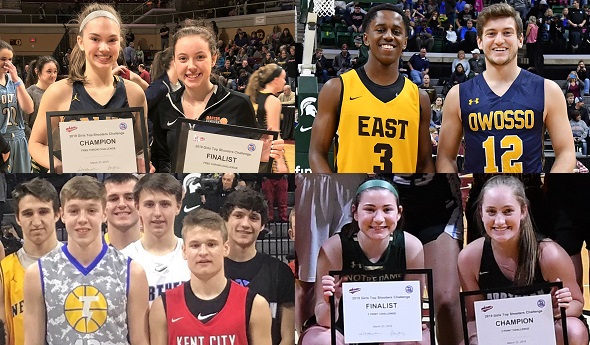
Top Shooters: This season’s BCAM top shooters contests again recognized the sharpest from the free-throw line and 3-point arc. This past weekend at Calvin College, Grand Rapids Forest Hills Northern’s Madi Stevenson won the 3-point contest with Pontiac Notre Dame Prep’s Sarah Stuart runner-up, while Saline’s Ella Stemmer won the free throw contest and Manton’s Abby Brown was second.
At Breslin, Mio’s Drew Hess won the 3-point challenge with Kent City’s Eli Carlson second. Zeeland East’s Clayton Dykhouse and Owosso’s Carson Bornefeld tied for the free throw championship.
(See photo above, clockwise from left: Girls free throw finalists, boys free throw finalists, girls 3-point finalists and boys 3-point finalists.)
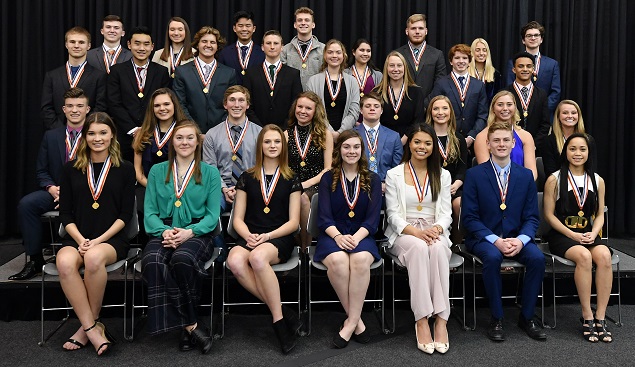
30th Scholar-Athlete Awards: Farm Bureau and the MHSAA presented 31 honorees with Scholar-Athlete Awards during Boys Finals weekend (one honoree was unable to attend). This year’s selections were honored at a banquet and then on the floor during halftime of the Division 3 Final.
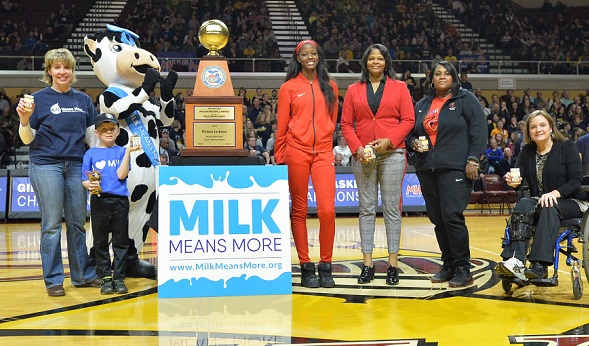
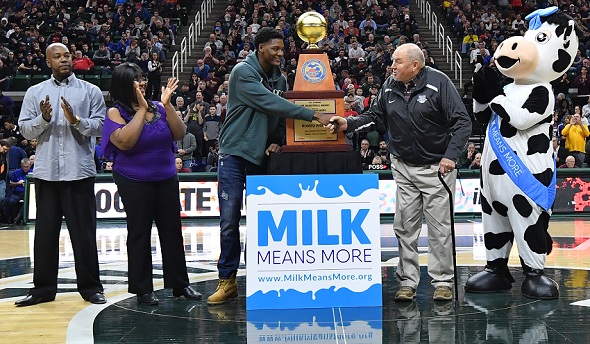
Miss Basketball & Mr. Basketball: Detroit Edison’s Rickea Jackson was recognized on-court as the Miss Basketball Award winner during Saturday’s Division 3 game before leading the Pioneers that evening to their third straight MHSAA title. Mr. Basketball Award honoree Romeo Weems accepted the trophy at Breslin as this year’s top senior on the boys side.
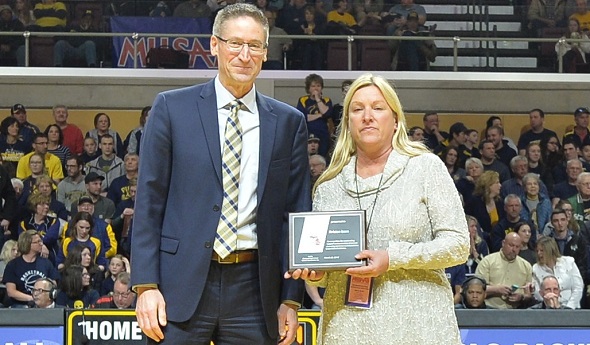
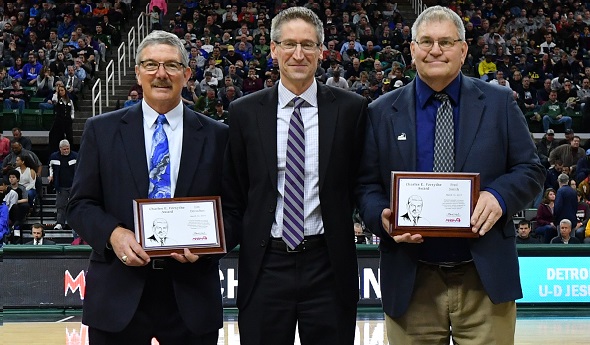
WISL & Forsythe Awards: Adrian Madison athletic director Kris Isom was honored Saturday as this year’s recipient of the MHSAA Women In Sports Leadership Award. The week prior, retired Negaunee and Brimley superintendent Jim Derocher and retired Buchanan, Benton Harbor, Comstock and St. Joseph Lake Michigan Catholic athletic director Fred Smith accepted Charles E. Forsythe Awards. All three were presented by Grand Haven Area Public Schools assistant superintendent Scott Grimes, who serves as president of the MHSAA’s Representative Council.
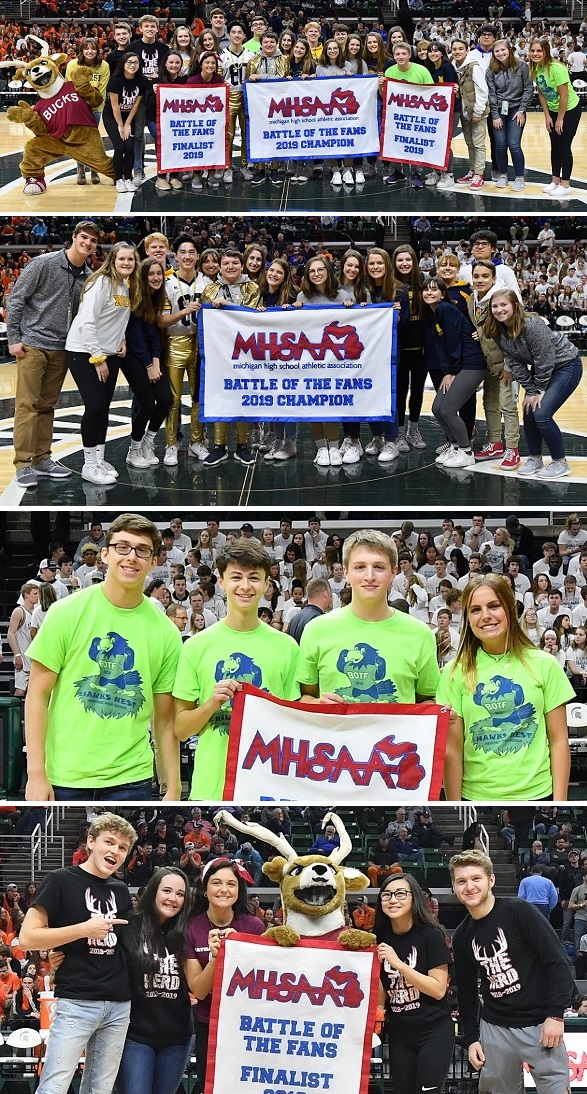
Battle of the Fans: Representatives from all three finalists from this year’s BOTF VIII – champion North Muskegon with Saginaw Heritage and Buchanan – took to the Breslin floor during the Division 2 Semifinals to receive their banners.