

Brush Up on the New Transfer Rule
July 18, 2019
By Rob Kaminski
MHSAA benchmarks editor
Eligibility under the new “sport-specific” transfer rule begins this coming fall after circulating extensively for nearly one school year.
Unless one of the stated 15 exceptions is met, participation during the 2018-19 school year determines eligibility for 2019-20.
The new rule adopted by the Representative Council at its May 2018 meeting has found support among most audiences. A transfer student’s eligibility in 2019-20 is based upon that student’s participation from this past school year (2018-19). It will be paramount for administrators and coaches to have awareness of the sports a transfer student participated in during the previous school year.
The long-standing 15 Exceptions to immediate eligibility, such as a full and complete residential change or a student moving between divorced parents by completing of an Educational Transfer Form, did not change.
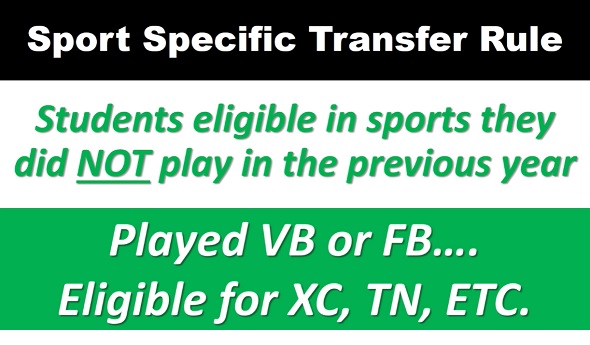
One might call the rule on the way out “The Fourth-Friday Transfer Rule.” Under this old rule, when a student enrolled at the new school determined his or her eligibility. Under the new Sport Specific Transfer rule, what a student played in the previous season determines eligibility.
The Council passed a more lenient rule on the one hand and more restrictive on the other. The more lenient aspect is a change that finds a transfer student ELIGIBLE in any sport in which he or she did not participate in a game or a scrimmage in the previous school year.
The more restrictive portion tends to discourage students who change schools for sports reasons. A transfer student who did play a sport in the previous season – and who does not meet one of the 15 Exceptions – is NOT ELIGIBLE in that sport for the next season. If a student changes schools in mid-season, the student would be ineligible for the rest of that season in that sport and the next season for that sport.
Participation under this and other rules means playing in an interscholastic game or scrimmage after starting the 9th grade at any high school. It does not mean practice, but entering an interscholastic game, meet or scrimmage in any way. It also may involve more than one sport, so a three-sport athlete who does not have a residential change and transfers would be ineligible in those sports during the next school year – but eligible for any other sport. It also means a student cut from a team – one who never entered a scrimmage or game – may transfer and play without delay for that new school’s team. It may also mean that a student who meets one of the stated exceptions such as a residential change but enrolls in a school other than her or his school of residence, would have eligibility in sports not played in the previous year.
The new rule will tend to discourage students from changing schools for sports because they would be ineligible in any sport they have played in school the previous season for that sport. It will increase participation for some students who were otherwise not eligible under the current rule.
It is always best to contact school athletic directors who can connect with the MHSAA to verify eligibility prior to enrollment.
If the student’s new school requests in writing, the MHSAA Executive Committee may approve a waiver that reduces the period of ineligibility to 90 scheduled school days at the new school if the change of schools was for compelling reasons demonstrated with outside documentation having nothing to do with sports, curriculum, finances, and school demographics. The Executives Committee also has authority to approve immediate eligibility.
Scholars & Athletes 2019: Class B
By
Geoff Kimmerly
MHSAA.com senior editor
February 11, 2019
By Geoff Kimmerly
Second Half editor
The Michigan High School Athletic Association has selected eight student-athletes from Class B member schools to receive scholarships through the MHSAA/Farm Bureau Insurance Scholar-Athlete Award program.
 Farm Bureau Insurance, in its 30th year of sponsoring the award, will give $1,000 college scholarships to 32 individuals who represent their member schools in at least one sport in which the Association sponsors a postseason tournament. The first 30 scholarships are awarded proportionately by school classification and the number of student-athletes involved in those classes; also, there are two at-large honorees who can come from any classification.
Students applying for the Scholar-Athlete Award must be carrying at least a 3.5 (on a 4.0 scale) grade-point average and have previously won a letter in a varsity sport in which the Michigan High School Athletic Association sponsors a postseason tournament. Other requirements for the applicants were to show active participation in other school and community activities and produce an essay on the importance of sportsmanship in educational athletics.
Each of the scholarship recipients will be honored at a halftime ceremony during the Class C Boys Basketball Final, March 16, at the Breslin Student Events Center in East Lansing. Commemorative medallions will be given to the finalists in recognition of their accomplishments.
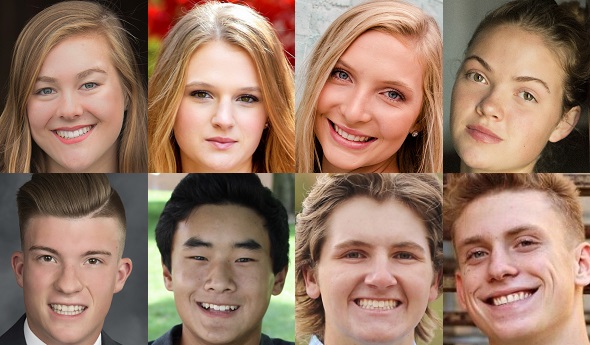
The Class B Scholar-Athlete Award honorees are: Lauren Anderson, Charlotte; Chloe Bartz, Edwardsburg; Olivia Haring, Clare; Zoe Neirink, Frankenmuth; Noah Doederlein, Carleton Airport; Justin Luo, Bloomfield Hills Cranbrook Kingswood; Pierce Morrissey, Big Rapids; and Connor Swinehart, Newaygo.
Overviews of the scholarship recipients of the Class B Scholar-Athlete Award follow. A quote from each recipient's essay also is included:
 Lauren Anderson, Charlotte
Played fourth season of varsity basketball, played four of varsity volleyball and will run her fourth of track & field this spring. Earned all-league recognition in volleyball and academic all-league honors multiple seasons in all three sports plus academic all-state in basketball and volleyball. Served as captain of volleyball and basketball teams. Will graduate high school with 24 college credits and carries a 4.0 GPA. Participating in second year of National Honor Society and earned Distinguished Scholar Award from Oakland University. Participating in fourth years of marching band, symphony band and drumline and has served as the percussion section leader and lead snare in those respective groups. Volunteers in youth basketball and volleyball camps and serves as middle school track timer, and earned Junior Rotarian award. Will attend Oakland and study nursing.
Essay Quote: “High school athletics are a minefield. With the pressure of school and other commitments, we rarely have time to think outside ourselves, and that becomes a problem when one’s emotions are not taken into account. When people get stressed or anxious, we don’t perform to the best of our abilities; we lag in our skills. When we get to that point, we need someone to be there, to yank us back from that ledge, to remind us that we are not alone, to give us confidence in our ability to perform as an athlete.”
 Chloe Bartz, Edwardsburg
Playing fourth season of varsity basketball, ran four of cross country and will participate in fourth of track & field this spring. Qualified for MHSAA Finals three times in track and holds school record as part of 3,200-meter relay. Helped basketball team to two league and two District titles and best finish in school history. Served as captain of all three teams and earned scholar athlete awards all four years. Serving fourth year on student council with two as vice president and participating in second year of National Honor Society with one as treasurer. Participating in third years on youth advisory council and yearbook staff – with two as editor – and fourth year as part of Students Against Destructive Decisions chapter with two as chairperson. Earned regional first place and qualified for state competition twice as part of Science Olympiad team. Will attend Loyola University Chicago and study biochemistry.
Essay Quote: “Sports are often said to reveal character, but I am of the opinion they build it. As student athletes we are reminded daily of the effort, time and passion needed to succeed on the sports field as well as in the classroom. It’s essential for sportsmanship to be practiced as much as a jump shot, for at the end of the game it won’t be a person’s last-second shot you remember in 20 years.”
 Olivia Haring, Clare
Playing third season of varsity basketball, ran four of cross country and will participate in fourth of track & field this spring; also played junior varsity softball as a freshman. Qualified for MHSAA Finals in cross country all four seasons and track her first three and helped those teams to a combined seven league championships. Earned all-conference, all-region and academic all-conference and all-state honors in those two sports, and has served as captain of all three of her varsity teams. Serving fourth year on student council and as student body president, and fourth year as part of Business Professionals of America and as co-president. Qualified for state BPA competition. Participating in second year of National Honor Society and has served as treasurer. Earned Presidential Scholarship and named Junior Business Student of the Year both by Northwood and carries a 3.96 GPA while dually enrolled at Mid Michigan College. Led fundraiser that collected more than $1,000 for breast cancer awareness. Will attend Northwood University and study finance with the intention of earning a master’s in business administration.
Essay Quote: “The high stakes of competitive athletics demand excellent sportsmanship. Failure to meet such expectations can be detrimental to the athlete, team and community. Witnessing unsportsmanlike conduct prompted positive change in my hometown.”
 Zoe Neirink, Frankenmuth
Ran four years of varsity cross country and will play her fourth of varsity soccer this spring. Served as captain of cross country team and qualified for MHSAA Finals in that sport all four seasons. Earned all-league recognition in both sports and all-state in soccer. Earned AP Scholar with Honor recognition and participates in National Honor Society. Competing in fourth years of quiz bowl and Science Olympiad; earned all-league honors and served as team captain for quiz bowl and medaled in regional competition and served as vice president for Science Olympiad. Playing fourth year in marching band and second as part of pit orchestra and served as marching band pit percussion section leader. Participating in volunteer and community service efforts and as part of 2019 Graduation Committee as selected by her teachers. Will attend Kenyon College in Ohio and study English, and intends to pursue a law degree.
Essay Quote: “The workload of being a student-athlete can be taxing, but things become easier when one stops regarding school and sports as two separate things. I see the same respect in my teammates cheering for all the runners in a cross country race as I do in a student helping another study for a hard test. The things that make us good students, good sports, and good people are all interwoven.”
 Noah Doederlein, Carleton Airport
Ran four seasons of varsity cross country and will run his fourth of track & field; also played junior varsity basketball as a sophomore. Earned all-league and all-academic honors for cross country and helped track team to conference championship in 2018. Earned AP Scholar with Distinction. Served as a team captain of both varsity teams, taking part as well on school’s Captains Council. Serving as class president for third year and also president of National Honor Society chapter. Served on Monroe County Youth Leadership Board and Monroe County 4-H Council. Selected for the 4-H State Youth Leadership Council and 4-H Capitol Experience Steering Committee, and as part of Michigan delegation to multiple national events. Participating in fourth year of Interact club and third of Michigan Youth Leadership (MYLead), and earned multiple local awards for academics and community involvement and also a 2017 Michigan Key Club Award. Will attend Michigan State University and study political science.
Essay Quote: “The communication, teamwork, and goal-setting skills that accompany educational athletics are inherent, while hard work and dedication teach students integrity. But, when poor sportsmanship infects athletics, the lessons being taught are misconstrued. When players, parents, and coaches begin to attack, taunt, or humiliate competitors, petty differences become more important than the skills players are attempting to learn.”
 Justin Luo, Bloomfield Hills Cranbrook Kingswood
Played four seasons of varsity tennis, helping team to three MHSAA Finals and Regional championships and earning an individual league title playing singles. Earned all-state and all-league honors and served as team captain. Participating in fourth year of debate and earned one gold and three silver bids to national Tournament of Champions. Qualified for National Catholic Forensics League Tournament and National Speech and Debate Association Tournament, and was named top speaker at 2017 debate state championship. Playing fourth year of clarinet for school’s band, orchestra and pit orchestra and has earned a number of solo/ensemble prizes and served as concertmaster. Participating in third year of American Youth Leadership Foundation and fourth tutoring as part of school’s Horizons Upward Bound program. Serves as president of Horizons and as Peer2Peer student leader. Will attend Princeton University and study operations research and financial engineering.
Essay Quote: “When sportsmanship is not upheld, people begin to solely focus on winning and forget why we play sports. Cheating offers an easy escape for players to avoid dealing with adversity and learning a valuable lesson. Rather than have fun and build friendships, people become angry and are hurt. I have felt the pain firsthand and would not want that for anyone else. Thus, we must preserve sportsmanship in order to maintain the educational value of athletics.”
 Pierce Morrissey, Big Rapids
Will play fourth year of varsity golf this spring and has served as captain every season, and also played varsity basketball as a junior and varsity tennis as a freshman. Earned all-state golf honors his first three seasons and made all-state “Super Team” the last two as one of the top golfers regardless of division. Won Lower Peninsula Division 3 Final individual championship in 2018. Serving fourth year on student council and Mecosta County Youth Advisory Council and second on MHSAA’s Student Advisory Council. Also serving fourth year on school’s Athletic Leadership Council and Climate Crew. Participating in fourth year of Project Outreach and this year as president, and was class representative for Fellowship of Christian Athletes chapter as freshman and sophomore. Participates in a number of volunteer projects including as mentor for youth golf. Will attend Michigan State University and study business.
Essay Quote: “A fundamental standard of educational athletics, sportsmanship is a code to separate the good athletes from exceptional athletes. A true "sportsman" has no room in their heart for selfish ambition. Of course, this selflessness doesn't happen in the blink of an eye. Most student-athletes would admit that their younger version of themselves had an abundance of maturing to do to become who they are today as a senior athlete.”
 Connor Swinehart, Newaygo
Playing third season of varsity basketball, played three of varsity football and will play third of varsity baseball this spring. Earned all-league honors a total of five times and all-state recognition in basketball, and all-state academic honors in baseball. Served as team captain multiple seasons for all three sports. Served three years as student council president and is participating in second year of National Honor Society. Has earned all As throughout high school. Participates is a variety of sports-related and community volunteer projects including as a peer math tutor. Will attend University of Michigan and study biomedical engineering.
Essay Quote: “I knew I could finish the game, but another victory meant more for me than the actual win. Sitting in the dugout was a teammate of mine who has stuck with baseball his whole life and loves the game with all of his heart. He is a special education student with disabilities, which limits him from consistent playing time, but that does not mean he cannot throw the ball. My teammate has one of the biggest arms on the team. … I tell (my coach) I want (my teammate) to finish the game. I want him to get the victory. He deserves the victory. … These are the moments where sportsmanship is important. Putting a teammate’s needs and desires before your own.”
Other Class B girls finalists for the Scholar-Athlete Award were: Kamryn Cushway, Big Rapids; Salena Prakah-Asante, Bloomfield Hills Cranbrook Kingswood; Eleri Giem, Boyne City; Daisy Ansel, Comstock; Sarah Bidgood, Comstock Park; Bridget Kohane, Grand Rapids West Catholic; Dana Wila, Grand Rapids West Catholic; Lindsey Jurecki, Grosse Ile; Robin LeFevere, Imlay City; Sophie Moccio, Milan; Emily Unger, Montague; and Mallory Kean, Yale.
Other Class B boys finalists for the Scholar-Athlete Award were: Sam Bussler, Battle Creek Harper Creek; Clark Doman, Bloomfield Hills Cranbrook Kingswood; Alex Netzley, Cadillac; Adam Bruce, Gladstone; Jack Perry, Michigan Center; Michael Gormley, North Branch; Isaac Waffle, Olivet; Tommee Smith, Sparta; Cooper Clark, Stevensville Lakeshore; Dillon Mochty, Tawas; Dylan Day, Tecumseh; and Ethan McKenzie, Whitehall.
The Class C and Class D scholarship award recipients were announced Feb. 5, and the Class A honorees will be announced Feb. 19.
Farm Bureau Insurance of Michigan was founded in 1949 by Michigan farmers who wanted an insurance company that worked as hard as they did. Those values still guide the company today and are a big reason why it is known as Michigan’s Insurance Company, dedicated to protecting the farms, families, and businesses of this great state. Farm Bureau Insurance agents across Michigan provide a full range of insurance services—life, home, auto, farm, business, retirement, Lake Estate®, and more—protecting nearly 500,000 Michigan policyholders.
The MHSAA is a private, not-for-profit corporation of voluntary membership by more than 1,500 public and private senior high schools and junior high/middle schools which exists to develop common rules for athletic eligibility and competition. No government funds or tax dollars support the MHSAA, which was the first such association nationally to not accept membership dues or tournament entry fees from schools. Member schools which enforce these rules are permitted to participate in MHSAA tournaments, which attract more than 1.4 million spectators each year.