

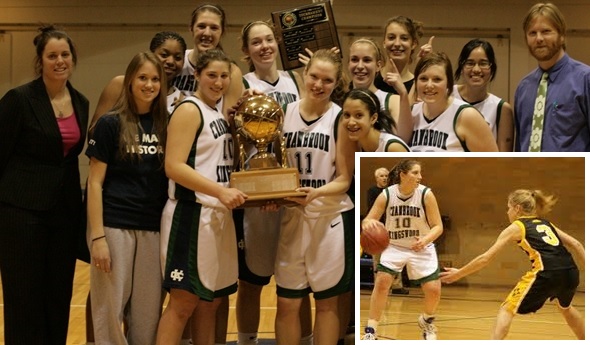
Cohen Champions Treatment, Technology
By
Geoff Kimmerly
MHSAA.com senior editor
March 10, 2014
Abby Cohen was looking for a problem to solve.
Two years later, she’s potentially only one more year from helping relieve a medical dilemma faced by 25 million Americans.
And the most impressive part might be that she graduated from high school a mere five years ago and is 23 years old.
 Cohen, a 2009 MHSAA Scholar-Athlete Award winner as a senior at Bloomfield Hills Cranbrook-Kingswood, certainly could be called proactive, going back to her days as a volleyball, basketball and soccer standout for the Cranes. Less than a year after graduating from Washington University in St. Louis, Mo., she’s co-founder and co-CEO of Sparo Labs, which seeks to provide asthma sufferers with a proactive way of monitoring their symptoms and improving their treatments.
“Everyone has a different perspective on how to go about doing things,” Cohen said. “For me, growing up trying to improve in sports, I’d write down a list of things to do every day and actually do them, follow through. That aspect of always wanting to get better, and improve, is something that’s carried through to the rest of what we do at Sparo and in general how I approach things.”
 On March 22, the MHSAA and Farm Bureau Insurance will recognize a 25th class of Scholar-Athlete Award winners. In advance of the celebration, Second Half has caught up with some of the hundreds who have been recognized (see additional links at the bottom of this page).
Cohen, who also served on the MHSAA Student Advisory Council from 2007-09, chose Washington based on its strong engineering problem and successful women’s basketball program. She studied bio-medical engineering and was a freshman on the Bears team that defeated Hope College for the Division III national championship in 2010.
But that first season was followed by a series of ankle injuries that required reconstructive surgery – and, effectively, ended her collegiate sports career. She still can play pick-up games, but four-hour daily practices and the other commitments of a varsity program would've been too much.
She missed basketball. But the end of her competitive career on the court, as it turned out, allowed more time to dive into a new pursuit – and, in her words, “work with another kind of team.”
“I’m a big believer in everything happens for a reason,” Cohen said. “It was disappointing having to have surgery to make everything feel better, for the long term, not just basketball. For me at that time, I didn't appreciate that with the extra time I could have, I could take the time to try new things, make the world a better place.”
Cohen planned at first to eventually become a physician. She shadowed a number of doctors, but decided that in the long run she could have a greater impact as an engineer designing products physicians could use.
In addition to her classwork, she helped form an extracurricular entrepreneurial group – and set out for an issue in need of repair. She and her now-business partner Andrew Brimer didn't realize how many Americans are affected by asthma, “that respiratory diseases are the only ones getting worse over time rather than getting better. That although technology is improving, why it’s not making a dent.”
They set out find out and make that dent themselves.
Through a series of interviews with patients, doctors, respiratory therapists and others in the field, Cohen and Brimer got an idea what could help – an affordable, easy-to-use device to allow patients to monitor on their own their symptoms so they can better manage them and the treatments to help. Cohen and Brimer designed a device that plugs into a smart phone and allows patients to blow into it like a whistle and register lung function readings – while also collecting data on medications, pollen counts, and other variables that affect lung function. Their device also should dent the health care costs that go with current testing, which generally requires an office visit.
Sparo will work over the next six months to improve its app interface and user experience, and then submit for Food and Drug Administration approval at the end of this year or the beginning of 2015 – with the hope it will then become available to patients later next spring.
Cohen is based in St. Louis, where she and Brimer have been able to work with three large local hospitals and within a nurturing entrepreneurial community. Brimer's brother owns a tech education company in New York which has provided additional support as she and Brimer discussed what was possible. “We were talking to patients and physicians, and it just seemed like the right thing to do,” Cohen said. “If we weren’t going to do this, who was?”
Cohen and Brimer have won 9 of 11 entrepreneurship grant competitions they've entered, netting more than $300,000 to get their lab rolling and allow them to hire two more engineers. Long-term, today’s work could just be the start of what Cohen hopes eventually will reach into developing countries as well.
She remains in touch with a number of teachers at Cranbrook-Kingswood – also, her mother Sheila Cohen teaches sixth-grade math at the school – and she spoke there at the end of 2013 as part of a TEDx event.
As she continues to build her team, Cohen is reminded of additional lessons she learned on the courts and soccer field – including a major one that will continue to pay as Sparo expands.
“Learning how to work on a team, with really different personalities, different people who all play different roles,” Cohen said. “That really came from sports – the ability to work with people and reach one common goal.”
Click to read the series' first installments:
- 25 Years Later, Scholar Athletes Shine On
- On Call as Doctor, Director, Mom
- "Mailloux Management" Goes Global
- Goorhouse Gives Back at Home
PHOTO: Abby Cohen (10) helps her teammates hoist a trophy while a player at Bloomfield Hills Cranbrook-Kingswood in 2009. (Photo courtesy of Cranbrook-Kingswood.)

Clipping Clipped as 2016-17 Begins
August 5, 2016
By Geoff Kimmerly
Second Half editor
Clipping has been eliminated in high school football, the biggest playing rules change on the horizon for member schools of the Michigan High School Athletic Association, which formally begin practice for 2016-17 fall sports next week.
Practice in football must begin on Aug. 8 for all schools wishing to begin regular-season games the weekend of Aug. 25-27. Schools must have 12 days of preseason practice at all levels before their first game, and those 12 days of practice may not occur before 16 calendar days.
Practice sessions for all other sports begin Wednesday (Aug. 10). In golf and tennis, competition may commence no earlier than after three separate days of team practice, and not before seven calendar days. The first day competition may take place in golf and tennis is Aug. 17. In all other fall sports, contests can take place after seven days of practice for the team and not before nine calendar days. The first day competition may take place in cross country, tennis, soccer, swimming and diving, and volleyball is Aug. 19.
This fall, two football dates again precede Labor Day, and a number of MHSAA schools will play their first varsity games on Thursday, Aug. 25. In Week 1, 131 varsity games will be played on Thursday, 169 contests will be played on Friday, and 17 games will be played on Saturday. In the second week, 245 games will take place on Thursday, 62 will be played on Friday and 6 contests are on Saturday.
Eliminating clipping from the high school game is the latest step in the national playing rules promulgated by the National Federation of State High School Associations. Clipping previously was permitted in the free-blocking zone when it met three conditions; however, clipping is now illegal anywhere on the field at any time. According to the rule, the free-blocking zone is defined as a rectangular area extending laterally 4 yards either side of the spot of the snap and 3 yards behind each line of scrimmage.
A few notable changes will go into effect for other fall sports:
• In cross country, a participant who assists an injured or ill competitor when the appropriate health care professional is not available no longer will be disqualified from the race; only the runner receiving assistance will be disqualified for not finishing the race unassisted.
• In soccer, changes were made to the offside rule that makes it match offside rules for the NCAA and FIFA/USSF. The most notable change states that a player in an offside position receiving the ball from an opponent who deliberately plays the ball (except from a deliberate save) is not considered to have gained an advantage and can move ahead toward attempting to score a goal. A player who does receive the ball while in offside position after a deliberate save remains offside, and the result is an indirect kick for the defending team.
• Also in soccer, eliminating of rough play will be a point of emphasis this school year. Rough play including contact above the shoulder often results in player injury.
• In volleyball, a change to rules on uniforms aims to make the libero more recognizable from all angles. Beginning this fall, the libero, her teammates, or both will be required to wear a solid-colored uniform top; the libero’s top must clearly contract the predominant color(s) of her teammates’ uniform tops. Also related the uniforms, soft hair devices, formerly no more than two inches in width, may now be up to three inches in width.
• Also in volleyball, a service toss that contacts a basketball backboard or its supports in a vertical position over the serving area is a service fault and not eligible for a re-serve. The opponent receives a point and the next serve.
The 2016 Fall campaign culminates with postseason tournaments beginning with the Upper Peninsula Girls Tennis Finals the week of Sept. 26, and wraps up with the 11-Player Football Playoff Finals on Nov. 25 and 26. Here is a complete list of fall tournament dates:
Cross Country:
U.P. Finals – Oct. 22
L.P. Regionals – Oct. 28 or 29
L.P. Finals – Nov. 5
11-Player Football:
Selection Sunday – Oct. 23
Pre-Districts – Oct. 28 or Oct. 29
District Finals – Nov. 4 or 5
Regional Finals – Nov. 11 or 12
Semifinals – Nov. 19
Finals – Nov. 25-26
8-Player Football:
Selection Sunday – Oct. 23
Regional Semifinals – Oct. 28 or Oct. 29
Regional Finals – Nov. 4 or 5
Semifinals – Nov. 12
Final – Nov. 18
L.P. Girls Golf:
Regionals – Oct. 5 or 6 or 7 or 8
Finals – Oct. 14-15
Soccer:
Boys L.P. Districts – Oct. 17-22
Boys L.P. Regionals – Oct. 25-29
Boys L.P. Semifinals – Nov. 2
Boys L.P. Finals – Nov. 5
L.P. Girls Swimming & Diving
Diving Regionals – Nov. 10
Swimming/Diving Finals – Nov. 18-19
Tennis:
U.P. Girls Finals – Sept. 28-Oct. 1
L.P. Boys Regionals – Oct. 6 or 7 or 8
L.P. Finals – Oct. 14-15
Girls Volleyball:
Districts – Oct. 31-Nov. 5
Regionals – Nov. 8 & 10
Quarterfinals – Nov. 15
Semifinals – Nov. 17-18
Finals – Nov. 19
The MHSAA is a private, not-for-profit corporation of voluntary membership by more than 1,400 public and private senior high schools and junior high/middle schools which exists to develop common rules for athletic eligibility and competition. No government funds or tax dollars support the MHSAA, which was the first such association nationally to not accept membership dues or tournament entry fees from schools. Member schools which enforce these rules are permitted to participate in MHSAA tournaments, which attract more than 1.4 million spectators each year.