

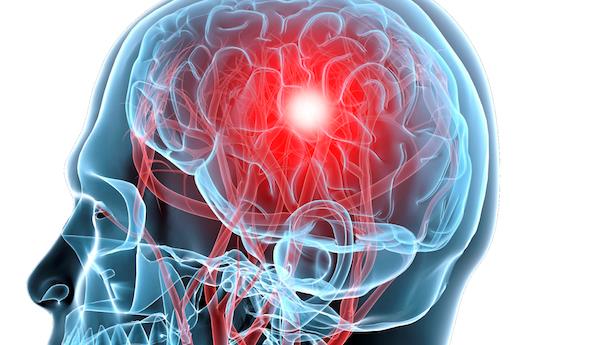
MHSAA Announces 2016-17 Concussion Data
August 7, 2017
By Geoff Kimmerly
Second Half editor
The Michigan High School Athletic Association has completed its second year of collecting head injury reports from member schools as it continues to build data that will assist in identifying trends and progress being made to reduce the incidence of head injuries in school sports.
Following a first mandate to do so in 2015-16, member schools again were required to report head injuries to the MHSAA identifying the sport that each student-athlete was participating in and whether the injury was sustained during practice or competition. As reporting for the 2017-18 school year is now underway, schools again are required to designate if potential concussions occur during competition or practice and at which level – varsity, junior varsity or freshman.
The full report of all head injuries experienced during 2016-17 by student-athletes at MHSAA member high schools – including percentages by sport (per 1,000 participants), gender and team level, as well as data tracking when athletes returned to play – is available on the Health & Safety page of the MHSAA Website.
As with the first year of reporting, the MHSAA received data from more than 99 percent of its member high schools after the fall, winter and spring seasons and continued to track each injury report through its conclusion this summer. Member junior high and middle schools also were allowed, although not mandated, to report their potential head injuries; and those findings are not part of the published report.
The 2016-17 concussion report found an 11-percent decrease in the number of confirmed concussions from the previous year. Student-athletes at MHSAA member high schools encountered during 2016-17 a total of 3,958 head injuries – or 5.2 per member school, similar but lower than the 2015-16 average of 5.9. Total participation in MHSAA sports for 2016-17 was 283,625 – with students counted once for each sport he or she played – and only 1.4 percent of participants experienced a head injury; that percentage in 2015-16 was 1.6.
However, MHSAA Executive Director John E. “Jack” Roberts said that while it’s significant to note the similarity in those statistics over the first two years of injury report collection, the lower percentages in 2016-17 don’t necessarily represent a trend – that conclusion can only be made after more data is collected in years to come. Some differences in data from the first year to the second could be the result of schools’ increased familiarity with the reporting system, the refinement of the follow-up reporting procedure and other survey error that is expected to decrease with future surveys.
“Our first survey in 2015-16 raised some initial themes, and the data we collected this past year and will continue to collect will help us identify the trends that will guide our next steps in reducing head injuries in interscholastic athletics,” Roberts said. “However, the necessity for more data to determine these trends should not delay our efforts to experiment with more head protection and modified play and practice rules in contact sports like ice hockey, soccer, wrestling and lacrosse – which all ranked among the top 10 sports for numbers of head injuries per thousand participants.
“We will continue to look for ways to make our good games better and our healthy games safer, and the collection of this data will continue to prove key as we work toward those goals.”
Although the total number of confirmed concussions was significantly lower in 2016-17, a number of findings detailing those injuries fell in line with results of the 2015-16 survey.
Boys experienced 2,607 – or 66 percent – of those injuries, nearly the same ratio as 2015-16 and as boys participation in sports, especially contact sports, remained higher than girls. More than half of head injuries – 55 percent – were experienced by varsity athletes, which also fell within a percent difference of last year’s findings.
A total of 2,973 head injuries – or 65 percent – came in competition as opposed to practice. More than half took place during either the middle of practice or middle of competition as opposed to the start or end, and 52 percent of injuries were a result of person-to-person contact. The largest percentage of athletes – 27 percent – returned to activity after 6 to 10 days, while 23 percent of those who suffered head injuries returned after 11-15 days of rest. All of these findings were within 1-4 percent of those discovered from the 2015-16 data.
Contact sports again revealed the most head injuries. Ranking first was football, 11 and 8-player combined, with 44 head injuries per 1,000 participants – a decrease of five head injuries per 1,000 participants from 2015-16. Ice hockey repeated with the second-most injuries per 1,000, with 36 (down two injuries per 1,000 from 2015-16), and girls soccer was again third with 28 head injuries per 1,000 participants (also down two from the previous year).
In fact, after football and hockey, four of the next five sports to show the highest incidences of head injuries were girls sports – girls soccer followed by girls basketball (23 per 1,000), girls competitive cheer (22) and girls lacrosse (20). Although girls basketball again showed the fifth-highest ratio, it did see a decline of six injuries per 1,000 participants from 2015-16.
Startling indications of another potential trend were seen again in the number of reported head injuries suffered by girls and boys playing the same sports. Soccer, basketball and baseball/softball are played under identical or nearly identical rules. Just as in 2015-16, females in those sports reported significantly more concussions than males playing the same or similar sport.
Female soccer players reported double the concussions per 1,000 participants as male soccer players, while female basketball players reported nearly triple the number of concussions per 1,000 participants (23 to 8). Softball players reported 11 concussions per 1,000 participants, and baseball players reported four per 1,000. The numbers from all three comparisons remained consistent from what the survey found in 2015-16.
It is the hope that Michigan’s universities, health care systems and the National Federation of State High School Associations will take part in analyzing the data and questions that have arisen during the past two years. Michigan State University’s Institute for the Study of Youth Sports submitted a paper titled “Gender Differences in Youth Sports Concussion” based on the 2015-16 results, and that subject will remain closely monitored in 2017-18 and beyond.
“The Institute’s research concluded that there is merit for believing females may be more susceptible than males to having concussions because of structural differences to the neck and head, and also due to neurological differences in the brains of females and males. But the findings also show merit for believing females may be more honest in reporting concussions,” Roberts said.
“We need to find out why. Are girls just more willing to report the injury? Are boys hiding it? These are some of our most important questions moving forward, and they will be critical in our efforts to educate athletes, their parents and coaches on the importance of reporting and receiving care for these injuries immediately.”
Schools report possible concussions online via the MHSAA Website. Reports are then examined by members of the MHSAA staff, who follow up with school administrators as those student-athletes continue to receive care and eventually return to play. Student privacy is protected.
The reporting of possible concussions is part of a three-pronged advance by the MHSAA in concussion care begun during the 2015-16 school year. The MHSAA completed this past spring (2017) the largest-ever state high school association sideline concussion testing pilot program, with a sample of schools from across the state over the last two years using one of two screening tests designed to detect concussions. The second year of the pilot program (2016-17) allowed participating schools to use the sideline detection tests in all sports but mandated they be used in sports (11 total over three seasons) showing the highest prevalence of concussions.
The MHSAA also was the first state association to provide all participants at every member high school and junior high/middle school with insurance intended to pay accident medical expense benefits – covering deductibles and co-pays left unpaid by other policies – resulting from head injuries sustained during school practices or competitions and at no cost to either schools or families. During 2016-17, a total of 139 claims were made – 20 fewer than in 2015-16 – with football (44) and girls basketball (27) the sports most cited in those claims for the second straight year.
Previously, the MHSAA also was among the first state associations to adopt a return-to-play protocol that keeps an athlete out of activity until at least the next day after a suspected concussion, and allows that athlete to return to play only after he or she has been cleared unconditionally for activity by a doctor (M.D. or D.O.), physician’s assistant or nurse practitioner.
In addition, the MHSAA’s Coaches Advancement Program – which includes courses that must be completed by all varsity head coaches hired for the first time at a member school – has augmented for this fall its already substantial instruction on concussion care. Separately, rules meetings that are required viewing for all varsity and subvarsity head and assistant coaches at the start of each season include detailed training on caring for athletes with possible head injuries.
The MHSAA is a private, not-for-profit corporation of voluntary membership by more than 1,400 public and private senior high schools and junior high/middle schools which exists to develop common rules for athletic eligibility and competition. No government funds or tax dollars support the MHSAA, which was the first such association nationally to not accept membership dues or tournament entry fees from schools. Member schools which enforce these rules are permitted to participate in MHSAA tournaments, which attract more than 1.4 million spectators each year.
Finalists Announced for 2025-26 MHSAA/Farm Bureau Insurance Scholar-Athlete Awards
By
Geoff Kimmerly
MHSAA.com senior editor
January 20, 2026
The 120 finalists for the Michigan High School Athletic Association's Scholar-Athlete Awards for the 2025-26 school year, presented by Farm Bureau Insurance, have been announced.
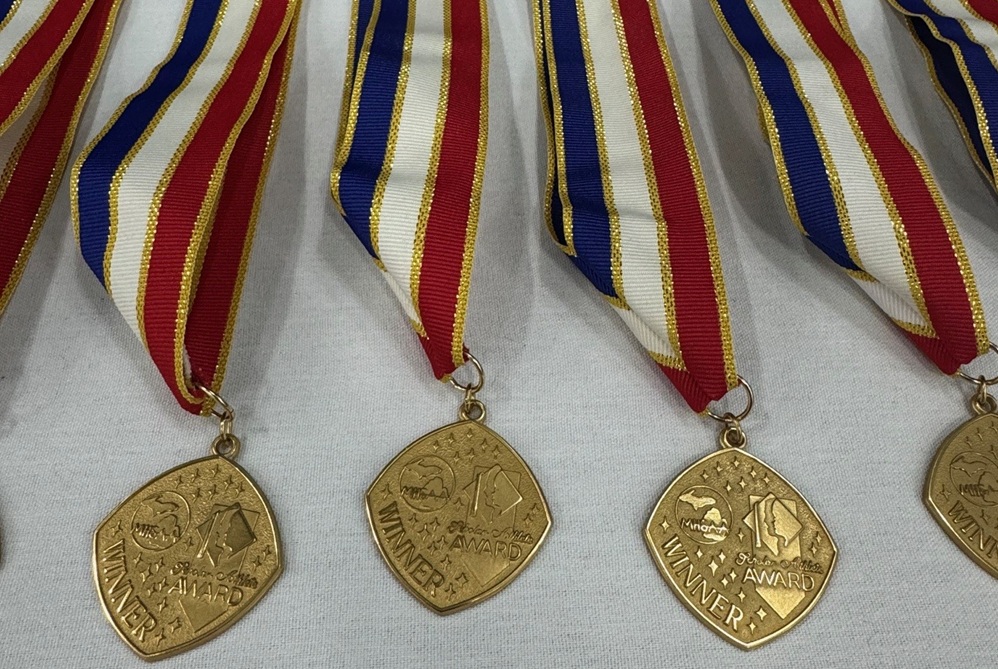
 The program, in its 37th year, has recognized student-athletes since the 1989-90 school year and again this winter will honor 32 individuals from MHSAA member schools who participate in at least one sport in which the Association sponsors a postseason tournament.
Farm Bureau Insurance underwrites the Scholar-Athlete Awards and will present a $2,000 scholarship to each recipient. Since the beginning of the program, 991 scholarships have been awarded.
Scholarships will be presented proportionately by school classification, with 12 scholarships to be awarded to Class A student-athletes, six female and six male; eight scholarships awarded to Class B student-athletes, four female and four male; six scholarships awarded to Class C student-athletes, three female and three male; and four scholarships awarded to Class D student-athletes, two female and two male. In addition, two scholarships will be awarded at-large to minority recipients, regardless of school size.
Every MHSAA member high school could submit as many applications as there are scholarships available in its classification and could have more than one finalist. This year, 95 schools have a finalist, with Birmingham Groves and Flint Powers Catholic atop the list with three apiece. Twenty-one schools have two finalists: Ann Arbor Greenhills, Bay City Central, Birch Run, Bloomfield Hills, Bloomfield Hills Academy of the Sacred Heart, Bloomfield Hills Cranbrook Kingswood, Corunna, Detroit Country Day, Frankenmuth, Grand Ledge, Holland, Holland West Ottawa, Midland Dow, Mount Pleasant Sacred Heart, Negaunee, Northville, Okemos, Plymouth, Royal Oak, White Lake Lakeland and Yale.
Multiple-sport participation remains the norm among applicants. The average sport participation rate of the finalists is 3.02, up from 2.88 a year ago. There also are 82 three-plus sport participants in the finalists field, up from 75 in 2024-25, and all 31 sports in which the MHSAA sponsors postseason tournaments are represented — including field hockey and boys volleyball, which joined the MHSAA's championship lineup this school year for the first time.
Of 426 schools which submitted applicants, 20 submitted the maximum allowed. This year, 1,438 applications were received. All applicants will be presented with certificates commemorating their achievement. Additional Scholar-Athlete Award information, including a complete list of scholarship nominees, can be found on the Scholar-Athlete Award page.
The applications were judged by a 72-member committee of coaches, counselors, faculty members, administrators and board members from MHSAA member schools. Selection of the 32 scholarship recipients will take place in early February. Class C and D scholarship recipients will be announced Feb. 3, Class B scholarship recipients will be announced Feb. 10 and Class A scholarship recipients will be announced Feb. 17. All announcements will be made on the MHSAA Website.
To be eligible for the award, students must have a cumulative grade-point average of 3.50 (on a 4.0 scale) and previously have won a varsity letter in at least one sport in which the MHSAA sponsors a postseason tournament. Students also were asked to respond to a series of short essay questions and submit two letters of recommendation and a 500-word essay on the importance of sportsmanship in educational athletics.
Farm Bureau Insurance of Michigan was founded in 1949 by Michigan farmers who wanted an insurance company that worked as hard as they did. Those values still guide the company today and are a big reason why it is known as Michigan’s Insurance Company, dedicated to protecting the farms, families, and businesses of this great state. Farm Bureau Insurance agents across Michigan provide a full range of insurance services — life, home, auto, farm, business, retirement, Lake Estate®, and more — protecting nearly 500,000 Michigan policyholders.
The MHSAA is a private, not-for-profit corporation of voluntary membership by more than 1,500 public and private senior high schools and junior high/middle schools which exists to develop common rules for athletic eligibility and competition. No government funds or tax dollars support the MHSAA, which was the first such association nationally to not accept membership dues or tournament entry fees from schools. Member schools which enforce these rules are permitted to participate in MHSAA tournaments, which attract more than 1.4 million spectators each year.
2025-26 Scholar-Athlete Award Finalists
GIRLS CLASS A
Reese Beauleaux, Adrian
Asia Shi, Ann Arbor Huron
Lilamae Frank, Battle Creek Lakeview
Brynn Corrion, Bay City Central
Bella Matthews, Bay City Central
Lydia Binelli, Berkley
Jacey Roy, Birmingham Groves
Julia Yoder, Birmingham Groves
Ella Griffin, Bloomfield Hills
Sydney Behnke, Bloomfield Hills Cranbrook Kingswood
Justine Casey, Bloomfield Hills Cranbrook Kingswood
Laurin M. Edwards, Detroit Cass Tech
Grace Kim, Farmington Hills Mercy
Gracelynn Olson, Fruitport
Jade Queen, Grand Ledge
Maggie Telgenhof, Holland
Maggie Rothstein, Holland West Ottawa
Mattie Thompson, Okemos
Veda Keshavamurthy, Plymouth
Ava Mac Donald, Rochester Adams
Jillian Hayes, Saline
Arabella Glass, Waterford Kettering
Anna Linen, White Lake Lakeland
Meredith Peterson, White Lake Lakeland
BOYS CLASS A
Ari Blank, Birmingham Groves
Caleb Garrett, Birmingham Seaholm
Sajan Doshi, Bloomfield Hills
Kazutaka Suzuki, Canton
Ryan Dye, Detroit Catholic Central
Carson Soltis, DeWitt
Trevor Griffith, Flint Kearsley
Ian Deters, Grand Ledge
Eli Macauley, Grand Rapids Forest Hills Northern
Andrew Legg, Holland
Drew Rothstein, Holland West Ottawa
Wesley Rogers, Mason
Marcel Stork, Mattawan
Eamon Murray, Midland
Matthew Huang, Midland Dow
Matthew McGaugh, Midland Dow
Benjamin Hu, Northville
Amogh Mavatoor, Northville
Ian Morgan, Okemos
Sami Anwar, Plymouth
Omar Elghawy, Portage Northern
Luke Desnoyer, Royal Oak
Nicholas Maeso, Royal Oak
Owen Wohlfert, Traverse City West
GIRLS CLASS B
Sophia Hazzi, Ann Arbor Greenhills
Sydney Fox, Birch Run
Avery Pagel, Birch Run
Presley Chamberlain, Cheboygan
Madison Dennis, Durand
Natalie Foltz, Frankenmuth
Julia Noureddine, Grosse Ile
Phoebe Elder, Haslett
Brayley West, Lake Fenton
Aubrey Tarkiewicz, Marshall
Clare O'Donnell, Negaunee
Liliana Saunders, Negaunee
Lilly Thelen, Portland
Maya Grossman, Vicksburg
Ava Lassey, Wixom St. Catherine
Kendall Hollon, Yale
BOYS CLASS B
Parth Ashok, Ann Arbor Greenhills
Cole Haist, Big Rapids
Miles Dell, Chelsea
Nolan Carr, Corunna
Joel DeLorge, Corunna
Hugh Aaron, Detroit Country Day
Micah Zacks, Detroit Country Day
Möbius Stubblefield, Edwardsburg
Caleb Carignan, Flint Powers Catholic
Bryce Gross, Flint Powers Catholic
Logan Johnson, Flint Powers Catholic
Caden Sommerfield, Frankenmuth
Dylan Becksvoort, Holland Christian
Jaxxon Thelen, Ionia
Tucker Cole, Tecumseh
Jackson Kohler, Yale
GIRLS CLASS C
Anna Poppema, Bath
Hope Miller, Blissfield
Brynne Schulte, Elk Rapids
Addyson Rhodes, Grandville Calvin Christian
Molly Soper, Hanover-Horton
Izabella Latuszek, Laingsburg
Maya Carlson, Manistique
Ashley Carlson, Norway
Luella Whipkey, Oscoda
Emma Winans, Perry
Lillian Kwiatkowski, Rudyard
Irelynn Pachulski, Saranac
BOYS CLASS C
Ethan Stine, Bridgman
Joe Gaffney, Charlevoix
Gavin Comero, Ishpeming Westwood
Sean Siems, Kalamazoo Hackett Catholic Prep
Eli Smith, LeRoy Pine River
Grason Weber, Leslie
Sean Dammann, New Lothrop
Logan Slimko, North Muskegon
Drew Ruddy, Ottawa Lake Whiteford
Luke Paxton, Pewamo-Westphalia
Ryan Kowalczyk, Pinconning
Amos Miller, Saginaw Arts & Sciences Academy
GIRLS CLASS D
Audrey Stone, Bessemer
Madison Karakashian, Bloomfield Hills Academy of the Sacred Heart
Alexa Ross, Bloomfield Hills Academy of the Sacred Heart
Caila Fitchett, Dryden
Lorna Wiesen, Leland
Isabel Rookard, Mount Pleasant Sacred Heart
Hope Woolman, Sterling Heights Parkway Christian
Emily DelFavero, Wakefield-Marenisco
BOYS CLASS D
Zyan Breznik, Adrian Lenawee Christian
Ian Flanagan, Deckerville
Brady Jungwirth, Felch North Dickinson
David Wahl, Gaylord St Mary
Connor Hill, Hillsdale Academy
Noah Zeien, Mount Pleasant Sacred Heart
Jack Nelson, Ontonagon
Louis Kowalsky, West Bloomfield FJA