


MHSAA Provides Hot Weather Reminders
July 31, 2017
By Geoff Kimmerly
Second Half editor
As summer turns toward the beginning of fall sports practices next week, the MHSAA is providing a familiar but vital reminder that student-athletes need to prepare for activity in the hot weather that traditionally accompanies the beginning of August and the first training sessions of the school year.
Each year, the MHSAA provides information to its member schools to help them prepare for hot weather practice and game conditions during the late summer and early fall. Football practice can begin at MHSAA schools August 7, followed by first practices for all other fall sports August 9.
The topic of heat-related injuries receives a lot of attention at this time of year, especially when deaths at the professional, collegiate and interscholastic levels of sport occur, and especially since they are preventable in most cases with the proper precautions.
“We emphasize preparation for hot weather at the start of each fall, but this cannot be repeated enough: If we take precautions and plan as we should, heat illness is almost always preventable,” said John E. “Jack” Roberts, executive director of the MHSAA. “We encourage student-athletes to come to their first practice prepared for hot conditions. But coaches also are trained to assume not all student-athletes will be ready, and to be vigilant in making sure all participants are hydrating properly.”
A number of member schools continue to follow the MHSAA’s Model Policy for Managing Heat & Humidity, which while not mandated for member schools was adopted as a rule for MHSAA postseason competition in 2013. The plan directs schools to begin monitoring the heat index at the activity site once the air temperature reaches 80 degrees and provides recommendations when the heat index reaches certain points, including ceasing activities when it rises above 104 degrees.
The model heat & humidity policy is outlined in a number of places, including the publication Heat Ways, which is available for download from the MHSAA Website on the “Health & Safety” page.
To also assist in acclimatization, football practice rule changes adopted in 2014 allow for only helmets to be worn during the first two days, only shoulder pads to be added on the third and fourth days, and full pads to not be worn until the fifth day of team practice. The policy in detail can be found on the Football page of the MHSAA Website.
Heat, hydration and acclimatization continue to be focuses of the MHSAA’s required preseason rules meetings for coaches and officials. The online presentations discuss the need for good hydration in sports, regardless of the activity or time of year, and informs both how to recognize the early signs of heat illness and the immediate steps to take to respond to those symptoms. The MHSAA requires all head varsity, varsity assistant and subvarsity coaches at the high school level to complete the rules and risk minimization meeting requirement.
The first days of formal practices in hot weather should be more for heat acclimatization than the conditioning of athletes, Roberts reminded, and practices in such conditions need planning to become longer and more strenuous over a gradual progression of time. He noted that schools also must consider moving practices to different locations or different times of day, or change practice plans to include different activities depending on the conditions.
Roberts also noted that student-athletes should make sure to hydrate all day long – beginning before practice, continuing during and also after practice is done. Water and properly-formulated sports drinks are the best choices for hydration, while energy drinks, high-carbohydrate fruit juices (greater than eight percent carb content), carbonated and caffeinated beverages are among those that should be avoided.
The Health & Safety Resources page of the MHSAA Website has a number of links to various publications and information and a free online presentation on preventing heat illness from the National Federation of State High School Associations. Also accessible through the MHSAA Health & Safety page are resources from Sparrow Health System, a member of the Mayo Clinic Care Network, which lends expertise on-site at various MHSAA tournament events and provides an online “Ask the Experts” feature to connect MHSAA.com users with Sparrow sports medicine caregivers.
Visit MHSAA.com and click on "Health & Safety” in the top menu bar to find the information, or click the direct link provided above.
Rep Council Wrap-up: Fall 2012
December 7, 2012
A change in format for the Boys Basketball Finals highlighted actions taken by the Representative Council of the Michigan High School Athletic Association during its annual Fall Meeting, Nov. 30 in East Lansing.
Mirroring closely the format of the MHSAA Girls Basketball Finals, the Boys Finals will move this season from three to two sessions. The first session will tip off with the Class D Final at 10 a.m., followed by the Class A championship game. The second session will begin tentatively at 4:30 p.m. with the Class C Final and conclude with the Class B title game.
Previously, the Class A and B Finals were separate sessions, with the Class A Final tipping at 4 p.m. and Class B at 8 p.m. The change will make for a shorter day for spectators wishing to attend all four games, and also allow them to do so by purchasing tickets for two sessions instead of three.
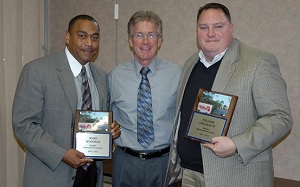 The Fall Meeting also saw the addition of two members to the 19-person council. Reese Public Schools athletic director Dave Derocher began a two-year term after being elected earlier this fall to represent Class C and D schools in the northern Lower Peninsula. Orlando Medina, who serves as athletic coordinator for Harrison Township L’Anse Creuse Public Schools, was appointed for a two-year term. He also previously served as athletic director at Detroit Cesar Chavez Academy. They fill positions formerly held by Beal City superintendent William Chilman IV and Romulus High School athletic director Mark Woodson, whose terms ended.
Also, Carmen Kennedy, principal at St. Clair Shores South Lake High School, was reappointed for a second two-year term. The Representative Council is the legislative body of the MHSAA. All but five members are elected by member schools. Four members are appointed by the Council to facilitate representation of females and minorities, and the 19th position is occupied by the Superintendent of Public Instruction or designee.
The most prominent points discussed at the Fall Meeting were risk minimization for athletes and possible strategies for making school sports safer. Among topics discussed were raising expectations for coaches’ participation in online safety courses and schools’ management of heat illness; the possible restructuring of practice policies in regards to hot weather; and game rules revisions to enhance safety especially in football, soccer and ice hockey.
The Council reviewed its previous actions on those topics, including discussions in December 2011 that led to the inclusion of health and safety content in online rules meetings. Council members considered a model policy for managing heat and humidity, and also a number of ideas collected during Fall Update meetings with administrators throughout the state.
No action was requested on those items at the Fall Meeting. Complete and vetted proposals are likely to be considered when the Council next meets in March and then May.
PHOTO: Outgoing Representative Council members Mark Woodson of Romulus (left) and William Chilman IV (right) are presented plaques for their service by MHSAA Executive Director Jack Roberts (middle) during the Fall Meeting.