


MHSAA Remembers Late Director Bush
By
Geoff Kimmerly
MHSAA.com senior editor
September 11, 2013
Allen W. Bush was a military man and had a military way about him.
And those traits no doubt were invaluable as the former U.S. Marine became a respected national voice during arguably the most transformative era in high school athletics.
Bush, who served as Executive Director the Michigan High School Athletic Association from the fall of 1968 through the summer of 1978, died Monday in Traverse City. He was 90.
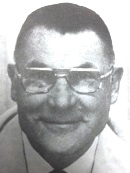 Bush oversaw some of the most significant developments in MHSAA history, chiefly the addition of girls sports – MHSAA tournaments existed for nine girls sports when he retired – plus the addition of football playoffs in 1975 and MHSAA tournaments in baseball, ice hockey and skiing.
“He led the MHSAA during simultaneously one of the most stressful and most exciting times as schools responded to federal legislation promoting opportunities for minorities and females,” current MHSAA Executive Director John E. “Jack” Roberts said. “Al Bush was among leaders who saw the opportunities instead of burdens of those laws.”
He began his tenure at the MHSAA on March 1, 1960, as Assistant State Director of Athletics to Executive Director Charles E. Forsythe. Bush’s designation changed to Associate Director in 1963, and on July 10, 1968 he was appointed to replace the retiring Forsythe as leader of the association.
An award bearing Bush’s name is bestowed by the MHSAA each spring to an administrator, coach, official, trainer, doctor, or member of the media who has at least 15 years of experience in Michigan interscholastic athletics with unusually frequent and significant contributions to the MHSAA.
Prior to joining the MHSAA, Bush taught mathematics, coached four sports and served as athletic director at different times during tenures at Battle Creek Central, Kalamazoo University, Dearborn and Bay City Handy high schools. Bush was a graduate of Kalamazoo University and later earned multiple bachelor’s degrees from Western Michigan University and a master’s in school administration from the University of Michigan. He was captain of the football team at WMU and received its Most Valuable Player and Athletic-Scholarship awards as a senior, and later was named Man of the Year in 1975 by WMU’s Alumni W Club.
Bush also studied at Princeton University and the University of Arizona and served six years of active duty with the U.S. Marine Corps during World War II and the Korean War. He was discharged with a rank of first lieutenant.
While at the MHSAA, Bush was a frequent contributor to the National Federation of State High School Associations. He served as chairperson of the committee that wrote the NFHS’s first swimming and diving rule book and also was a representative to the U.S. Olympic Committee.
A memorial service will take place at 11 a.m. Friday, Sept. 13, at Central United Methodist Church in Traverse City.
A summation written by late MHSAA historian Dick Kishpaugh during 1978 said the following of Bush's service to member schools:
"Through all of these varied and complex changes, the MHSAA has met its commitment to a high standard of excellence," Kishpaugh wrote.
"Al Bush is fallible, as we all are, but he needs to make no apologies. The accomplishments speak for themselves."
2023 Scholar-Athlete Award Recipients Announced in Class C & D
By
Geoff Kimmerly
MHSAA.com senior editor
February 7, 2023
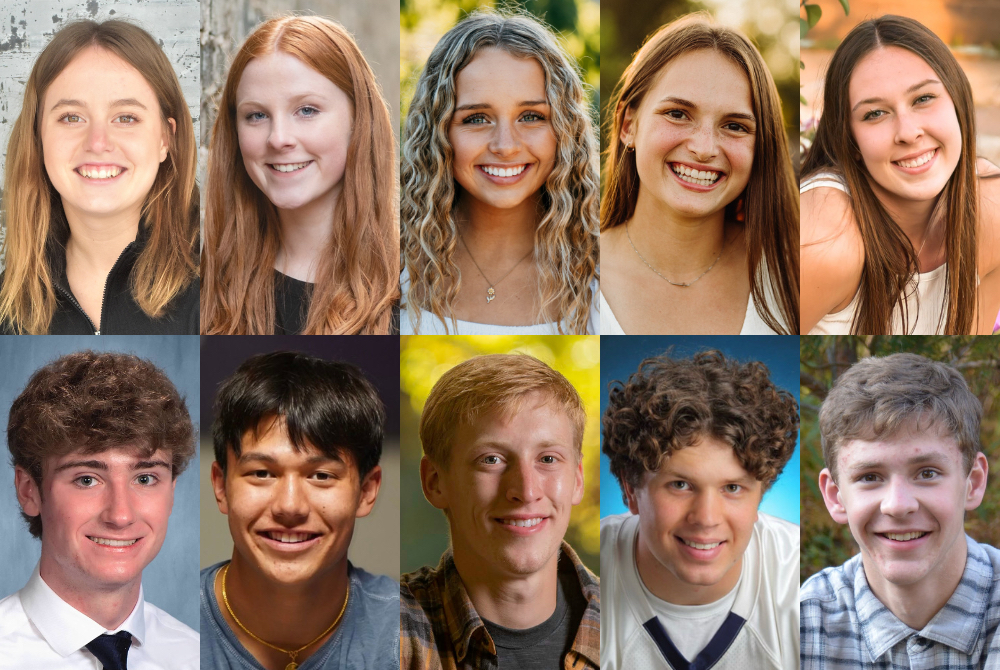
The Michigan High School Athletic Association has selected 10 student-athletes from Class C and D member schools to receive scholarships through the MHSAA/Farm Bureau Insurance Scholar-Athlete Award program.
 Farm Bureau Insurance, in its 34th year of sponsoring the award, will give $2,000 college scholarships to 32 individuals who represent their member schools in at least one sport in which the Association sponsors a postseason tournament. The first 30 scholarships are awarded proportionately by school classification and the number of student-athletes involved in those classes; also, there are two at-large honorees who can come from any classification.
Students applying for the Scholar-Athlete Award must be carrying at least a 3.5 (on a 4.0 scale) grade-point average and have previously won a letter in a varsity sport in which the Michigan High School Athletic Association sponsors a postseason tournament. Other requirements for the applicants were to show active participation in other school and community activities and produce an essay on the importance of sportsmanship in educational athletics.
The 32 scholarship recipients will be recognized March 25 during the MHSAA Boys Basketball Finals at the Breslin Student Events Center in East Lansing.
The Class C Scholar-Athlete Award honorees are Saylar Cuthrell, Cass City; Laina Harger, St. Charles; Quinn Watts, Fowler; Brennan Cannaday, Royal Oak Shrine Catholic; Noah Etnyre, Plymouth Christian Academy; and Ethan Green, Kingston.
The Class D Scholar-Athlete Award recipients are Megan Roberts, Hillsdale Academy; Makennah Uotila, Ontonagon; Ryan McDonell, Bay City All Saints; and Amos Norland, Dollar Bay.
Overviews of the scholarship recipients of the Class C Scholar-Athlete Award follow. A quote from each recipient's essay also is included:
(NOTE: If an athlete intended to play and was part of a spring sports team in 2020, that sport is counted among the athlete’s total although the season was canceled due to COVID-19.)
 Saylar Cuthrell, Cass City
Played three seasons of varsity volleyball, is playing her fourth of varsity basketball and will play her fourth of softball and compete in her third of track & field this spring. Led volleyball team to Division 3 Semifinals this past fall and helped basketball team to District title in 2021. Named all-state first team in softball, all-area in basketball and all-region in volleyball, and won Regional title in track to make MHSAA Finals in that sport. Earned academic all-state in volleyball and will graduate a three or four-year captain in three sports. Participating in second year as dual enrollment student. Served in various leadership positions including as student body president and president of Tuscola County Future Youth Involvement advisory council, and also participated in National Honor Society. Will attend Northwood University and study supply chain management.
Essay Quote: “Our (Semifinal) battle against Pewamo-Westphalia was soon to begin, and when the first whistle blew our student section cheered. What was so chilling about the student section was that it not only had Cass City kids but also the North Branch volleyball team as well. It wasn’t that we knew each other personally but simply because we both live in the thumb of Michigan and share that thumb pride. It was a feel-good statement and was heartfelt. What an amazing teaching moment for all in attendance.”
 Laina Harger, St. Charles
Played two seasons of varsity volleyball, is playing her third of varsity basketball and will play her third of varsity softball this spring. Led basketball teams to league and District championships, earning all-area honors in that sport and all-league recognition in volleyball. Served as team captain for both volleyball and basketball. Helped all three varsities to academic all-state honors. Participating in second year of National Honor Society and fourth years of class council, student council and as part of Saginaw County Youth Ambassador program. Serving as NHS chapter and class council vice president. Earned National Merit Rural/Small Town Recognition. Also participating in second year of school Link Crew and third as part of Read Across America program. Is undecided where she will attend college but intends to study physical therapy.
Essay Quote: “As my future plans became clear, I realized that playing in college wasn't the best fit for me. Understanding this, I struggled to figure out what I would get from playing sports if my intentions weren't to play college anymore. … It took me four years to finally see that there is so much more to high school sports than getting to the next level. Sports enhance how you treat others, your resilience in tough situations, your leadership skills, and so much more.”
 Quinn Watts, Fowler
Played two seasons of varsity volleyball, is playing her second of varsity basketball and will play her fourth of varsity softball this spring; also played junior varsity golf this fall. Helped basketball team to back-to-back Division 4 Finals championships and volleyball team to back-to-back District titles and a Regional championship. Served as captain of both of those teams. Serving fourth year as student council president and also has served as president during four years on school’s Student Athletic Advisory Council. Participating in third year of National Honor Society and second of National Technical Honor Society. Served as 4-H club leader and earned multiple grand champion awards for showing cattle. Participated in two years of Business Professionals of America and made regional finals. Is undecided where she will attend college but intends to study biology on a pre-medical track.
Essay Quote: “A state championship trophy was what my team and I had to show for this season; however, no trophy could exceed the richness of the lessons I learned. … We chose to act with respect, kindness, and generosity towards our opponents and allowed our performance on the court, rather than the voice of our words, prove our worth.”
 Brennan Cannaday, Royal Oak Shrine Catholic
Played four seasons of varsity soccer, will play his third of varsity lacrosse this spring and also played junior varsity basketball as a sophomore. Earned multiple all-state honorable mentions for soccer in helping that team to league and District titles, and earned all-league in helping lacrosse team to multiple league titles and Regional Finals appearance. Served as soccer captain and will serve as lacrosse captain in the spring. Participating in third year of National Honor Society and previously served two years in student government including as class president. Participated in DECA throughout high school, earning multiple state championships, and posted top scores across all district and state competitions multiple times. Served as DECA vice president of membership and vice president of career development. Will attend Michigan State University and study psychology.
Essay Quote: “There is no truer form of sportsmanship than to be praised by your opponent. … I have made an active effort to acknowledge the successes of not only my teammates but also the other teams as well because of the effect that one comment had on me. My favorite thing to do after games is to walk over to the other team’s bench and meet the coach and players.”
 Noah Etnyre, Plymouth Christian Academy
Played four seasons of varsity football and is wrestling fourth varsity season, both as part of cooperatives with Lutheran Westland, and will play fourth varsity season of baseball this spring. Qualified for MHSAA Individual Wrestling Finals first three seasons and finished runner-up as junior. Earned all-state in football and helped that team to league title, and earned multiple all-state honors in baseball helping that team to multiple District championships. Set program records in football and wrestling and served as captain of all three teams; also earned academic all-state honors in all three. Named National Wrestling Coaches Association/U.S. Marine Corps Character and Leadership All-American. Took classes from Schoolcraft College as dual-enrolled student for two years. Participating in third years of National Honor Society, National Art Honor Society and National Spanish Honor Society. Represented school on league leadership council. Will attend Calvin University and study biology.
Essay Quote: “(My Westland teammate) Jack and I share an intense affinity for competition and success, and this common desire presented itself in a garage gym, a local football field, and the 2021-22 athletic season. However, unlike most high school teammates, we never attended class in the same school building. … The importance of sportsmanship is understanding that a sport is so much more than a game. The game is simply there to bring people who need to be together, together.”
 Ethan Green, Kingston
Ran four seasons of varsity cross country, playing second season of varsity basketball and will play second season of varsity baseball and compete in fourth of track & field this spring. Earned all-state and academic all-state in cross country, and all-league in track. Ran in three MHSAA Cross Country Finals and won two Regional titles in that sport, and won Regional title as part of track relay to make those Finals as well. Also helped baseball team to District title. Served or will serve as captain of all four teams. Participating in second year of National Honor Society and fourth of student council and school leadership committee. Serving as class and NHS chapter president and will graduate as class valedictorian. Played four years in marching band and orchestra. Will attend Ferris State University and study optometry.
Essay Quote: “As good as it is to be competitive, character and respect towards others is so much more vital in life than having too big of an ego to show an act of sportsmanship. … Now when it's my turn on the court, I always thank our officials that are taking time away from their home and families, tell opposing coaches and players "good game," even after a loss. Another important thing I took away from this experience is that people are always watching, especially the youth.”
Other Class C girls finalists for the Scholar-Athlete Award were Alaina Andrews, Ottawa Lake Whiteford; Aziza Burgoon, Iron Mountain; Samantha Dietz, Watervliet; Kylie McGrath, Cass City; Abigail Meyer, Marlette; Tailor Onstott, Beal City; Claire Scholten, Charlevoix; Ruby Sierer, Clinton; and Danni Swihart, Hanover-Horton.
Other Class C boys finalists for the Scholar-Athlete Award were Riley DeSarbo, Monroe St. Mary Catholic Central; Ty Kohlmann, New Lothrop; Grant Mason, Manistique; Andrew Mleczko, Madison Heights Bishop Foley; Brock Murphy, Menominee; Blake O'Connor, Maple City Glen Lake; Logan Pflug, Cassopolis; Dirk Rierson, Unionville-Sebewaing; and Seth Vanderwest, Kent City.
Overviews of the scholarship recipients of the Class D Scholar-Athlete Award follow. A quote from each recipient's essay also is included:
(NOTE: If an athlete intended to play and was part of a spring sports team in 2020, that sport is counted among the athlete’s total although the season was canceled due to COVID-19.)
 Megan Roberts, Hillsdale Academy
Ran four seasons of varsity cross country and played four seasons of varsity volleyball, playing fourth season of varsity basketball and will compete in fourth of track & field this spring. Earned multiple all-state honors in track & field and cross country and all-state honorable mention in basketball, and academic all-state in cross country, volleyball and track. Helped 3,200 relay to Lower Peninsula Division 4 Finals championship and owns school records in two events. Served as team captain of all four teams and twice represented school at league leadership conference. Earned National Merit Rural/Small Town Recognition. Participating in third year of National Honor Society and fourth of student council, serving as vice president of the latter as a senior. Participating in service club for fourth year, and second as president. Will attend Hillsdale College and study biology.
Essay Quote: “I have found that one of the greatest parts of sports in educational athletics is the friendships made both inside and outside of my team. Although you could become friends with an opponent off the court, most of my friendships were formed on the playing field, often after a time that good sportsmanship was displayed. … I come from a very competitive family and being able to compete in sports with other players who I both respect and respect me makes the sports I play a lot more enjoyable. Healthy competition with good sportsmanship makes sports fun for everyone.”
 Makennah Uotila, Ontonagon
Ran three years of varsity cross country and played four of varsity volleyball, playing fourth season of varsity basketball and will compete in fourth of track & field this spring. Helped track & field team to last two Upper Peninsula Division 3 Finals championships and basketball team to District title as junior. Earned all-state honorable mention in basketball and all-Upper Peninsula in cross country; also earned all-league in volleyball and won individual Finals title in long jump multiple seasons. Served as volleyball and basketball team captain. Participating in fourth year in student government and third as National Honor Society officer, serving as president of both, and also has served as secretary of Future Farmers of America chapter. Earned FFA District award for public speaking and attended American Legion Auxiliary Girls State program. Participating in fourth year of TANGO service group. Is undecided where she will attend college but intends to study biology with a concentration in natural resources.
Essay Quote: “I always felt as if I was kind to those on and off the court, but I have limited time left to consciously exercise this abundance of empathy as a senior athlete. Learning from the experience firsthand, kindness can change a mindset. In a setting that teaches so many lessons, kindness is a lesson that can be learned and taken with an athlete everywhere life takes them; I'll be taking sportsmanship with me.”
 Ryan McDonell, Bay City All Saints
Played four seasons of varsity football, is playing his third of varsity basketball and competing in fourth of varsity bowling. Earned all-league and all-area honors in football and served as captain of football and basketball teams. Will graduate as class valedictorian. Participating in second year of National Honor Society and fourth on student council, serving as NHS president and student council vice president. Participated in Youth Leadership Bay County and the Catholic Diocese of Saginaw’s Youth Encounter Service, both as a junior. Participating in fourth year of Yellow Ribbon Suicide Prevention Club, serving as president. Coached at youth football and basketball camps. Will attend Michigan State University and study biology.
Essay Quote: I tore my ACL, needed surgery, and no sports for nine months. My senior year was finished, and it barely got started. … I was a captain but couldn’t play, how could I lead? But then I thought about my football family. The parents that thanked me for teaching their sons, and my teammates: the offense, the defense, the entire team had to reconfigure their positions to adapt in my absence. … My team was willing to do whatever they needed to do to be successful, not only for the team, but for me. The empathy from my teammates, the unselfishness, and their concern for me to prevail (off the field) was the truest example of sportsmanship I’ve ever experienced.”
 Amos Norland, Dollar Bay
Ran four seasons of varsity cross country, is playing third season of varsity basketball and will compete in fourth of track & field this spring. Earned all-state cross country honors all four years, helping his team to two Finals titles and a runner-up finish and winning the Upper Peninsula Division 3 individual championship as a senior. Earned all-state in multiple track events and helped that team win a Finals title as well. Earned all-league in basketball. Served as cross country team leader and basketball captain. Serving fourth year on student council and as president, and also serving as class president for fourth year. Participating in third year of National Honor Society, serving as chapter president, and serving third year on Student Leadership Advisory Council of the Keweenaw, as director of resources. Playing fourth year in band and as saxophone section leader. Will attend Michigan Technological University and study kinesiology.
Essay Quote: “As good as it feels to beat a rival basketball team or win a race, demonstrating good sportsmanship is valuable in a deeper way. Winning gives you a victory. Sportsmanship builds character, forms relationships, and provides you with important lifelong lessons. My cross country coach teaches us how to be respectful almost as much as he teaches us how to run. As a result, we have grown as runners, but more so, we have grown to show the values of being a good sport.”
Other Class D girls finalists for the Scholar-Athlete Award were Monique Brisson, Munising; Emma Case, Kinde North Huron; Kylie Quist, Athens; Macey Springer, Three Oaks River Valley; Kasandra Lynn Waldi, Chesterfield Austin Catholic; and Gabriella Wenzel, Saginaw Michigan Lutheran Seminary.
Other Class D boys finalists for the Scholar-Athlete Award were Brody Appelgren, Hillman; James Blackburn, Martin; Caleb Diener, Hillsdale Academy; Caleb Munson, Saginaw Michigan Lutheran Seminary; Luke Walker, Clarkston Everest Collegiate; and Matthew Zammit, Marine City Cardinal Mooney.
The Class B scholarship award recipients will be announced Feb. 14, and the Class A honorees will be announced Feb. 21.
Farm Bureau Insurance of Michigan was founded in 1949 by Michigan farmers who wanted an insurance company that worked as hard as they did. Those values still guide the company today and are a big reason why it is known as Michigan’s Insurance Company, dedicated to protecting the farms, families, and businesses of this great state. Farm Bureau Insurance agents across Michigan provide a full range of insurance services—life, home, auto, farm, business, retirement, Lake Estate®, and more—protecting nearly 500,000 Michigan policyholders.
The MHSAA is a private, not-for-profit corporation of voluntary membership by more than 1,500 public and private senior high schools and junior high/middle schools which exists to develop common rules for athletic eligibility and competition. No government funds or tax dollars support the MHSAA, which was the first such association nationally to not accept membership dues or tournament entry fees from schools. Member schools which enforce these rules are permitted to participate in MHSAA tournaments, which attract more than 1.3 million spectators each year.