


MHSAA Ups Awareness with 'Heat Ways'
August 6, 2013
With the beginning of a new year for high school sports just a week away, members of the Michigan High School Athletic Association have been preparing to follow a new model policy for hot weather activity, guided by a new publication and a rules meeting emphasis on heat and hydration.
The MHSAA Representative Council adopted a Model Policy for Managing Heat & Humidity earlier this year, a plan many schools have since adopted at the local level. The plan directs schools to begin monitoring the heat index at the activity site once the air temperature reaches 80 degrees, and provides recommendations when the heat index reaches certain points, including ceasing activities when it rises above 104 degrees.
The model policy is outlined in a number of places, including a new publication called Heat Ways, which is available for download from the MHSAA Website. Heat Ways not only provides the model policy, but addresses the need for proper acclimatization in hot weather.
The topic of heat-related injuries receives a lot of attention at this time of year, especially when deaths at the professional, collegiate and interscholastic levels of sport occur, and especially since they are preventable in most cases with the proper precautions. In football, data from the National Federation of State High School Associations shows that 41 high school players have died from heat stroke between 1995 and 2012.
Even before the days of the Internet, the MHSAA held a leadership role in providing resources each Spring to assist schools in their preparation for hot preseason practices. In addition to the information now contained in Heat Ways, the Association is making dealing with heat, hydration and acclimatization the topic for its required preseason rules meetings for coaches and officials. The 15-minute online presentation spends a fair amount of time talking about the need for good hydration in sports, regardless of the activity or time of year.
The Health & Safety Resources page of the MHSAA Website has a set a number of links to different publications and information, and a free online presentation from the National Federation of State High School Associations. Visit MHSAA.com, click on Schools, and then on Health & Safety Resources to find the information.
“We know now more than we ever have about when the risk is high and who is most at risk, and we’re fortunate to be able to communicate that information better than ever before to administrators, coaches, athletes and parents," said John E. “Jack” Roberts, executive director of the MHSAA. “Heat stroke is almost always preventable, and we encourage everyone to avail themselves of the information on our website.”
Roberts added that the first days of formal practices in hot weather should be more for heat acclimatization than the conditioning of athletes, and that practices in such conditions need planning to become longer and more strenuous over a gradual progression of time.
“Then, schools need to be vigilant about providing water during practices, making sure that youngsters are partaking of water and educating their teams about the need for good hydration practices away from the practice and competition fields,” Roberts said.
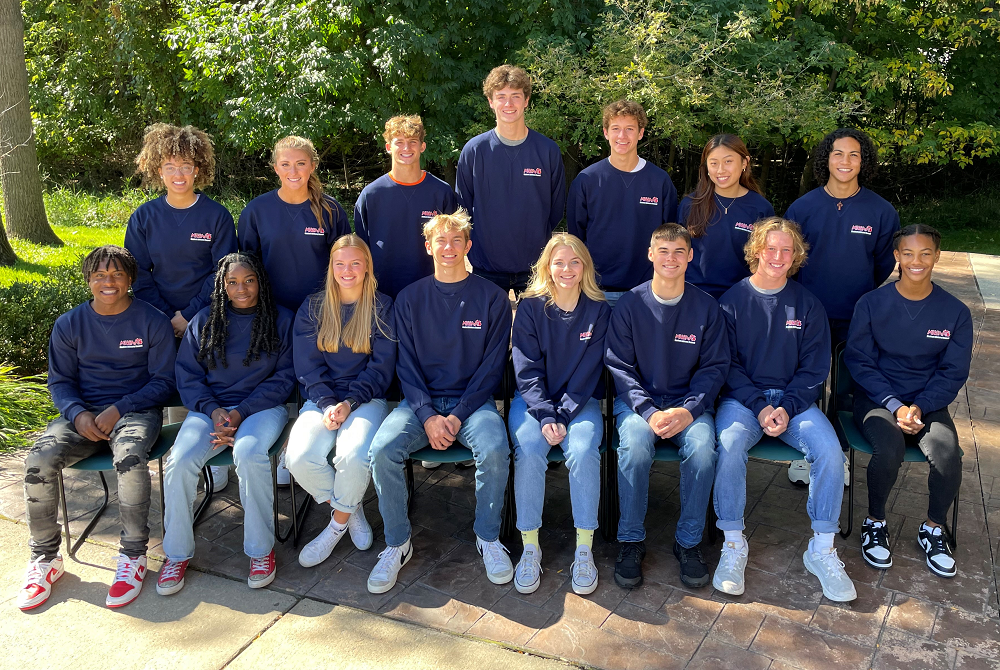
MHSAA Accepting Student Advisory Council Applications for Class of 2025
By
Geoff Kimmerly
MHSAA.com senior editor
April 10, 2023
The Michigan High School Athletic Association is seeking student-athletes to become members of its Student Advisory Council beginning with the 2023-24 school year.
Four boys and four girls from the Class of 2025 will be selected to two-year terms, and will meet on matters related to maintaining and promoting a proper perspective and sensible scope for high school sports in Michigan. Eight members from the Class of 2024 already are serving on the Council, while eight members from the Class of 2023 are leaving the Council this spring.
To be eligible for the committee, candidates must be a member of the Class of 2025, complete the official application including answering the three short-answer questions, submit a letter of recommendation from a school administrator, have a cumulative GPA of at least 3.0 (on a 4.0 scale) and be available for all scheduled meetings.
In addition, candidates should show a history of leadership on athletic teams as well as with other extracurricular activities, community service projects, or in the workplace; and show an understanding of the role of school sports and have ideas for promoting a proper perspective for educational athletics.
Applications are due to the MHSAA by 4:30 p.m. on April 24. Applications can be downloaded from the Student Advisory Council page of the MHSAA Website and must be returned via e-mail, fax or any mail delivery service.
The Student Advisory Council meets six times each school year, and once more for a 24-hour leadership camp. In addition to assisting in the promotion of the educational value of interscholastic athletics, the Council discusses issues dealing with the 4 S’s of educational athletics: scholarship, sportsmanship, safety (including health and nutrition) and the sensible scope of athletic programs. A fifth S – student leadership – is also a common topic. Members contribute to the planning of Sportsmanship Summits, Captains Clinics and other student leadership events, and assist with medal ceremonies at MHSAA championship events.
Newly-chosen members will join the following from the Class of 2023: Kannon Duffing, Manchester; Claire Gorno, Gaylord; M'Khi Guy, Muskegon; Dawsen Lehew, Marcellus; Christian Sanders, Detroit Renaissance; Ben Sytsma, Grand Rapids Christian; Madeline Werner, Bay City All Saints; and DaNia Womack, Dearborn Advanced Tech Academy.
The eight new members of the Student Advisory Council will be notified by May 5. The 2023-24 meetings are tentatively scheduled for Aug. 27, Oct. 1, Dec. 3, Feb. 11, April 21 and May 12. Meetings will take place at the MHSAA Office in East Lansing. For additional information, contact Andy Frushour at the MHSAA – 517-332-5046 or [email protected].