


MHSAA's Roberts to Retire in August
By
Geoff Kimmerly
MHSAA.com senior editor
April 24, 2018
For 32 years, Jack Roberts has served as much more than a caretaker of the Michigan High School Athletic Association.
In announcing his retirement Tuesday, he called working for 1,500 schools and hundreds of thousands of student-athletes over three decades his "purpose."
John E. “Jack” Roberts, who has served as executive director of the MHSAA since the fall of 1986, will retire in August.
Roberts will conclude his tenure as the second-longest serving full-time executive director during the MHSAA’s 94-year history. He is the fourth person to serve that leadership role full time, following Charles E. Forsythe (1931-42, 1945-68), Allen W. Bush (1968-78) and Vern L. Norris (1978-86). Roberts currently is also the nation’s longest-serving executive director of a state high school athletic association.
The MHSAA has enjoyed continued growth under Roberts’ guidance, particularly in the number of Michigan high school students participating in athletics and in the number of MHSAA-sponsored tournament sports available to them.
The Association also has made unprecedented advances in providing for the health and safety of athletes and promoting sportsmanship and the values of educational athletics and while working to preserve competitive equity for its more than 1,500 member high school and junior high/middle schools.
“I don’t think anybody could have been luckier than I to enjoy their work so much and to enjoy the people he worked with so much,” Roberts said. “It has been a blessing to be able to bring my passions to work every day and be able to act on my convictions. I don’t think anybody could ever feel more called to a job than I did."
Under Roberts’ leadership, overall participation in high school athletics in Michigan has increased 10 percent, and the MHSAA has added more than 200 schools in increasing its membership by more than 15 percent at the high school and junior high/middle school levels combined. Most recently, in 2016, 6th-graders were allowed to compete for member schools for the first time as a push was made to increase junior high/middle school membership and serve the state’s students earlier in their athletic careers.
His tenure has seen the addition of girls competitive cheer (1994), girls & boys bowling (2004) and girls & boys lacrosse (2005) to the tournament sport lineup, the creation of separate wrestling tournament to determine champions by team format (1988) and 8-player football (2010, first playoffs 2011) as many small schools across the state began having trouble fielding 11-player teams because of enrollment and population decreases. Meanwhile, also under his leadership, the 11-player Football Playoffs expanded, doubling to 256 teams in 1999.
A number of key rules changes came under Roberts’ watch and direction, including the addition of opportunities for multiple schools to create cooperative teams in sports where participation is lagging, as well as the creation of down time and dead periods (2006) to ease pressure for year-round activity. A comprehensive sportsmanship package enacted in 1996 set a statewide tone for appropriate behavior and perspective that continues to make an impact today.
But the most significant and arguably lasting work influenced by Roberts came on topics not related to specific sports or competition. The MHSAA has led nationally in concussion care with its first programming in 2000 and return-to-play protocols enacted in 2010, and with concussion pilot testing, mandated reporting and insurance for those who suffer head injuries rolled out in 2015.
A heat management policy and CPR requirements for coaches were introduced in 2013. The first program for coaches education was launched in 1987 and evolved into the Coaches Advancement Program that is now required for all newly-hired varsity head coaches, and all coaches (head or assistant) at all high school levels (varsity and subvarsity) are now required to take annual rules/health meetings.
The Women in Sports Leadership Conference was created in 1989 and remains the first, largest and longest-running program of its type in the country, regularly drawing upwards of 500 participants. The first of now-annual statewide Athletic Director In-Service Programs was conducted in 1992, and the MHSAA’s website – MHSAA.com – was launched in 1997. That same year the first of the now-annual Sportsmanship Summits was held, and Michigan remains a national leader in student services thanks to a variety of programs that have been introduced over the last three decades.
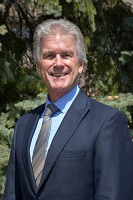 “We have accomplished a great deal over 32 years, but there is very much more to do – and it will always be that way,” Roberts said. “People ask me if I have any regrets, and I don’t have many. But two come to mind right now.
“I regret that I didn’t spend more time writing notes to the folks I’ve been serving at the local level who work so hard delivering the program every day, every week, every season, every year to the young people that we serve. I wish I’d done more of that – that encouraging word to people in the trenches doing the work.
“And I suppose the second regret is that in spite of everything that we’ve done, there’s still a lot more to do to keep school sports as safe, sane and sportsmanlike as it ought to be – as it must be for schools to continue to sponsor these programs. You see, school sports done right brings help and hope to parents and to schools who are trying as hard as they can to raise up and educate kids in very, very scary times. School sports helps parents and helps schools bring stability and engagement into young people’s lives that can provide them life lessons and turn some good athletes into great citizens down the road.”
Roberts privately made the decision to retire during May 2017. But even as he has prepared for his retirement this summer, he’s catalyzed a Multi-Sport Participation Task Force charged with promoting the benefits of playing more than one sport and led the facilitating of statewide discussion on a sport-based transfer rule proposal that will come before the MHSAA's Representative Council in May.
In addition to his work specifically in Michigan, Roberts has carried significant influence at the national level. With his retirement, he also will be leaving the National Federation of State High School Associations (NFHS) Board of Directors. He led the creation of the NFHS Network for video productions in 2012 and is finishing an extended term as that board’s chairperson. He also has served on the board of directors of the National Association of Sports Officials (NASO).
Roberts previously served as an assistant director for the National Federation from 1973-80. He came to the MHSAA in 1986 from the Fellowship of Christian Athletes, which he served as executive vice president. During the last 45 years, Roberts has spoken to education, business and civic groups in nearly every state and five Canadian provinces and continues to be hailed as one of the nation’s most articulate advocates for educational athletics.
"We have always felt that we had the best executive director in the United States. What he's done for interscholastic athletics in Michigan is incredible," said MHSAA Representative Council President Scott Grimes, who serves as assistant superintendent of human services for Grand Haven Area Public Schools.
"Jack has always had student-athletes' best interests in mind when making all decisions, and he's had tough decisions to make. We certainly will miss his leadership in our state."
In addition to his MHSAA work, Roberts has served as board president for the Refugee Development Center in Lansing for nine years and this year is the chair of the board of trustees for the Capital Regional Community Foundation. He is a 1970 graduate of Dartmouth College and taught English and coached football at high schools in Milwaukee and Denver before joining the NFHS staff. He and his wife Peggy reside in East Lansing, and his late father, John Roberts, served as the executive director of the Wisconsin Interscholastic Athletic Association (WIAA) from 1957-86.
The MHSAA is a private, not-for-profit corporation of voluntary membership by more than 1,500 public and private senior high schools and junior high/middle schools which exists to develop common rules for athletic eligibility and competition. No government funds or tax dollars support the MHSAA, which was the first such association nationally to not accept membership dues or tournament entry fees from schools. Member schools which enforce these rules are permitted to participate in MHSAA tournaments, which attract more than 1.4 million spectators each year.
PHOTOS: From left, Jack Roberts during an interview in 1986, at Ford Field in 2005 and during a Representative Council meeting in 2014.

Crowley, Lintner & Smelis Named 2022 Bush Award Recipients
By
Geoff Kimmerly
MHSAA.com senior editor
August 11, 2022
Lowell’s Deanne Crowley, Owosso’s Dallas Lintner and Fenton’s Mitch Smelis all have provided more than two decades of service to Michigan educational athletics, Crowley as a highly-regarded coach and administrator, Lintner also as an administrator and educational leader and Smelis as an athletic trainer and prominent voice in the sports medicine community especially in its service to school sports.
To recognize their significant and continued contributions to educational athletics, Crowley, Lintner and Smelis have been named recipients of the Michigan High School Athletic Association’s Allen W. Bush Award for 2022.
Al Bush served as executive director of the MHSAA for 10 years. The award honors individuals for past and continuing service to school athletics as a coach, administrator, official, trainer, doctor or member of the media. The award was developed to bring recognition to people who are giving and serving without a lot of attention. This is the 31st year of the award, with selections made by the MHSAA's Representative Council.
Crowley began her coaching career at Lake Odessa Lakewood in 1987 with subvarsity basketball, and she took over Lowell’s girls varsity program in 2000 after previously beginning her teaching career there in 1998. She remained the Red Arrows’ coach through 2006, that season leading her team to the Class A Semifinals – and she also was named Class A Coach of Year in 2004 by The Associated Press. Crowley became an assistant principal at Lowell in 2010 and the high school’s athletic director in 2013.
 She earned her certified athletic administrator designation from the National Interscholastic Athletic Administrators Association (NIAAA) in 2018 and was named Region 4 Athletic Director of the Year this past school year by the Michigan Interscholastic Athletic Administrators Association (MIAAA). Previously, she was named Athletic Director of the Year by the Michigan Wrestling Association for the 2018-19 school year and by the West Michigan Officials Association in 2021. Crowley also is a significant contributor to Lowell’s nationally-recognized Pink Arrow Pride program that raises funds annually for cancer awareness, education and support within the Lowell community; she organizes and coordinates the education program, which among other goals provides scholarships for Lowell graduates pursuing careers in medicine. She also was a co-founder in 2000 of the Lady Arrows Varsity Club, which provides leadership training for female student-athletes who have earned a varsity letter.
Crowley graduated from Lakewood High School in 1983 and earned her bachelor’s degree in secondary education from Western Michigan University in 1997 and a master’s in educational administration from Michigan State University in 2002.
“I have known Dee for over 20 years, and she has always been incredibly dedicated to finding opportunities for all students, especially female student-athletes,” Uyl said. “Her years as a coach and administrator have shown a solid record of finding ways for kids to compete.”
Lintner is returning to Owosso High School as principal this fall after finishing the second half of 2021-22 as interim athletic director at Fenton High School. He first joined the staff at Owosso as a teacher in 2001-02, went to Linden as athletic director for two years beginning with fall of 2008, then returned to Owosso as athletic director and assistant principal from 2010 through the 2020-21 school year. He served as principal at Owosso Lincoln High School last school year until leaving for Fenton.
 Education has been a focus of Lintner’s work, and he received a doctorate in educational leadership from University of Michigan-Flint in 2017. He has a certified master athletic administrator designation and has served as a leadership training instructor for the NIAAA since 2015. He also has served as a facilitator for the Love and Logic parenting program.
Lintner has been an active participant with the MIAAA as well, serving as its constitution committee chairperson since 2009. He was a member of the executive board from 2015-20, including serving as president during the 2018-19 school year. As athletic director, he was a frequent host of MHSAA postseason events and a contributor to various committees, and he previously was an MHSAA registered official for track & field and coach in multiple sports. Prior to earning his doctorate, Lintner graduated from Vassar High School in 1995, then earned a bachelor's degree in education from Saginaw Valley State University in 2000 and a master’s in athletic administration from Central Michigan University in 2005.
“Dallas has provided years of solid leadership in Owosso,” MHSAA Executive Director Mark Uyl said. “This consistent approach has led to numerous improvements, and during his tenure as athletic director his school won its first state championship, with the softball program (in 2021).”
Smelis has served as an athletic trainer for 25 years with Fenton Area Public Schools, for the last decade through NovaCare Rehabilitation. He was named High School Athletic Trainer of the Year by the Michigan Athletic Trainers’ Society (MATS) in 2017 and serves as co-chairperson of its Secondary School Committee.
 Also a member of the National Athletic Trainers Association (NATA) and Great Lakes Athletic Trainers Association (GLATA), Smelis has become a key connection between the training community and MHSAA. He has contributed as a MATS liaison on multiple MHSAA sport committees, and serves on the Sports Medicine Advisory Committee and as an instructor for the MHSAA’s Coaches Advancement Program (CAP). He also has presented at the MIAAA’s annual and summer conferences on a variety of physical health and safety and mental health topics.
Smelis graduated from Imlay City High School in 1991 and earned a bachelor’s degree in sports medicine from Central Michigan University in 1997. He is a certified American Heart Association instructor for CPR, first aid and basic life support and has served as lead instructor in CPR and first aid for Fenton’s coaches and staff.
“Mitch has been incredibly dedicated to keeping kids safe while playing all sports,” Uyl said. “He also has been responsible for further strengthening the good relationship between the MHSAA and Michigan Athletic Trainers’ Society, and he continues to provide valuable insight as part of our coaches education efforts.”