


Participation Again Outpaces Population
August 9, 2017
By Geoff Kimmerly
Second Half editor
Michigan had the eighth-most participants in high school sports nationally in 2016-17 according to statistics released this week by the National Federation of State High School Associations, after ranking seventh in participation the last eight school years.
However, this year’s level of participation again bested Michigan’s national ranking for total number of residents of high school age, which fell from ninth to 10th according to U.S. Census Bureau figures.
Michigan’s participation ranking was based on a number of 295,647, with 127,277 girls and 168,370 boys taking part in high school athletics, and included sports in which the MHSAA does not conduct postseason tournaments. The totals count students once for each sport in which he or she participates, meaning students who are multiple-sport athletes are counted more than once.
The state’s girls participation ranked eighth nationally, down one spot from 2015-16, while the boys participation figure also ranked eighth, down from sixth the year before. However, as with overall population, Michigan ranks 10th for both females and males ages 14-17 according to the latest U.S. Census Bureau estimates from 2016.
A total of 19 sports bested the state’s overall national participation ranking of eighth by placing seventh or higher on their respective lists. Three Michigan sports improved in national ranking during 2016-17, while five sports dropped one position and a sixth sport dropped two spots.
Michigan girls and boys golf both improved from sixth to fifth in national participation ranking, while girls basketball – with its first increase in participation after 10 straight years of decline – rose from seventh to sixth nationally. Michigan also moved up to seventh, from eighth, for 8-player football participation – significant because the state’s 11-player football participation ranking didn’t fall with that increase, remaining at sixth nationally for the fourth straight year.
Of the five sports that fell in national participation rankings in 2016-17, three stayed above population rank – boys basketball fell from sixth to seventh nationally, girls bowling from third to fourth and volleyball from fourth to sixth. Girls gymnastics (11th to 12th) and boys lacrosse (eighth to ninth) fell only one spot on their respective national lists.
The other Michigan sports that ranked eighth or higher all equaled their national rankings from 2015-16 and included baseball (eighth), boys bowling (third), competitive cheer (sixth), boys and girls cross country (both seventh), boys ice hockey (fourth), boys and girls skiing (both third), softball (seventh), boys tennis (fifth), girls tennis (third), boys track & field (seventh), girls track & field (eighth) and wrestling (seventh). Girls lacrosse (13th), boys and girls soccer (both ninth), boys swimming & diving (ninth) and girls swimming & diving (10th) all also held to their national rankings from the previous year.
National participation in high school sports in 2016-17 set a record for the 28th consecutive year with 7,963,535 participants – an increase of 94,635 from the year before. Girls participation increased for the 28th consecutive year with an additional 75,971 participants – the largest one-year jump since 2000-01 – and set an all-time high of 3,400,297. Boys participation also set another all-time high with 4,563,238, an increase of 18,664 participants from 2015-16.
Girls saw increases in all of their top-10 participatory sports, with competitive spirit (competitive cheer in Michigan) showing the largest increase of 18,712 participants nationally. Track & field, volleyball, soccer and lacrosse showed the next greatest increases among girls sports. Seven of the top 10 boys sports registered increases from 2015-16, led by soccer, track & field and cross country.
Football (1,086,748), while down two percent from 2015-16, again remained the most-played high school sport overall, followed by boys track & field (600,136), boys basketball (550,305), girls track & field (494,477) and baseball (492,935).
Scholars & Athletes 2021: Class B
By
Geoff Kimmerly
MHSAA.com senior editor
February 16, 2021
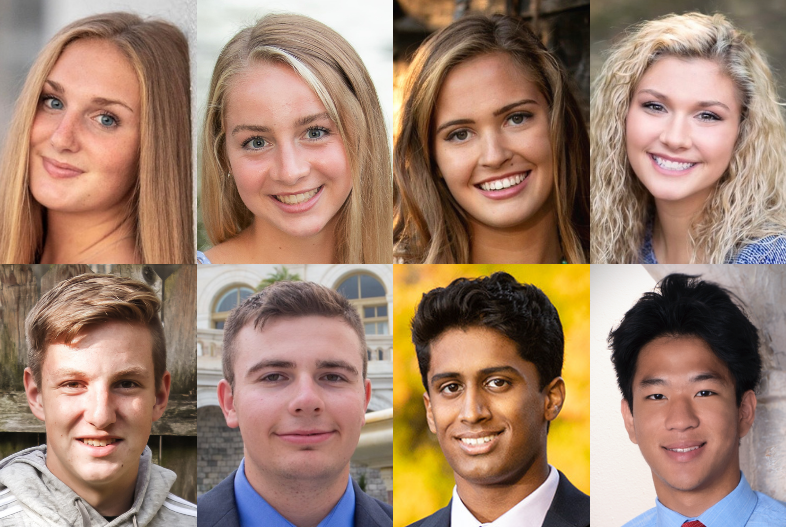
The Michigan High School Athletic Association has selected eight student-athletes from Class B member schools to receive scholarships through the MHSAA/Farm Bureau Insurance Scholar-Athlete Award program.
 Farm Bureau Insurance, in its 32nd year of sponsoring the award, will give $1,000 college scholarships to 32 individuals who represent their member schools in at least one sport in which the Association sponsors a postseason tournament. The first 30 scholarships are awarded proportionately by school classification and the number of student-athletes involved in those classes; also, there are two at-large honorees who can come from any classification.
Students applying for the Scholar-Athlete Award must be carrying at least a 3.5 (on a 4.0 scale) grade-point average and have previously won a letter in a varsity sport in which the Michigan High School Athletic Association sponsors a postseason tournament. Other requirements for the applicants were to show active participation in other school and community activities and produce an essay on the importance of sportsmanship in educational athletics.
Each of the scholarship recipients will be honored during an online ceremony later this winter. Commemorative medallions will be given to the finalists in recognition of their accomplishments.
The Class B Scholar-Athlete Award honorees are: Haleigh Knowles, Sault Ste. Marie; Andrea Kowalski, Chelsea; Elena Schwegman, Pontiac Notre Dame Prep; Illyanna Marie Taylor, Three Rivers; Wilson Bragg, Gladwin; Hudson Alexander Harkness, Newaygo; Dhilan Nagaraju, Bloomfield Hills Cranbrook Kingswood; and Ryan Tang, Detroit Country Day.
Overviews of the scholarship recipients of the Class B Scholar-Athlete Award follow. A quote from each recipient's essay also is included:
(NOTE: If an athlete intended to play and was part of a spring sports team in 2020, that sport is counted among the athlete’s total although the season was canceled due to COVID-19.)
 Haleigh Knowles, Sault Ste. Marie
Ran four seasons of varsity cross country, is playing her second season of varsity basketball and will participate in fourth season of varsity track & field this spring. Earned all-state and academic all-state in cross country all four seasons, and earned all-state in track as a freshman and sophomore. Earned all-league recognition in basketball. Served as varsity cross country captain, and basketball captain for subvarsity teams. Carries 4.06 GPA and is participating in fourth years of National Honor Society, student government, Business Professionals of America and Students United volunteer group and second year in LINKS program. Served as state and national delegate for BPA, and currently as chapter vice president and historian. Serving as social media coordinator and historian for student government and group leader for Students United, both for second years. Earned gold-level President’s Volunteer Service Award three times and Hospice of the EUP’s Service and Membership Award. Will attend Michigan State University and study pre-law.
Essay Quote: “As the years have gone on, I opened my eyes to the game around me. When the whole gym is packed and coaches, fans, and players are all screaming at one another, sportsmanship is playing with class.”
 Andrea Kowalski, Chelsea
Playing second year of varsity basketball and will play her fourth of varsity soccer this spring; also ran varsity cross country as a freshman and sophomore. Earned all-league and all-region in soccer. Helped varsity basketball team to league title in 2020 and cross country team to Regional title in 2017. Serving as basketball captain and will serve as soccer captain for second season. Carries 4.425 GPA and earned AP Scholar with Honor recognition. Participating in fourth year of student council and second as cabinet operations chair. Earned positions of flute section leader for marching band and first chair for band/wind symphony, and earned Division 1 rating at all judged musical performances. Participating in second year of National Honor Society and civic engagement club, the latter as a founding member. Will attend University of Michigan and study engineering.
Essay Quote: “Our opponents in educational athletics, club sports, or pickup games are just other people who want to compete. Whether a friend or foe, displaying empathy, respect, and integrity in all contests is what makes the community of athletes a special place for everyone. My adolescent eyes struggled to see it, but sportsmanship makes educational athletics bigger than each player and bigger than the pitch. It equates us all as human beings.”
 Elena Schwegman, Pontiac Notre Dame Prep
Played two seasons of varsity basketball, one of varsity volleyball and will play her fourth of varsity softball this spring. Will serve as captain for second season in softball and helped volleyball team to 2017 Class B championship and basketball team to multiple District titles. Earned all-region in softball and academic all-state in softball and basketball. Earned AP Scholar with Honor and three times achieved either silver medal or honorable mention on National Spanish Exam. Participating in fourth year of student council and has served as vice president. Participating in third years of National Honor Society and Spanish National Honor Society. Co-founded school’s be nice. mental health awareness group and served as activities committee chair. Participating in third year of tutoring and started free service during COVID-19 pandemic. Is undecided where she will attend college but intends to major in business and economics and minor in computer science.
Essay Quote: “Sports are an opportunity to bring out the best in all of us, and poor sportsmanship demeans high school sports and discourages participation. … There will always be wins and losses, but there will also always be teaching moments and more importantly, defining moments – opportunities to do the right thing, to claim a deserved victory, and to do so with character and humility.”
 Illyanna Marie Taylor, Three Rivers
Playing second season of varsity basketball, played three of varsity golf and will play fourth of varsity soccer and compete in fourth of varsity track & field this spring; also played junior varsity volleyball as a freshman. Earned all-league recognition in golf and academic all-state in golf and soccer, and was part of multiple academic all-state golf teams. Helped basketball team to District title in 2020 and has served as captain of basketball and soccer teams. Participating in fourth year of student council and has served as council president and vice president, and class president. Participating in third years of DECA and National Honor Society and served as chapter president of both. Participating in fourth years of marching and symphony bands and earned multiple Division 1 ratings; also sang three years in choir earning a Division 1 award and twice serving as section leader. Is undecided where she will attend college but intends to pursue pre-medical studies.
Essay Quote: “Sportsmanship is not just fair play; it encompasses an array of values: Respect. Kindness. Honesty. … Good sportsmanship presents kindness to be a uniform we should wear every day. Helping others and being empathetic is never out of season. We must work together in the pursuit of a collective victory.”
 Wilson Bragg, Gladwin
Ran four seasons of varsity cross country, played three of varsity soccer, is playing his third season of varsity basketball and will run his fourth of varsity track & field this spring. Earned all-region in soccer and all-league recognition in cross country, basketball and track. Served as captain of cross country and basketball teams. Participating in fourth years of student council and executive council and served three years as class president and two as executive council treasurer. Participating in fourth year of key club and served as treasurer for three. Participating in second year of National Honor Society, carries 4.0 GPA and is earning 18 college credits as part of dual enrollment at Mid Michigan College. Served more than 300 hours as mentor or volunteer for various efforts and earned local Daughters of American Revolution Good Citizen Award. Participating in fourth year of business club and was treasurer for three. Is undecided where he will attend college, but will study business.
Essay Quote: “I am proud that my positive reputation is recognized by my community, but more importantly, I am pleased to have conducted myself in a manner which has made my community and teammates proud, by modeling sportsmanship, both publicly and privately. Embracing sportsmanship in educational athletics, and in life, builds and reveals character.”
 Hudson Alexander Harkness, Newaygo
Played three seasons of varsity football, is playing varsity basketball this winter and will play his third season of varsity baseball this spring. Served as captain of varsity football and baseball and junior varsity football and basketball teams, and made all-league for football. Serving as class president for fourth year. Participating in second year of National Honor Society and has earned college credit in leadership from George Mason University. Serving as yearbook editor for third year and selected as National Youth Correspondent for Washington Journalism & Media Conference at George Mason, and has had articles and news segments published by local media. Volunteered throughout high school as West Michigan Miracle League announcer and earned school’s Community Service Award. Participating in second year of College Ambassador program and served as assistant community service director. Will attend Northwood University and study sports management.
Essay Quote: “With parents, students, and athletes yelling at officials throughout the entire game, it is sad to see the lack of sportsmanship in today's games. Sportsmanship isn’t just about being respectful to the other team but respecting officials too. … When I see or hear other people yelling at an official I think to myself “how stupid.” These men and women give up times to make sure we can play and learn to love the game. Without them, we would have no games.”
 Dhilan Nagaraju, Bloomfield Hills Cranbrook Kingswood
Played three seasons of varsity tennis and is playing his second of varsity basketball. Earned all-state and all-academic honors in tennis and was part of school’s 2018 and 2020 Lower Peninsula Division 3 championship teams. Served as varsity tennis and junior varsity basketball captain. Participating in fourth year of Horizon Upward Bound and has served as president, fourth year of Business/Entrepreneurship Club, and third year of Bridge the Divide group and as a student leader. Participated in LEAD Summer Business Institute and Cornell University Real Estate Exchange. Engaged in chemistry and biology research with faculty and undergraduate students at Oakland University. Founded community service organization to provide personal protective equipment. Earned various awards including at state competition for piano, and participated in three years of debate and earned speakers award. Is undecided where he will attend college but intends to study business and economics.
Essay Quote: “The contrast I observed among these students and the handful of unsportsmanlike athletes I had competed against at other schools was clear – it was integrity. While these HUB students were naturally driven, proven by their excellent academics and discipline in the classroom, it was the small actions that made the difference. Through their honest line calls on the tennis court to helping opponents up in the gym, I have recognized the important role that integrity plays in athletics.”
 Ryan Tang, Detroit Country Day
Played four seasons of varsity soccer and helped his team to the Division 2 championship in 2018 and multiple Regional and District titles. Earned all-state multiple seasons and served as team captain as a senior. Earned AP Scholar with Distinction and named National Merit Scholarship semifinalist. Received Association of Chinese Americans O.S. Chan scholarship for excellence in entrepreneurship and innovation. Co-founded and served as co-president of Help on the Way charitable fundraising organization, and also co-founded and served as vice president of school’s Finance/Entrepreneurship Club. Created prototype college counseling app as part of finance club and advanced to creative problem solving state finals as part of HOSA Future Health Professionals team. Is undecided where he will attend college but intends to study business management and computer science.
Essay Quote: “The principles of being a good sport extend far beyond just athletics; they become ingrained in our character and allow us to tackle issues with maturity in the future. Through athletics, I have learned to treat others with respect and carry myself with dignity, which are values that I apply to all aspects of my life. … It's imperative that student athletes strive to be respectful and mature on and off the field, keeping their emotions in check, as maintaining dignity and integrity will serve us well on and off the field.”
Other Class B girls finalists for the Scholar-Athlete Award were: Katie Acker, Lake Odessa Lakewood; Katie DeVlaminck, Buchanan; Jordyn Disbrow, Kalkaska; London Eldridge, Central Montcalm; Anna Gerardy, Yale; Allison R. Hall, Montague; Rachel Joslyn, Saginaw Swan Valley; Kendall Mathis, Newaygo; Katelyn Moore, Grayling; Caitlin Mullen, Grand Rapids Catholic Central; Riley Schroeder, Clare; and Bailey Taylor, Clare.
Other Class B boys finalists for the Scholar-Athlete Award were: Ryan Atkinson, Dundee; Cole Bennett, Pontiac Notre Dame Prep; Ian Burke, Ortonville Brandon; Drew Collins, Montague; Dillon Dennison, Alma; Nickolai J. Emde, Plainwell; Stuart Hamilton, Lansing Catholic; Brock Holek, Durand; Jackson Hoover, Edwardsburg; Zachary Huitema, Tawas; Jack Parker, Spring Lake; and Cade M. Vota, Niles.
The Class C and D scholarship award recipients were announced Feb. 9, and the Class A honorees will be announced Feb. 23.
Farm Bureau Insurance of Michigan was founded in 1949 by Michigan farmers who wanted an insurance company that worked as hard as they did. Those values still guide the company today and are a big reason why it is known as Michigan’s Insurance Company, dedicated to protecting the farms, families, and businesses of this great state. Farm Bureau Insurance agents across Michigan provide a full range of insurance services—life, home, auto, farm, business, retirement, Lake Estate®, and more—protecting nearly 500,000 Michigan policyholders.