


Participation Fees Rise Again
December 19, 2013
By Geoff Kimmerly
Second Half editor
The use of participation fees to help fund interscholastic athletics in Michigan high schools for the first time rose significantly above 50 percent during the 2012-13 school year, according to the most recent survey taken by the Michigan High School Athletic Association of its member institutions.
Use of fees had held steady at just above 50 percent over the last two school years, 2010-11 and 2011-12. But the most recently completed survey indicated that of 450 member schools participating, 249 schools – 55.3 percent – charged participation fees during the 2012-13 school year.
There were 758 senior high schools in the MHSAA membership in 2012-13 – the survey generated a response rate of 59 percent. This was the ninth survey of schools since the 2003-04 school year, when members reported that fees were being charged in 24 percent of schools.
The largest surge of charging fees in 2012-13 came at Class B schools, with 61 percent reporting fees after 54 percent reported using them in 2011-12. Class A schools saw a five percent jump to 71 percent, Class C saw a three percent rise to 49, and Class D schools saw a slight increase to 37 percent assessing fees.
Charging a standardized per-team fee for each on which a student participates remains the most popular method among schools that assess fees – although those doing so in that way dropped to 36 percent, a decrease of more than five percent. The median fee among those schools was $65, a decrease of $10 from the previous year.
Building on a trend that emerged during the 2011-12 survey, the use of fees incurred by students who paid once for an entire year of participation increased again to 29 percent of schools that charge. Families as a whole are facing higher fees as well; although an increasing number of schools are setting a maximum fee a family can be assessed, the amount of that fee increased in 2012-13 to a median of $300.
The survey for 2012-13 and surveys from previous years can be found on the MHSAA Website by clicking on Schools – Administrators – Pay-To-Play Resources.
The MHSAA is a private, not-for-profit corporation of voluntary membership by more than 1,500 public and private senior high schools and junior high/middle schools which exists to develop common rules for athletic eligibility and competition. No government funds or tax dollars support the MHSAA, which was the first such association nationally to not accept membership dues or tournament entry fees from schools. Member schools which enforce these rules are permitted to participate in MHSAA tournaments, which attract more than 1.4 million spectators each year.
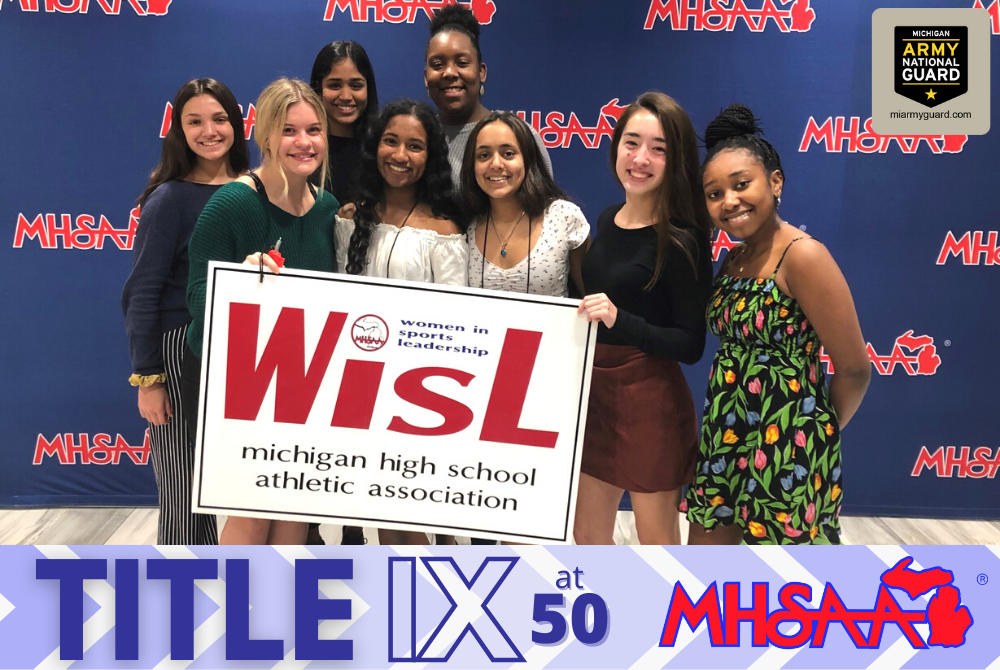
Title IX at 50: We Celebrate Our Past, We Look Forward to Our Future
By
Geoff Kimmerly
MHSAA.com senior editor
June 23, 2022
Today, we commemorate the 50th anniversary of Title IX and the opportunities it has provided, specifically in our athletic world, for girls to participate and compete in school sports.
This is hardly the beginning of our celebration of “Title IX at 50” – see below for our weekly spotlights as we have frequently detailed the “Power of our Past.” Today also isn’t the end of our recognition of Title IX’s significance, as we switch gears starting next week by connecting with some of our highest achievers from 2021-22 – our “Force of the Future” – to learn what these opportunities have meant to them.
We will continue our celebration leading up to the 25th MHSAA Women In Sports Leadership Conference – entitled “Power of the Past – Force of the Future” – which is once again expected to welcome more than 500 female student-athletes from across the state Oct. 9-10 to Crowne Plaza Lansing West. The event will provide them with leadership training to draw upon not only currently as competitors, but also as they hopefully consider continuing in athletics as administrators, coaches, officials or in other significant roles.
There will be more to come on this year’s WISL Conference, including lists of speakers who will inspire and educational sessions reflecting suggestions by the WISL planning committee gleaned from input by student-athletes and school administrators and coaches. Registration already has begun – learn more at MHSAA.com.
Second Half's weekly Title IX Celebration posts are sponsored by Michigan Army National Guard.
Previous Title IX at 50 Spotlights
June 21: Assistant Directors Have Been Difference Makers - Read
June 14: Girls Lacrosse Finals Officials Set Empowering Example - Read
June 7: From Gymnastics to Wrestling, Girls Opportunities Continue to Grow - Read
May 31: Mumford Sprinter's Magnificent 2006 Final Remains Unmatched - Read
May 24: Scane, Whiteside Alone on 400-Goal, 500-Point Girls Lacrosse Lists - Read
May 17: Over 8 Days in 1988, Pair of Champs Set No. 1 Singles Standard - Read
May 10: Portage Central's Tarpley Scores as State's Superstar, U.S. Soccer Hero - Read
May 3: Prychitko 'Legend In Her Own Time,' Legend for All Time - Read
April 26: Braddock vs. Verdun Still Striding Among All-Time Sprint Matchups - Read
April 19: Holmes' Strikeout Record Rarely Approached, May Be Unbreakable - Read
April 12: Anticipation High as 45,000 Girls Return to Spring Sports - Read
April 5: Regina's Laffey Retiring as Definition of Legendary - Read
March 29: Edison's Whitehorn named 2022 Miss Basketball - Read
March 22: Carney-Nadeau Sets Girls Hoops Standard with 78-Win Streak - Read
March 15: Binder Among Voices Telling Our Story on MHSAA Network - Read
March 8: 28 Years, Thousands of Cheers - Read
March 1: Kearsley Rolls On Among Girls Bowling's Early Successes - Read
Feb. 22: Marquette Ties Record for Swim & Dive Finals Success - Read
Feb. 15: Jaeger's 2004 Winter Run Created Lasting Connection - Read
Feb. 8: Marian's Cicerone to Finish Among All-Time Elite - Read
Feb. 1: WISL Award Honors Builders of State's Girls Sports Tradition - Read
Jan. 25: Decades Later, Edwards' Legend Continues to Grow - Read
Jan. 18: Iron Mountain Completes Championship Climb - Read
Jan. 11: Harrold's Achievement Heralds Growth of Girls Wrestling - Read
Dec. 20: Competitive Cheer Gives Michigan Plenty to Cheer About - Read
Dec. 14: Evelyn's Game Had Plenty of Magic - Read
Dec. 7: Council Term Ends, But Leinaar Leaves Lasting Impact - Read
Nov. 30: Basketball Season Ready to Add to Rich Tradition - Read
Nov. 23: Marysville Builds Winning Streak Yet to be Challenged - Read
Nov. 16: Wroubel Has Championed Girls School Sports from Their Start - Read
Nov. 9: Pioneer's Joyce Legendary in Michigan, National Swim History - Read
Nov. 2: Royal Oak's Finch Leading Way on Football Field - Read
Oct. 26: Coach Clegg Sets Championship Standard at Grand Blanc - Read
Oct. 19: Rockford Girls Set Pace, Hundreds After Have Continued to Chase - Read
Oct. 12: Bedford Volleyball Pioneer Continues Blazing Record-Setting Trail - Read
Oct. 5: Warner Paved Way to Legend Status with Record Rounds - Read
Sept. 28: Taylor Kennedy Gymnasts Earn Fame as 1st Champions - Read
Sept. 21: Portage Northern Star Byington Becomes Play-by-Play Pioneer - Read
Sept. 14: Guerra/Groat Legacy Continues to Serve St. Philip Well - Read
Sept. 7: Best-Ever Conversation Must Include Leland's Glass - Read
Aug. 31: We Will Celebrate Many Who Paved the Way - Read
(MHSAA file photo.)