


Rep Council Wrap-up: Fall 2012
December 7, 2012
A change in format for the Boys Basketball Finals highlighted actions taken by the Representative Council of the Michigan High School Athletic Association during its annual Fall Meeting, Nov. 30 in East Lansing.
Mirroring closely the format of the MHSAA Girls Basketball Finals, the Boys Finals will move this season from three to two sessions. The first session will tip off with the Class D Final at 10 a.m., followed by the Class A championship game. The second session will begin tentatively at 4:30 p.m. with the Class C Final and conclude with the Class B title game.
Previously, the Class A and B Finals were separate sessions, with the Class A Final tipping at 4 p.m. and Class B at 8 p.m. The change will make for a shorter day for spectators wishing to attend all four games, and also allow them to do so by purchasing tickets for two sessions instead of three.
 The Fall Meeting also saw the addition of two members to the 19-person council. Reese Public Schools athletic director Dave Derocher began a two-year term after being elected earlier this fall to represent Class C and D schools in the northern Lower Peninsula. Orlando Medina, who serves as athletic coordinator for Harrison Township L’Anse Creuse Public Schools, was appointed for a two-year term. He also previously served as athletic director at Detroit Cesar Chavez Academy. They fill positions formerly held by Beal City superintendent William Chilman IV and Romulus High School athletic director Mark Woodson, whose terms ended.
Also, Carmen Kennedy, principal at St. Clair Shores South Lake High School, was reappointed for a second two-year term. The Representative Council is the legislative body of the MHSAA. All but five members are elected by member schools. Four members are appointed by the Council to facilitate representation of females and minorities, and the 19th position is occupied by the Superintendent of Public Instruction or designee.
The most prominent points discussed at the Fall Meeting were risk minimization for athletes and possible strategies for making school sports safer. Among topics discussed were raising expectations for coaches’ participation in online safety courses and schools’ management of heat illness; the possible restructuring of practice policies in regards to hot weather; and game rules revisions to enhance safety especially in football, soccer and ice hockey.
The Council reviewed its previous actions on those topics, including discussions in December 2011 that led to the inclusion of health and safety content in online rules meetings. Council members considered a model policy for managing heat and humidity, and also a number of ideas collected during Fall Update meetings with administrators throughout the state.
No action was requested on those items at the Fall Meeting. Complete and vetted proposals are likely to be considered when the Council next meets in March and then May.
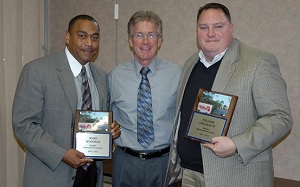
PHOTO: Outgoing Representative Council members Mark Woodson of Romulus (left) and William Chilman IV (right) are presented plaques for their service by MHSAA Executive Director Jack Roberts (middle) during the Fall Meeting.
Scholars & Athletes 2017: Class B
By
Geoff Kimmerly
MHSAA.com senior editor
February 13, 2017
By Geoff Kimmerly
Second Half editor
The MHSAA has selected nine student-athletes from Class B member schools to receive scholarships through the MHSAA-Farm Bureau Insurance Scholar-Athlete Award program.
 Farm Bureau Insurance, in its 28th year of sponsoring the award, will give $1,000 college scholarships to 32 individuals who represent their member schools in at least one sport in which the Association sponsors a postseason tournament. The first 30 scholarships are awarded proportionately by school classification and the number of student-athletes involved in those classes; also, there are two at-large honorees which can come from any classification.
Students applying for the Scholar-Athlete Award must be carrying at least a 3.5 (on a 4.0 scale) grade-point average and have previously won a letter in a varsity sport in which the Michigan High School Athletic Association sponsors a postseason tournament. Other requirements for the applicants were to show active participation in other school and community activities and produce an essay on the importance of sportsmanship in educational athletics.
Each of the scholarship recipients will be honored at halftime ceremonies of the Class C Boys Basketball Final game March 25 at the Breslin Student Events Center in East Lansing. Commemorative medallions will be given to the finalists in recognition of their accomplishments.
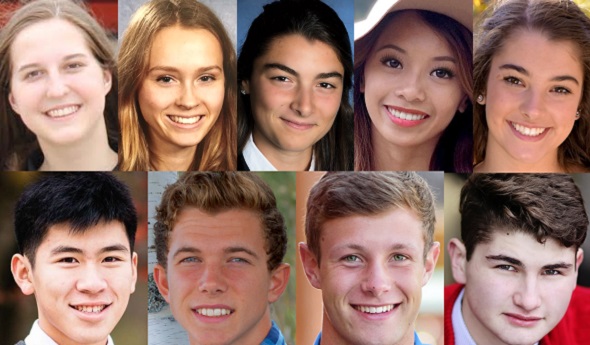
The Class B Scholar-Athlete Award honorees are: Michael Bian, Bloomfield Hills Cranbrook Kingswood; Morgan Colling, Houghton; Jasmine Harper, Clare; Sasha Hartje, Detroit Country Day; Brayden Huddleston, Benzonia Benzie Central; Adam Kozinski, Edwardsburg; Tait Morrissey, Big Rapids; Kim Anh Nguyen, Wyoming Kelloggsville; and Emma Nowak, Ann Arbor Gabriel Richard.
Overviews of the scholarship recipients of the Class B Scholar-Athlete Award follow. A quote from each recipient's essay also is included:
 Morgan Colling
Houghton
Played four years of varsity basketball and ran two years each of varsity cross country and track & field, plus played two seasons of subvarsity volleyball. Qualified for the MHSAA Finals twice in both cross country and track and earned all-league recognition in basketball while helping that team to three league and two District titles during her first three seasons. Served as cross country and basketball captain. Participating in second year of National Honor Society and third of student government and key club. Serving as service project coordinator chair for NHS and vice president for key club, and has volunteered with Salvation Army and Copper Country Humane Society all four years of high school. Participated two years in Junior State of America and studied during the summer of 2016 in Hiroshima, Japan, after winning a Japan-America Friendship Scholarship. Will study microbiology at California Polytechnic State University.
Essay Quote: “When my vision cleared and I saw the winning team, overjoyed and grinning ear-to-ear, something inside me mended. I recognized the look on their faces; I had seen it many times before on my own teammates. It was then that I realized that the only difference between my team, and theirs, was our uniforms. As fellow basketball players, we shared the same passion, determination and yearning for success.”
 Jasmine Harper
Clare
Ran four year of varsity cross country and will run her fourth of track & field, and has broken a total of four school records while earning a combined 10 all-state honors in those sports. Selected as the top academic all-state cross country athlete in Lower Peninsula Division 3 as a junior and capped her career this past fall by finishing ninth at the MHSAA Final in that division. Served as captain of both teams and ran for Michigan at the 2016 Mid-East Meet of Champions. Participated two years each in National Honor Society and student government, as her class president both years of the latter. Also participated in marching and symphonic band all four years of high school and theater for three years; earned 10 state merit awards and two national fourth-place finishes from the National Youth Ministries’ National Fine Arts Festival. Also served in leadership roles in her local Fellowship of Christian Athletes. Will attend Spring Arbor University and study elementary education.
Essay Quote: “I was the conference champion my freshman year of cross country, but illness and injuries prevented me from keeping that title the next three years. I experienced what it was like to have a younger teammate beat me. But, I was reminded to treat everyone the same, whether I won or lost.”
 Sasha Hartje
Detroit Country Day
Played three seasons of varsity volleyball and will pay her fourth of tennis and second of soccer this spring. Won Lower Peninsula Division 3 championship at No. 1 singles in 2016 after finishing runner-up in 2015, also leading Country Day to the team title. Earned all-state honors in tennis three times and all-region honorable mention in volleyball; served as captain of both teams and earned her school’s Scholar Athlete Award in 2016. Also plays ice hockey and was part of the 2014 bantam major national championship team, and serves as captain of her Little Caesars AAA hockey club. Serves as president of her school’s Current Events Club and lead instructor and coordinator for “Skate to be Great” in addition to volunteering with Big Brothers Big Sisters. Will attend Emory University in Georgia and major in pre-medical studies.
Essay Quote: “Over the years, these lessons I have been taught on the tennis court have rounded out not only my athletic education, but more importantly, my life. The lessons of sportsmanship and fair play on the field of battle, in the classroom or outside of both sports and school are always the same and carry the true measure of success.”
 Kim Anh Nguyen
Wyoming Kelloggsville
Participated in varsity competitive cheer for three seasons, played two of varsity tennis and one of varsity volleyball. Earned all-conference honors in cheer as a sophomore and junior while helping her teams to league titles both seasons; served as captain of cheer and junior varsity volleyball teams. Participating in fourth year of student government and third of National Honor Society and is serving as president both of her class and NHS chapter. Also has participated in marching band four years including as drum major and for three years on her school’s Athletic Leadership Council. Will attend University of Michigan and study biochemistry.
Essay Quote: “When I am in a gym full of teams from all over the state, I see girls of different backgrounds, all wearing different uniforms. Despite this, we are unified by the same adrenaline that pumps through our veins as we approach an empty mat and staring faces. We are bound by the same passion and breathe as one before we perform. This sense of unity would not be possible without sportsmanship, for it creates memories that extend beyond titles and trophies.”
 Emma Nowak
Ann Arbor Gabriel Richard
Played three seasons of varsity volleyball and will play her fourth of softball; also played freshman basketball. Started as setter of the volleyball team that finished 42-0 and won the Class B title in 2015 and three District and two Regional titles overall during her time on varsity; also expects to start at shortstop for her fourth season and helped her team to its first Detroit Catholic League title in 2015. Earned all-league honors in both sports, all-District in softball and all-Region in volleyball, and captained teams in all three of her high school sports and club volleyball. Participating in second year of National Honor Society and serves or has served in leadership positions for a number of efforts in her school and church including Be Love Revolution and as part of the Pine Hills Camp service team. Carries a 3.97 grade-point average and has earned multiple academic awards. Remains undecided on where she will attend college but intends to pursue studies in the medical field.
Essay Quote: “I have always been taught to compete hard, while respecting my opponent. What I have come to learn is you can also befriend your opponent and still compete every bit as hard … and that sportsmanship in athletics can lead to friendships and memories that I will always cherish.”
 Michael Bian
Bloomfield Hills Cranbrook Kingswood
Played four seasons of varsity tennis, winning an individual Lower Peninsula Division 3 championship at No. 1 doubles in the fall after finishing runner-up at No. 3 singles twice; helped Cranbrook Kingswood to MHSAA team titles in both 2015 and 2016 and served as captain as a senior. Earned all-state recognition the last three seasons and his team earned all-academic honors as well the last three years. Also has participated on robotics and quiz bowl teams the last four years, helping robotics team to a state championship and VEX World Championship qualification three times. Serving as vice president of senior class while in fourth year of student government and is co-founder and president of his school’s philosophy club; also has been president of robotics and quiz bowl teams and of his school’s Future Business Leaders & Economists and Science & Engineering clubs. Named National Consumers League LifeSmarts state champion and ranked as ninth-best debater at 2016 state finals. Remains undecided where he will attend college, but intends to study philosophy, economics or political science.
Essay Quote: “One of the greatest myths we hear about sportsmanship is that it is purely altruistic – that those who engage in it have nothing to gain. On the contrary, those who display sportsmanship gain important virtues.”
 Brayden Huddleston
Benzonia Benzie Central
Ran four seasons of cross country, will run his fourth of track & field and played two seasons of varsity basketball. Earned all-state honors all four years of cross country, finishing seventh in Lower Peninsula Division 3 as a senior, and helped that team to two MHSAA championships. Also earned all-state five times in track and helped the basketball team to a District title, and has captained all three teams. Participating in second year of both National Honor Society and National Technological Honors Society; named “Student of the Year” at Traverse City’s Manufacturing Technology Academy. Serves as vice president of Interact Club which has raised more than $10,000 toward polio and multiple sclerosis research and has participated in “Back the Track” foundation that has raised more than $140,000. Will attend Bradley University and study mechanical engineering.
Essay Quote: “One of my biggest role models was a runner from another team. I remember watching, as a freshman, him dominate the field. It wasn’t how fast he ran or the distance he put on the second-place kid that made him stick out to me. … He was modest, never wanting to talk about himself. He had a way of making you feel just as fast or (like you had) the same potential as he did. At these realizations, I aspired to model my athletic career after him.”
 Adam Kozinski
Edwardsburg
Played three seasons of varsity soccer and basketball and will play his third of varsity golf; also played a season of varsity tennis. Earned all-league honors in basketball and tennis and academic all-state in basketball and soccer while his team earned academic all-state in golf. Helped his basketball team to two District titles and has served as a captain of the soccer, basketball and golf teams. Serves as secretary of his National Honor Society chapter and as a committee chairperson for Students Against Destructive Decisions. Assisted in NHS fundraising of more than $30,000 for “Operation Christmas” event to benefit less-fortunate families and represented his school at a Hugh O’Brian Youth Leadership conference. Has volunteered at a local food pantry and churches and serves as Sunday morning head chef at University of Notre Dame’s Corby Hall, where he prepares meals for priests. Will attend Central Michigan University and study business.
Essay Quote: “Having an opportunity to play varsity sports since my freshman year, I have experienced a variety of ways senior and junior teammates treat underclassmen. Throughout the years, I have observed seniors that are very positive and uplifting to underclassmen, but then some other senior teammates are negative. … I decided when I was a senior, I would try to be the most positive and encouraging teammate on the team.”
 Tait Morrissey
Big Rapids
Played four seasons of varsity tennis, two of varsity basketball and will play his fourth of varsity golf this spring. Earned all-conference honors in golf his first three seasons and helped that team to league, District and Regional championships and a third-place MHSAA Finals finish last season. Also helped his basketball team to league, District and Regional titles and a Class B Semifinal berth in 2016. Earned academic all-state honors in tennis his last two seasons; served as captain of that team and will serve as golf captain this spring. Serving second year as his class’ vice president and also has served as a representative for Fellowship of Christian Athletes, the Mecosta County Youth Advisory Council and his schools “Climate Crew” and in a number of leadership roles including as patrol leader of his Boy Scout troop. Participating in National Honor Society, key club, Students Against Destructive Decisions and attended American Legion Boys State in 2016. Also is a member of the Boy Scouts’ Order of the Arrow honor society. Will attend Alma College and major in pre-medical studies.
Essay Quote: “Although high school athletics are highly competitive, and emotions tend to run high, standard values such as sportsmanship are necessary in order to embrace and give meaning to the event. In turn, athletes learn integrity, ethics and values.”
Other Class B girls finalists for the Scholar-Athlete Award were: Michel Faliski, Bloomfield Hills Cranbrook Kingswood; Madeline Filiatraut, Dearborn Divine Child; Noelle Kraus, Edwardsburg; Peyton Rellinger, Gladwin; Lindsey Shearer, Gladwin; Erika Freyhof, Hamilton; Haley Heldt, Midland Bullock Creek; Megan Aalberts, Otsego; Raechel K. McKiernan, Richmond; Kylie Hutchinson, Shepherd; and Gabrielle Smith, Yale.
Other Class B boys finalists for the Scholar-Athlete Award were: Michael J. Gussert, Cadillac; Christopher A. Roush, Chelsea; Collin Lieber, Croswell-Lexington; Evan Latham, Dearborn Divine Child; Patrick Johns, Marine City; Richard Dominick Reo III, Paw Paw; Brendan Gered Fraser, Pontiac Notre Dame Prep; Ryley Alaspa, Sault Ste. Marie; Ryan Sanderson, Sault Ste. Marie; Josef Hissom, Spring Lake; Andrew D. Marten, Tecumseh; and Cade Smeznik, Yale.
The Class C and D scholarship award recipients were announced Feb. 7, and the Class A honorees will be announced Feb. 21.
Farm Bureau Insurance of Michigan was founded in 1949 by Michigan farmers who wanted an insurance company that worked as hard as they did. Those values still guide the company today and are a big reason why it is known as Michigan’s Insurance Company, dedicated to protecting the farms, families, and businesses of this great state. Farm Bureau Insurance agents across Michigan provide a full range of insurance services — life, home, auto, farm, business, retirement, Lake Estate®, and more — protecting nearly 500,000 Michigan policyholders.