

Several 1st-Time Winners Highlight 2025-26 MHSAA Parade of Champions
By
Geoff Kimmerly
MHSAA.com senior editor
June 18, 2026
Three schools celebrated their first Michigan High School Athletic Association Finals championships in any sport during the 2025-26 school year as 39 teams total won first Finals titles in their respective sports.
Holland Calvary, in boys cross country, Durand in boys bowling and Walled Lake Northern in softball won their schools’ first Finals championships in any sport, as 88 schools total won at least one of the 132 MHSAA team titles awarded over the three seasons.
A total of 23 schools won two or more championships this school year, paced again by Marquette with eight earned in girls and boys cross country, boys golf, girls skiing, girls and boys swimming & diving, boys tennis and boys track & field. Detroit Country Day was next with seven Finals championships, followed by Detroit Catholic Central with six and Ann Arbor Pioneer with four.
Bloomfield Hills Cranbrook Kingswood, Negaunee, Northville and Rockford all won three titles in 2025-26. Winning two were Birmingham Seaholm, Charlevoix, Farmington Hills Mercy, Flint Kearsley, Flint Powers Catholic, Grand Rapids West Catholic, Jackson Lumen Christi, Lake Linden-Hubbell, Lowell, Newberry, Orchard Lake St. Mary’s, Pewamo-Westphalia, Ravenna, Rudyard and West Iron County.
A total of 48 champions were repeat winners from 2025-26. A total of 31 teams won championships for at least the third-straight season, while 22 teams extended title streaks to at least four consecutive seasons. The Lowell wrestling program owns the longest title streak at 13 seasons, followed by Dundee wrestling’s nine consecutive titles and runs of seven straight Finals victories by the Detroit Catholic Central ice hockey team and Marquette’s boys cross country and boys swimming & diving programs.
This school year saw the addition of field hockey and boys volleyball to the MHSAA’s postseason tournament offerings. Eighteen of the MHSAA's 30 team championship tournaments are unified, involving teams from the Upper and Lower Peninsulas, while separate competition to determine title winners in both peninsulas is conducted in remaining sports.
For a sport-by-sport listing of MHSAA champions for 2025-26, click here (PDF).
The MHSAA is a private, not-for-profit corporation of voluntary membership by more than 1,500 public and private senior high schools and junior high/middle schools which exists to develop common rules for athletic eligibility and competition. No government funds or tax dollars support the MHSAA, which was the first such association nationally to not accept membership dues or tournament entry fees from schools. Member schools which enforce these rules are permitted to participate in MHSAA tournaments, which attract more than 1.4 million spectators each year.
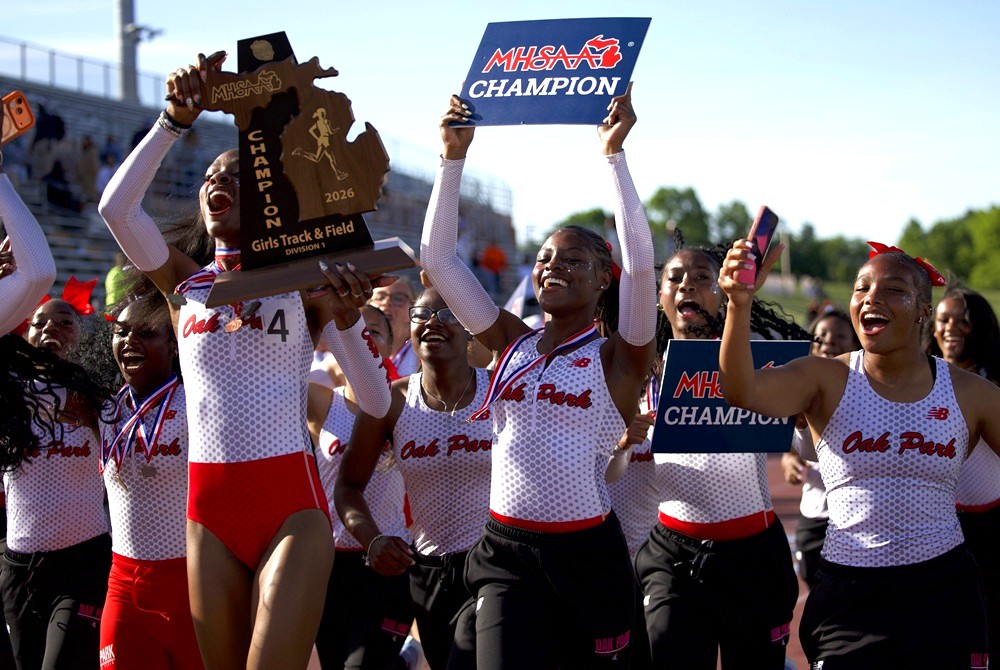
PHOTO The Oak Park girls track & field team hoist their championship trophy and sign May 30 at Rockford High School. (Click for more from RunMichigan.com.)
Scholars & Athletes 2017: Class C, D
By
Geoff Kimmerly
MHSAA.com senior editor
February 6, 2017
By Geoff Kimmerly
Second Half editor
The Michigan High School Athletic Association has selected 10 student-athletes from Class C and D member schools to receive scholarships through the MHSAA-Farm Bureau Insurance Scholar-Athlete Award program.
 Farm Bureau Insurance, in its 28th year of sponsoring the award, will give $1,000 college scholarships to 32 individuals who represent their member schools in at least one sport in which the Association sponsors a postseason tournament. The first 30 scholarships are awarded proportionately by school classification and the number of student-athletes involved in those classes; also, there are two at-large honorees which can come from any classification.
Students applying for the Scholar-Athlete Award must be carrying at least a 3.5 (on a 4.0 scale) grade-point average and have previously won a letter in a varsity sport in which the Michigan High School Athletic Association sponsors a postseason tournament. Other requirements for the applicants were to show active participation in other school and community activities and produce an essay on the importance of sportsmanship in educational athletics.
Each of the scholarship recipients will be honored at halftime ceremonies of the Class C Boys Basketball Final game March 25 at the Breslin Student Events Center in East Lansing. Commemorative medallions will be given to the finalists in recognition of their accomplishments.
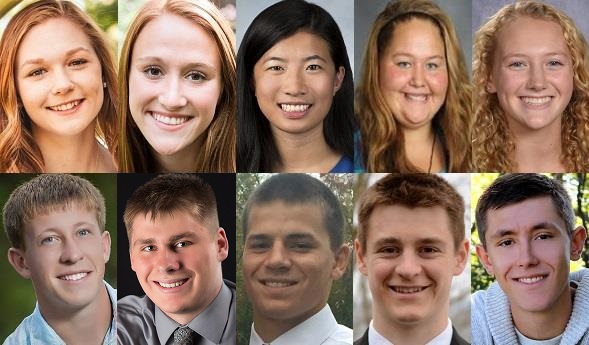
The Class C Scholar-Athlete Award honorees are: Hope Baldwin, Kalamazoo Hackett Catholic Prep; Clark Brady, Bad Axe; Tyler Brant, Watervliet; Jacob Shoop, Scottville Mason County Central; Khora Swanson, Ishpeming; and Madeline Wu, Grosse Pointe Woods University Liggett.
The Class D Scholar-Athlete Award recipients are: Grace Alvesteffer, Pentwater; Mary Leighton, Mendon; Elijah Newton, Central Lake; and Seth Polfus, Powers North Central.
Overviews of the scholarship recipients of the Class C Scholar-Athlete Award follow. A quote from each recipient's essay also is included:
 Hope Baldwin, Kalamazoo Hackett Catholic Prep
Played two years of varsity volleyball, three of basketball and will play her fourth of soccer this spring. Served as captain of her varsity volleyball and basketball teams and has earned some level of all-conference recognition in all three sports. Served as president of her junior class and is serving as vice president of the student body this school year; also serving as vice president of her National Honor Society chapter. Earned outstanding achievement awards in science, literature, math and Spanish at her school and National Spanish Exam honorifica three years. Also participated in Student Athletic Advisory Board three years and Student Leadership team the last two, as part of her school’s Respect Life Club and migrant ministry both for four years, and has logged more than 220 volunteer hours assisting a number of causes and projects. Will attend either University of Notre Dame or University of Michigan and study neuroscience or biology.
Essay Quote: “Of course everyone wishes to beat their rivals, but this desire to win should not negatively impact someone’s behavior – because athletics aim to build character, not to diminish it. … When athletes are able to put the importance of winning in perspective, it makes it clear how much more valuable the actual experience of competing is than the outcome.”
 Khora Swanson, Ishpeming
Ran four seasons of varsity cross country and will run her fourth this spring of track & field; also played three seasons of varsity basketball. Became the first girl at her school to win an individual MHSAA Finals championship in cross country, taking first in Upper Peninsula Division 2 in 2015, and helped the Hematites to three team titles. Also has won six individual MHSAA Finals track championships and helped her team to two titles in that sport, and earned all-league and all-Upper Peninsula recognition in basketball. Served as captain of all three teams at least two seasons. Carries a 4.0 grade-point average and also participates in her school’s select chorus. Is serving her second year as student body vice president, youth advisory council president and key club secretary, and has volunteered both as a peer-to-peer and Special Olympics mentor. Will attend either Northern Michigan University or St. Norbert College (Wis.) and study education.
Essay Quote: “Choosing to exemplify outstanding sportsmanship will transfer to daily life as well as future life, when playing sports may not be routine anymore. … Learning the importance of a great attitude at a young age just may be the key to keeping competition healthy at all ages.”
 Madeline Wu, Grosse Pointe Woods University Liggett
Ran four seasons of varsity cross country and will play her fourth season this spring of varsity soccer. Served as cross country captain in the fall and will serve as soccer captain this spring. Helped both teams to league and Regional titles and last year’s soccer team to the MHSAA Division 4 Final championship. Earned all-state recognition in soccer twice and made the MHSAA Finals in cross country all four seasons. Carries a 4.1 grade-point average and was a National Merit Scholarship Program semifinalist as a junior. Has participated in theater and acapella group all four years of high school and received numerous awards and ratings for piano; served as student music director for her theater troupe and acapella group leader the last two years. Also has served four years as a student commissioner and set a school record fundraising for the American Cancer Society’s Relay of Life. Will attend Princeton University and study educational policy.
Essay Quote: “My coaches have acted as role models for me, and I am now a role model for my fellow student athletes. Through practicing good sportsmanship, my team and I have become ambassadors that represent my school and the sport of cross country.”
 Clark Brady, Bad Axe
Played three seasons of varsity football and basketball and will play his third of baseball this spring; also ran track as a freshman. Earned all-conference recognition in baseball and academic all-state also in that sport, and academic all-conference in basketball. Helped basketball team to league and District championships and baseball to a District title as well. During four years in student government has served as class president three years, fundraising president two years and student council president two years, and also serves as National Honor Society chapter secretary. Has received multiple academic awards, including the National Academy of Future Physicians and Medical Scientists Award of Excellence. Served two years on Huron County Community Foundation Youth Advisory Council. Volunteered as tutor/mentor and church acolyte, and has served as a referee and umpire during all four years of high school. Will attend Oakland University and study pre-medicine.
Essay Quote: “I believe it is the job of us, the athletes, to be the example for future athletes by showing good sportsmanship so they too understand that by doing so they are building themselves to have good character. … If this lesson can be taught, athletes will look at sportsmanship as more of a great quality rather than being ‘overrated.’”
 Tyler Brant, Watervliet
Played two seasons of varsity football and basketball and will play his third season of varsity baseball this spring. Set multiple school receiving records in earning all-state recognition in football and also has earned all-conference and academic all-state in baseball. Served as captain of all three teams. Is serving his second term as class co-president and also has served as class vice president. Participated on Watervliet’s leadership council for three years and is in his third of National Honor Society. Also is participating in his second year in the Whirlpool Engineering Apprenticeship Program and has led various group projects as part of that effort; earned a third place at the Michigan Industrial and Technology Education Society state competition in 2015. Will attend Trine University and study business administration.
Essay Quote: “The value I place on sportsmanship cannot be pinpointed to one specific person or game, but rather to a culmination of every practice and game experience throughout my life. I have been fortunate to have had numerous coaches who have always placed the qualities of sportsmanship – fairness, hard work and handing every situation with dignity – above winning or losing.”
 Jacob Shoop, Scottville Mason County Central
Ran four seasons of varsity cross country and will participate in fourth of track & field, and also competed in four seasons of varsity wrestling. Qualified for MHSAA Finals in cross country and wrestling four times and won a Division 3 individual wrestling title as a senior; also had earned all-conference honors seven times over his three sports entering this winter and academic all-conference seven times as well. Served as captain of both the cross country and wrestling teams. Serves as an officer in the FreeSoil Friendly Farmers 4-H Club and also participates in National Honor Society. Has earned multiple academic awards and also multiple awards for showing animals; has taught area youth how to show animals as part of 4-H and students how to wrestle and referee the sport as a team leader for Mason County Central recreation wrestling. Will attend Grand View University (Iowa) and study either nursing or pre-chiropractic.
Essay Quote: “Scholar-athletes take the higher ground in all cases, whether academic or athletic, always looking for the best possible scenario for all involved. Sometimes it takes a lot of guidance before you reach the higher ground. … Everyone around me has been teaching me good sportsmanship since the day I started athletics.”
Other Class C girls finalists for the Scholar-Athlete Award were: Kelsey Wyman, Blissfield; Quinn Epkey, Kalamazoo Hackett Catholic Prep; Keilene Renae Elmer, Lincoln Alcona; Bailey Downs, Munising; Maysa Sitar, Newberry; Mary Hoopes, North Muskegon; Brenna Wirth, Pewamo-Westphalia; Sidney Linck, Ravenna; and Madison Bryce, St. Charles.
Other Class C boys finalists for the Scholar-Athlete Award were: Spencer Fisher, Blissfield; Jonathan Lutchka, Grass Lake; Sam Bailey, Harbor Springs; Ashok Ravindran, Ishpeming; Joseph Rigling, Leroy Pine River; Alexander Dixon, Madison Heights Bishop Foley Catholic; Bryce J Thelen, Pewamo-Westphalia; Nicholas Hammond, Riverview Gabriel Richard; and Cameron Rendo, Watervliet.
Overviews of the scholarship recipients of the Class D Scholar-Athlete Award follow. A quote from each recipient's essay also is included:
 Grace Alvesteffer, Pentwater
Played two seasons of varsity volleyball, three of varsity basketball and will participate in a third season of varsity track & field this spring; she’s also cheerleading this winter and intends to play softball in the spring. Advanced to MHSAA Finals two seasons for shot put and earned all-conference honors twice in that event and once in discus. Served as basketball team captain and is currently her school’s student council president. Participating in third year of National Honor Society and third with The Oceana Prevention Partnership for Change, and is co-founder and president of Oceana County’s 4-H Teen Leadership & Fun Finders Club. Earned 4-H and county medals for community service, civic involvement and teen leadership and also has participated in a variety of volunteer efforts. Will attend West Shore Community College and then Ferris State University to study pre-mortuary science.
Essay Quote: “My time on the bench gave me a new perspective, and I realized that true team spirit and sportsmanship are demonstrated by the athlete who never sees a minute of playing time yet is faithfully there to support her teammates in practice, games, class and wherever needed.”
 Mary Leighton, Mendon
Ran four years of varsity cross country, will run her fourth of track & field this spring and also played two full seasons of varsity basketball after moving up as a sophomore. Won the 100-meter hurdles and set the meet record in that event at last season’s Lower Peninsula Division 4 Finals. Also earned all-state in the 300 hurdles and cross country and all-conference in all three sports. Served as team captain for varsity and junior varsity basketball teams. Serving as a class officer and member of student senate both for the fourth year and is participating in her second of National Honor Society, with leadership positions in both student government and NHS. Attended classes as a dual enrollee at Glen Oaks Community College for two years, making president’s honor roll both years; also has earned academic all-state in cross country and basketball. Will attend Indiana Institute of Technology and study either mechanical or chemical engineering.
Essay Quote: “Sportsmanship taught me that if I win, I should win humbly. And if I lose, I should do so gracefully. With this attitude, I can live life successfully and accept the results of life and move on to improve them.”
 Elijah Newton, Central Lake
Played three seasons of varsity football and basketball and will play his fourth of varsity baseball, earning all-conference honors in football three seasons and basketball once. Served or will serve as team captain of all three teams as a junior and senior. Serving as student body and National Honor Society president as a senior and was class president as a freshman, sophomore and junior. Has participated for three years on quiz bowl and his school’s first robotics teams. Volunteered for four years for Big Brothers Big Sisters and Central Lake Pop Warner football and this year coordinated an American Red Cross blood drive. Earned Charlevoix-Emmet Drafting & Design Technology Award and Daughters of the American Revolution Good Citizens Award. Will attend Michigan Technological University and study mechanical engineering.
Essay Quote: “Good play, coupled with great sportsmanship, is the true definition of a winner. However, when it’s all over and the bleachers have cleared, the ability to deal with the most difficult losses in a classy manner is far more important than any championship trophy.”
 Seth Polfus, Powers North Central
Ran four years of varsity cross country, will play his fourth of baseball and is in his second season on the boys basketball team; also played varsity golf and participated in track & field as a freshman. Has contributed to MHSAA Finals champions in cross country and basketball. Earned cross country all-state honors three seasons and was his league’s individual champion in the fall; earned academic all-state as a junior. Served as team captain for cross country all four years and two years for his junior varsity basketball team. Serving his fourth year as class president and second as president of his school’s National Honor Society chapter, and was an American Legion Boys State representative as a junior. Participated in key club, quiz bowl and yearbook all for four years. Earned SAT national achievement award. Organized local 5K run/walk to raise cancer awareness. Will attend University of Wisconsin-La Crosse and major in exercise science with a minor in photography.
Essay Quote: “When a team has sportsmanship, (athletes) are learning more than just the athletic value of sports. They are learning a lesson about life. They are learning that one should treat others how one would want to be treated.”
Other Class D girls finalists for the Scholar-Athlete Award were: Rachel Hiveley, Au Gres-Sims; Allyson Richards, Fruitport Calvary Christian; Alexa Destrampe, Lake Linden-Hubbell; Jade Sibley, Marcellus; Alexis McConnell, Mt. Pleasant Sacred Heart; and Rhiley Hubert, Rapid River.
Other Class D boys finalists for the Scholar-Athlete Award were: Jacob Single, Adrian Lenawee Christian; Jacob Martin, Athens; Richard Steffan, Auburn Hills Oakland Christian; Jace Feldpausch, Fowler; Brian A Price, Mio; and Nicholas Morgenstern, Muskegon Catholic Central.
The Class B scholarship award recipients will be announced Feb. 14, and the Class A honorees will be announced Feb. 21.
Farm Bureau Insurance of Michigan was founded in 1949 by Michigan farmers who wanted an insurance company that worked as hard as they did. Those values still guide the company today and are a big reason why it is known as Michigan’s Insurance Company, dedicated to protecting the farms, families, and businesses of this great state. Farm Bureau Insurance agents across Michigan provide a full range of insurance services — life, home, auto, farm, business, retirement, Lake Estate®, and more — protecting nearly 500,000 Michigan policyholders.
The MHSAA is a private, not-for-profit corporation of voluntary membership by more than 1,400 public and private senior high schools and junior high/middle schools which exists to develop common rules for athletic eligibility and competition. No government funds or tax dollars support the MHSAA, which was the first such association nationally to not accept membership dues or tournament entry fees from schools. Member schools which enforce these rules are permitted to participate in MHSAA tournaments, which attract more than 1.4 million spectators each year.