

Mourning Those Who Contributed Much
April 14, 2014
By Geoff Kimmerly
Second Half editor
This weekend was a sad one for those who work in Michigan high school athletics or have appreciated the contributions from three who gave significantly to our games but died after long fights with cancer.
Mount Pleasant Sacred Heart's Keisha Brown, Grand Haven's Robin Bye and Haslett's Jamie Gent left memorable legacies in their passing – Brown on Thursday, Gent on Friday and Bye on Saturday.
Following are just a few details of their contributions to schools and sports, followed by a handful of Twitter posts celebrating their commitments.
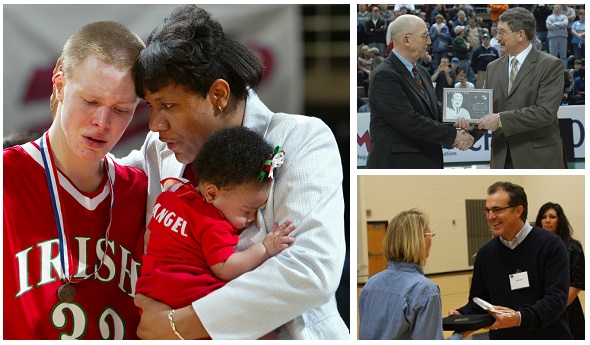
- Brown in 2006 became the first and only female coach to lead a boys team to the MHSAA Basketball Finals, guiding the Irish to the Class D Final before they fell to Wyoming Tri-unity Christian. She also served as principal and athletic director at Sacred Heart and coached the boys basketball team to a 114-30 record before taking over the Alma College women’s program, which she coached through this season. Click to read the memorial column from the Mount Pleasant Morning Sun’s Jim Lahde.
"RIP Keisha Brown. What a truly inspiring human being that battled cancer with courage and strength. My thoughts are with her family.” – Oakland Press reporter Drew Ellis, formerly of the Morning Sun
“Rest in Peace Keisha Brown #TrueWarrior. Words cannot express my sadness #HeartBroken.” – Alma College Sports Information Director Mike Hanson
- Bye worked in the Grand Haven school system for 34 years, including the last two-plus as athletic director after formerly serving as an assistant and a girls basketball coach. He also had been a middle school art teacher in the district, and last year received its “Spirit of Grand Haven” award for commitment and dedication to Grand Haven schools. Click to read the story on his passing from the Muskegon Chronicle’s Scott Brandenburg.
“Thinking of the Bye family tonight. Robin will be missed. As a person and an AD, he made me want to be better a person/coach. God Bless.” – Grand Haven boys basketball coach Steve Hewitt.
“I will miss Robin Bye. He made a big difference for the youth in our town, more than an athletic director; an inspiration.” – Grand Haven parent Pat McGinnis
- Gent began his career at Haslett in 1967 as a middle school teacher and high school coach in three sports. He was head coach of the track and field, boys basketball and football varsity teams at different times and began his second stint as the school’s athletic director in 1991. He also was an MHSAA registered official for more than 15 years and a mentor to many both in the Lansing area and statewide through his contributions to the Michigan Interscholastic Athletic Administrators Association. He received the MHSAA’s Charles E. Forsythe Award in 2008. See below for a video posted that year in honor of Gent as he retired as athletic director, and click for Dick Hoekstra's piece in the Lansing State Journal posted today.
“Sad to hear of the passing of Jamie Gent, long time Haslett HS athletic director. Really great guy, very kind hearted.” – former Haslett athlete, current White Pigeon teacher/coach Kurt Twichell
“Jamie Gent was one of the best ADs I had the privilege to know. A great loss tonight for the Haslett community.” – Chelsea football coach Brad Bush
PHOTOS: (Clockwise from left) Former Mount Pleasant Sacred Heart boys basketball coach Keisha Brown comforts one of her players after the Irish fell in the Class D Final in 2006. Jamie Gent, left, receives his Charles E. Forsythe Award from Negaunee's Jim Derocher during the 2008 Boys Basketball Finals. Grand Haven athletic director, Robin Bye, is recognized as an assistant coach on the 1981 girls basketball team inducted into the Grand Haven sports Hall of Fame.
Is Baseline Concussion Testing Right For You?
November 2, 2021

Did you know there’s a test that can aid your recovery if you sustain a concussion?
Read on to get the facts about baseline testing from Michelle Gambino-Gorney, a certified athletic trainer for Henry Ford Health System.
What Is Baseline Concussion Testing?
“Baseline testing is an evaluation of your normal brain function that tests for neurocognitive abnormalities,” explains Gambino-Gorney. “We recommend baseline testing prior to the start of a sports season, before tryouts or practice.”
During baseline concussion testing, athletic trainers or physicians collect extensive information about an athlete’s brain health. They evaluate health, family history and neurocognitive function. Gambino-Gorney says that might include assessing everything from balance and reflexes to memory, vision and concentration. “If the athlete does sustain a concussion during the season, we can compare pre-injury test results to post-injury test results and find out how the injury is affecting an athlete’s brain. It helps us make the right recovery plan and determine when it’s safe for them to return to their sport.”
Myth: Concussion Baseline Testing Is Only for Football Players
While baseline testing is ideal for athletes (ages 9 and up) who play high-impact collision sports, any athlete at risk of a concussion should consider baseline testing. This includes football, lacrosse and hockey players, in addition to gymnasts, snowboarders, skateboarders and lots of other athletes.
In fact, even if you just take the occasional weekend bike ride, go jogging or lift weights, there’s no harm in having baseline test results on file. Pre-concussion screenings can also benefit people with physically demanding jobs, such as first responders, military personnel and tactical athletes.
Myth: You Only Need to Get Baseline Testing Once
Just as your joints and muscles change as you get older, your brain changes, too. It’s best to get annual baseline testing. Yearly tests help your healthcare team keep track of your brain health over time. They can spot problems or changes early, before they develop into serious issues. Ask your physician about baseline neurocognitive testing as part of your annual sports physical.
Myth: Baseline Testing Is Only Useful If You Get a Concussion
First and foremost, baseline testing tracks your physical and mental well-being. Even if you never sustain a concussion, the test is a way to stay proactive about your brain health. Gambino-Gorney explains that they can look at test results across seasons to detect changes in neurocognitive function that can indicate disorders such as:
► Anxiety
► Attention-deficit/hyperactivity disorder (ADHD)
► Depression
► Learning disabilities
Myth: Baseline Testing Diagnoses a Concussion
Baseline testing is not a diagnostic tool for concussions. It’s one piece of all the information a healthcare provider needs to determine if you sustained a mild traumatic brain injury. In addition to comprehensive neurocognitive testing, your provider assesses a broad range of concussion signs and symptoms to confirm a diagnosis after you’ve sustained an impact to your head.
To find a primary care or sports medicine specialist at Henry Ford, visit henryford.com or call 1-800-436-7936.
Michelle Gambino-Gorney is a certified athletic trainer in the Henry Ford Kutcher Clinic for Concussion and Sports Neurology.