

Mourning Those Who Contributed Much
April 14, 2014
By Geoff Kimmerly
Second Half editor
This weekend was a sad one for those who work in Michigan high school athletics or have appreciated the contributions from three who gave significantly to our games but died after long fights with cancer.
Mount Pleasant Sacred Heart's Keisha Brown, Grand Haven's Robin Bye and Haslett's Jamie Gent left memorable legacies in their passing – Brown on Thursday, Gent on Friday and Bye on Saturday.
Following are just a few details of their contributions to schools and sports, followed by a handful of Twitter posts celebrating their commitments.
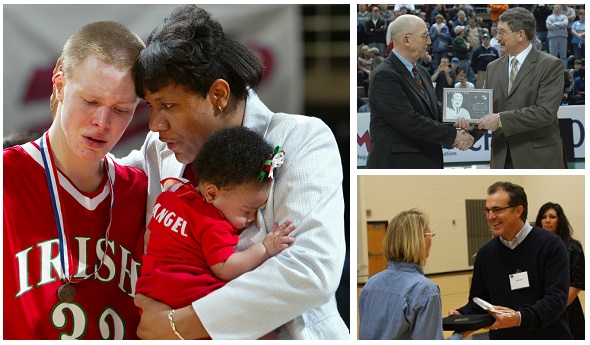
- Brown in 2006 became the first and only female coach to lead a boys team to the MHSAA Basketball Finals, guiding the Irish to the Class D Final before they fell to Wyoming Tri-unity Christian. She also served as principal and athletic director at Sacred Heart and coached the boys basketball team to a 114-30 record before taking over the Alma College women’s program, which she coached through this season. Click to read the memorial column from the Mount Pleasant Morning Sun’s Jim Lahde.
"RIP Keisha Brown. What a truly inspiring human being that battled cancer with courage and strength. My thoughts are with her family.” – Oakland Press reporter Drew Ellis, formerly of the Morning Sun
“Rest in Peace Keisha Brown #TrueWarrior. Words cannot express my sadness #HeartBroken.” – Alma College Sports Information Director Mike Hanson
- Bye worked in the Grand Haven school system for 34 years, including the last two-plus as athletic director after formerly serving as an assistant and a girls basketball coach. He also had been a middle school art teacher in the district, and last year received its “Spirit of Grand Haven” award for commitment and dedication to Grand Haven schools. Click to read the story on his passing from the Muskegon Chronicle’s Scott Brandenburg.
“Thinking of the Bye family tonight. Robin will be missed. As a person and an AD, he made me want to be better a person/coach. God Bless.” – Grand Haven boys basketball coach Steve Hewitt.
“I will miss Robin Bye. He made a big difference for the youth in our town, more than an athletic director; an inspiration.” – Grand Haven parent Pat McGinnis
- Gent began his career at Haslett in 1967 as a middle school teacher and high school coach in three sports. He was head coach of the track and field, boys basketball and football varsity teams at different times and began his second stint as the school’s athletic director in 1991. He also was an MHSAA registered official for more than 15 years and a mentor to many both in the Lansing area and statewide through his contributions to the Michigan Interscholastic Athletic Administrators Association. He received the MHSAA’s Charles E. Forsythe Award in 2008. See below for a video posted that year in honor of Gent as he retired as athletic director, and click for Dick Hoekstra's piece in the Lansing State Journal posted today.
“Sad to hear of the passing of Jamie Gent, long time Haslett HS athletic director. Really great guy, very kind hearted.” – former Haslett athlete, current White Pigeon teacher/coach Kurt Twichell
“Jamie Gent was one of the best ADs I had the privilege to know. A great loss tonight for the Haslett community.” – Chelsea football coach Brad Bush
PHOTOS: (Clockwise from left) Former Mount Pleasant Sacred Heart boys basketball coach Keisha Brown comforts one of her players after the Irish fell in the Class D Final in 2006. Jamie Gent, left, receives his Charles E. Forsythe Award from Negaunee's Jim Derocher during the 2008 Boys Basketball Finals. Grand Haven athletic director, Robin Bye, is recognized as an assistant coach on the 1981 girls basketball team inducted into the Grand Haven sports Hall of Fame.
Put a Stop to Recurring Injuries
May 5, 2020
 By Nick Parkinson, M.Ed., AT, ATC, TSAC-F
Henry Ford Health System
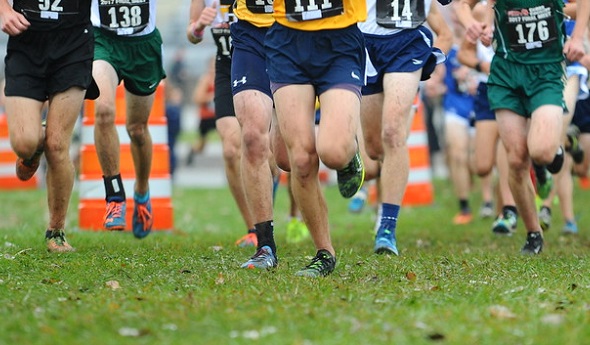
Recurring injuries happen — and they're especially common among single-sport athletes or people who focus on one type of exercise, like runners. The reason: You're working the same muscles repeatedly. The end result: Your joints, muscles and tissues get worn out.
Breaking Down Recurring Injuries
Overuse injuries are a big deal. Continuing to re-injure the same muscle groups can take you out of the game entirely and limit your ability to participate in other activities. Here's what you need to know about these all-to-common ailments:
What are Recurring Injuries?
Recurring injuries, also called repetitive and overuse injuries, are injuries that happen repeatedly in the same location. Think along the lines of tendinitis, stress fractures, shin splints and even carpal tunnel syndrome. Common sites include ankles, knees, hips and shoulders.
Who is at Risk for Repetitive Injuries?
Overuse injuries can happen to anyone, but they're more likely to occur among workers who do repetitive motions and single-sport athletes. The risk of these injuries also increases with age. They're more likely to occur if you don't recognize the impact aging can have on your muscles, joints and tissues and modify your activities accordingly.
Why Do Recurring Injuries Happen?
Recurring injuries happen when you overuse the same muscles without sufficient recovery. It's simple body mechanics: If you continue using compromised muscles, you're more likely to get reinjured. And once you get stuck in that same biomechanic loop, it's nearly impossible to recover without changing your routine and learning new techniques.
How Can You Prevent Recurring Injuries?
All sports have a risk of injury. The key is paying attention to your body and taking the appropriate steps to minimize your risk. Here's how:
• Use appropriate gear. Make sure you're wearing appropriate protective gear for the activity you're participating in and choose the right footwear.
• Alternate muscle groups. Instead of focusing on one type of exercise, switch things up. Incorporate low-impact activities, such as swimming, biking and water sports, and make sure you're not overloading any particular muscle group.
• Take rest days. It's important to give your muscles, joints and tissues time to recover. Two days of rest each week is best. If you play a sport, plan to have at least one off day per week and at least one month off per year.
• Strengthen muscles. Conditioning exercises can help strengthen the muscles you need to perform various activities.
• Use proper form. Overuse injuries are sometimes related to improper form during activity. Work with a professional to ensure you're using proper body mechanics and get back to your usual activities gradually.
Play it Safe
The best way to avoid recurrent injuries is to not get injured in the first place. Recover during the season — even if it means missing out on some play. It's better to show up to a game healthy but undertrained than to power through an injury and risk reinjury.
Talk to your doctor before starting a new activity or ramping up your current routine. If you're at risk of developing a recurrent injury, a professional can provide you with a workout regimen that can help prevent injury.
Most important: Don't let an overuse injury prevent you from being physically active. Instead, listen to your body, consult a professional and pace yourself. Treatment may involve avoiding a specific activity for a period of time, along with hot and cold therapy, massage and focused rehabilitation.
Nick Parkinson, M.Ed., AT, ATC, TSAC-F, is the Supervisor of Athletic Training with Henry Ford Sports Medicine and also leads Sports Performance training at the William Clay Ford Center for Athletic Medicine. Learn more about Nick.
Want to learn more? Henry Ford Health System sports medicine experts are treating the whole athlete, in a whole new way. From nutrition to neurology, and from injury prevention to treatment of sports-related conditions, they can give your athlete a unique game plan.
Visit henryford.com/sports or call (313) 972-4216 for an appointment within 24 business hours.