

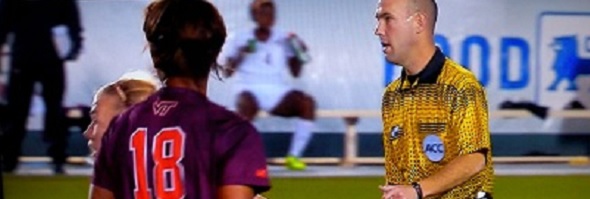
All in the Details
December 3, 2015
By Brent Sorg
Collegiate official & MHSAA coach
In my experience as both an official and coach, my partners or officials assigned to work my match are judged the moment we meet and make contact. That is human nature.
What is important is to make that first impression a positive one. At first contact, when greeting an administrator, coach or fellow official, look the person in the eye when shaking hands and be sincere in your greeting. When the person speaks, look them in the eye and listen. Sounds simple, yet I’ve seen many fail at this task and thus set themselves up for a difficult match.
The next moment of impact is the conversations that take place. It is totally acceptable to have a laugh and a joke, but be sure the environment and timing is right. You may ask, “Who is to judge when the time is correct?” It is all a feeling – a sort of sixth sense. I have witnessed on numerous occasions during the pregame check-in where officials “dig their own grave” by telling the players how they are going to call the game. Then they continue with how they will only talk to the captain. That is nonsense! In the business of managing people, it is imperative to deal with everyone involved in the game.
Once the match begins, the next task to strive for is not looking at the ball the entire time. From the first class I took on officiating, I was told the ball never commits a foul. In my 25 years, this is still true. Look ahead, scan the field, watch the players battling for position prior to the ball arriving. If one of the backs has the ball at his feet and is under zero pressure, there is no need to watch him pass the ball. Look instead at the forward checking back who is tightly marked by an opposing defender.
The game continues to evolve with faster, smarter, and more creative players. The coaches are implementing tactics to create every advantage possible. As you go about the game as the center official, don’t just judge fouls/non-foul moments, but expand your knowledge. What are the tendencies of certain players on the field? Are teams looking to build up or are they using a more direct style of play? This will help with your positioning and anticipating movement.
Almost every match has at least one defining moment that you as the referee must have the courage to deal with. It is often referred to as the “moment of truth.” It could mean you rule it is not a foul and don’t even have to blow the whistle, but you must deal with dissent. Or it could mean a stern talking to the player, issuing a caution, or showing the red card. Reflecting on the mentors I have had over the years and those I still look up today, I think about a consistent theme heard from all: Make sure you get something out of each caution or send-off.
Be brave. Make the tough decisions. Remember, the players are the ones who commit fouls forcing us to make certain decisions.
Many of you watch professional games on television, and I think we can all learn from them. In particular, I think the EPL (English Premier League) referees do an excellent job of isolating the guilty player, explaining the decision, and then showing the card. All while looking the player square in the eyes.
Your mindset to a match should be one of teamwork and one that fosters harmony with the players on the pitch. Not an “us vs. them” mentality.
Finally, be willing to admit a mistake. You are not perfect! You are a human being. It is OK to admit an error, but be genuine about it. Be sympathetic when appropriate. Be firm yet fair.
Most importantly, enjoy.
Sorg is a former National Referee and current NISOA Referee (ACC, Big Ten, Big East, Horizon, Conference USA, MAC); he also is a high school boys head coach who recently concluded his 11th season.
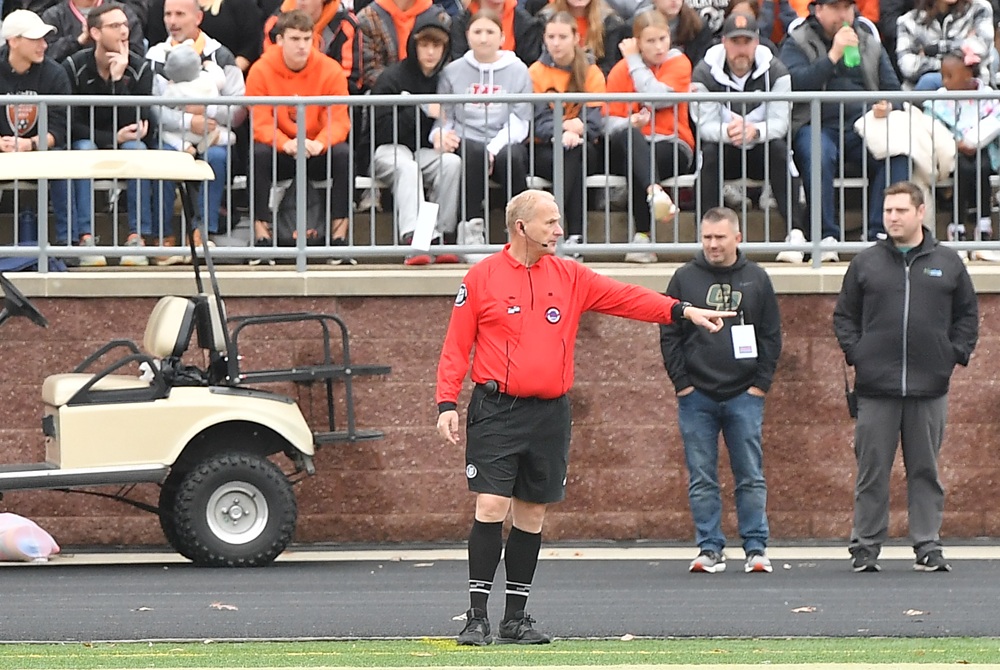
Be the Referee: Soccer Foul After Shot on Goal
By
Paige Winne
MHSAA Director of Brand Management
September 2, 2026
Be The Referee is a series of short messages designed to help educate people on the rules of different sports, to help them better understand the art of officiating, and to recruit officials.
Below is this week's segment – Soccer Foul After Shot on Goal - Listen
We’re on the soccer field today, and the home team has the ball and is on the attack.
The ball makes it around to a forward from the home team, who is on-side and within the penalty area. His shot just misses – going wide for a goal kick.
However, just after the ball crossed the goalline, a player from the away team tackles the home team forward with excessive force.
What’s the call?
Because excessive force was used, it’s a red card for the away team player, which is an automatic ejection. But because it happened after the ball crossed the goalline and not at the time of the shot, it’s still a goal kick for the away team, not a penalty kick for the home team.
Previous 2026-27 editions
Aug. 25: Fumble Out of Bounds - Listen