

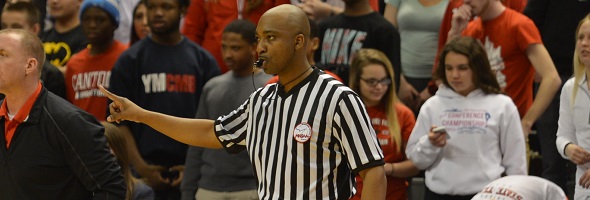
Be the Referee: Basketball Announcers
February 4, 2015
This week, MHSAA assistant director Mark Uyl explains the proper role of high school basketball public address announcers.
Be The Referee is a series of short messages designed to help educate people on the rules of different sports, to help them better understand the art of officiating, and to recruit officials.
Below is this week's segment - Basketball PA Announcers - Listen
Whenever there are rules changes in any sport, we usually think of the three groups that are most affected by those changes – obviously, the players, the coaches and the referees. This year in basketball, an additional group is receiving some attention from the rules makers, and those are the public address announcers.
At the college and pro levels, the P.A. Announcers are almost taking on a life of their own. They are seen in their communities and their towns as the home team’s biggest fan.
At the high school level, a good P.A. Announcer gives attention to both teams – the kids from both the home team and the visiting team – that do things that are noteworthy during the game. A P.A. Announcer should be there first to inform – not to entertain – and keeping sportsmanship at the forefront of every game.
Past editions
Jan. 26 - Wrestling Health Concerns - Listen
Jan. 19 - Basketball Physical Contact - Listen
Jan. 12 - Video Review Part 2 - Listen
Dec. 29 - Video Review Part 1 - Listen
Dec. 17 - Registration Part 2 - Listen
Dec. 10 - Registration Part 1 - Listen
Dec. 3 - Legacy Program - Listen
Nov. 26 - Sideline Management - Listen
Nov. 19 - 7-Person Mechanics - Listen
Nov. 12 - Blocking Below the Waist - Listen
Nov. 5 - Tournament Selection - Listen
Oct. 29 - Uncatchable Pass - Listen
Oct. 22 - Preparation for Officials - Listen
Oct. 15 - Automatic First Downs - Listen
Oct. 8 - Officials & Injuries - Listen
Oct. 1 - Overtime - Listen
Sept. 25 - Field Goals - Listen
Sept. 18 - Tackle Box - Listen
Sept. 11 - Pass Interference - Listen
Aug. 25 - Targeting - Listen
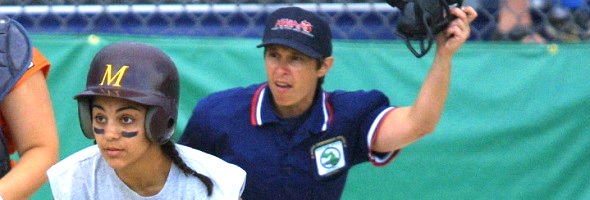
Be the Referee: Balks
May 27, 2015
This week, MHSAA assistant director Mark Uyl explains the often-misunderstood baseball balk rule.
Be The Referee is a series of short messages designed to help educate people on the rules of different sports, to help them better understand the art of officiating, and to recruit officials.
Below is this week's segment - Balks - Listen
One of the most misunderstood rules in all levels of baseball deals with the pitcher and the balk rule.
The balk rule is in place to make sure that the pitcher does not cheat to gain an unfair advantage on a baserunner who is either attempting to steal a base or advance to that next base.
In high school, whenever a pitcher commits a balk, the ball becomes dead immediately. The pitch does not count, and simply, all runners on base advance one base.
Under professional rules, when watching the Tigers, you’ll notice that if the pitcher balks – and it’s followed immediately by a pitch – and the hitter then puts the ball in play – and advances to at least first base – the balk is ignored, and we now go based on the ball put in play.
Past editions
May 18 - Baseball Pace of Play - Listen
May 11 - Fair or Foul Ball? - Listen
May 4 - Non-Glare Helmets - Listen
April 27 - Vern L. Norris Award - Listen
March 23 - Deciding the Game - Listen
March 16 - Block/Charge Call - Listen
March 9 - Dive on the Floor - Listen
March 2 - Primary Areas - Listen
Feb. 23 - Too Much TV - Listen
Feb. 16 - Video Clip Library - Listen
Feb. 9 - Cheer Safety - Listen
Feb. 2 - Basketball PA Announcers - Listen
Jan. 26 - Wrestling Health Concerns - Listen
Jan. 19 - Basketball Physical Contact - Listen
Jan. 12 - Video Review Part 2 - Listen
Dec. 29 - Video Review Part 1 - Listen
Dec. 17 - Registration Part 2 - Listen
Dec. 10 - Registration Part 1 - Listen
Dec. 3 - Legacy Program - Listen
Nov. 26 - Sideline Management - Listen
Nov. 19 - 7-Person Mechanics - Listen
Nov. 12 - Blocking Below the Waist - Listen
Nov. 5 - Tournament Selection - Listen
Oct. 29 - Uncatchable Pass - Listen
Oct. 22 - Preparation for Officials - Listen
Oct. 15 - Automatic First Downs - Listen
Oct. 8 - Officials & Injuries - Listen
Oct. 1 - Overtime - Listen
Sept. 25 - Field Goals - Listen
Sept. 18 - Tackle Box - Listen
Sept. 11 - Pass Interference - Listen
Aug. 25 - Targeting - Listen