


Be the Referee: Basketball Replay
December 26, 2015
This week, MHSAA assistant director Mark Uyl explains the use of instant replay in basketball only for MHSAA Semifinals and Finals.
Be The Referee is a series of short messages designed to help educate people on the rules of different sports, to help them better understand the art of officiating, and to recruit officials.
Below is this week's segment - Basketball Instant Replay - Listen
When watching a college or NBA game, the last 2 minutes of the game can seem like they take forever, especially in recent years where more and more judgment calls made by officials are subject to instant replay.
At the high school level, video is not used to make a ruling or confirm or overturn a call made during the course of the contest. The only time video review is used at the high school level is at the MHSAA Semifinal and Final games held at the Breslin Center. In these games, video review can be used only to determine if a shot was released in time at the end of the 4th quarter or overtime or if that shot in those periods was a 2-point or 3-point field goal when the shot is released near the 3-point line.
The MHSAA believes that this very limited use of replay in these games at the very end of the tournament series in boys and girls basketball is the right call.
Past editions:
Dec. 17: Basketball Communication - Listen
Dec. 10: Basketball Excessive Contact - Listen
Nov. 26: Pregame Communication - Listen
Nov. 19: Trick Plays - Listen
Nov. 12: 7-Person Football Mechanics - Listen
Nov. 5: Make the Call: Personal Fouls - Listen
Oct. 29: Officials Demographics - Listen
Oct. 15: Make the Call: Intentional Grounding - Listen
Oct. 8: Playoff Selection - Listen
Oct. 1: Kick Returns - Listen
Sept. 24: Concussions - Listen
Sept. 17: Automatic First Downs - Listen
Sept. 10: Correcting a Down - Listen
Sept 3: Spearing - Listen
Aug. 27: Missed Field Goal - Listen
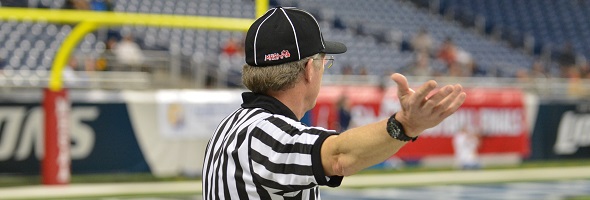
Be the Referee: Toughest Call
November 16, 2017
In this week's edition, assistant director Mark Uyl explains why pass interference is the toughest call for our football officials to make.
Be The Referee is a series of short messages designed to help educate people on the rules of different sports, to help them better understand the art of officiating, and to recruit officials.
Below is this week's segment – Toughest Call - Listen
At all levels of football, far and away the most difficult and controversial call to make is pass interference.
Pass interference can be challenging for officials because so much of it is based on judgment. Were the two players moving down the field making a legitimate play on the football; or did one of the two players initiate contact that created a disadvantaged situation for the opposing player?
Remember, when the ball is in the air, that both players – the offense and the defense – have an equal right to go for the football, making a legitimate play on it. But when that illegal contact occurs, that’s when the flag should come for pass interference.
Past editions
November 9: Hurdling - Listen
November 2: The Survey Says - Listen
October 26: Helmet Comes Off - Listen
October 19: Goal Line Rules - Listen
October 12: No 1st-Year Fee - Listen
October 5: Athletic Empty Nesters - Listen
September 28: Misunderstood Football Rules: Kicking - Listen
September 21: Preparation for Officials - Listen
September 14: Always Stay Registered - Listen
September 7: Other Football Rules Changes - Listen
August 31: Pop-Up Onside Kicks - Listen
August 24: Blindside Blocks - Listen