


Be the Referee: Because They Love It
February 13, 2019
This week, MHSAA assistant director Brent Rice explains why officials take up the avocation despite frequent criticism of their best efforts.
Be The Referee is a series of short messages designed to help educate people on the rules of different sports, to help them better understand the art of officiating, and to recruit officials.
Below is this week's segment – Because They Love It - Listen
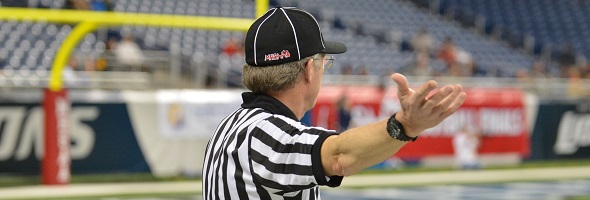
After the uproar about officiating in a recent pro football game, an online article appeared with the headline “Why in the world would anyone want to be a referee?” It’s a good question.
While everyone in the game – players, coaches and officials – strive for perfection, only the officials are ultimately expected to reach that standard. And that’s simply not fair. So why would anyone want to be a referee?
Every referee will give you three little words: “I love it!” They love it because they know how important it is – no matter the level of play. And they want to be right all the time – and most of the time they are. And like a lot of other things in sports, the friendships and relationships built, the memories – they can’t be beat. So we’ll always encourage people to join us as referees, and for those who can’t – or won’t – to stay in their lane when at the game.
Past editions
February 7: Coach/Official Communication - Listen
January 31: Backcourt Violation? - Listen
January 24: Required Hockey Equipment - Listen
January 17: You Make the Call: 10-Second Clock - Listen
January 10: Tripping in Hockey - Listen
January 3: Sliding in Basketball - Listen
December 27: Stalling in Wrestling - Listen
December 20: Basketball: You Make the Call - Listen
December 13: Basketball Uniform Safety - Listen
December 6: Coaching Box Expansion - Listen
November 29: Video Review, Part 2 - Listen
November 22: Video Review, Part 1 - Listen
November 15: You Make the Call - Sleeper Play - Listen
November 8: 7-Person Football Crews - Listen
November 1: Overtime Differences - Listen
October 25: Trickery & Communication - Listen
October 18: Punts & Missed Field Goals - Listen
October 11: What Officials Don't Do - Listen
October 4: Always 1st-and-Goal - Listen
September 27: Unique Kickoff Option - Listen
September 20: Uncatchable Pass - Listen
September 13: Soccer Rules Change - Listen
September 6: You Make the Call: Face Guarding - Listen
August 30: 40-Second Play Clock - Listen
August 23: Football Rules Changes - Listen
Be the Referee: Video Review - Part 2
January 15, 2015
This week, MHSAA assistant director Mark Uyl explains further the use of video replay during MHSAA tournament events and why it is difficult to expand use at the high school level.
Be The Referee is a series of short messages designed to help educate people on the rules of different sports, to help them better understand the art of officiating, and to recruit officials.
Below is this week's segment - Video Review Part 2 - Listen
In last week’s segment, we talked about the expanded use of instant replay for officials at both the collegiate and professional levels. The question is often asked of the MHSAA, “When are you going to use more instant replay at the high school level?”
Currently, there are a number of obstacles that prevent this, the first dealing with volume. With over 700 member schools in the MHSAA, hundreds of games and contests are played on virtually every night of the week. The second deals with cost and camera angles. At the high school level, most games are typically filmed or videoed using only a single camera from a set location, which precludes the use of various angles that would assist in getting the call correct.
Past editions
Dec. 29 - Video Review Part 1 - Listen
Dec. 17 - Registration Part 2 - Listen
Dec. 10 - Registration Part 1 - Listen
Dec. 3 - Legacy Program - Listen
Nov. 26 - Sideline Management - Listen
Nov. 19 - 7-Person Mechanics - Listen
Nov. 12 - Blocking Below the Waist - Listen
Nov. 5 - Tournament Selection - Listen
Oct. 29 - Uncatchable Pass - Listen
Oct. 22 - Preparation for Officials - Listen
Oct. 15 - Automatic First Downs - Listen
Oct. 8 - Officials & Injuries - Listen
Oct. 1 - Overtime - Listen
Sept. 25 - Field Goals - Listen
Sept. 18 - Tackle Box - Listen
Sept. 11 - Pass Interference - Listen
Aug. 25 - Targeting - Listen