

Be the Referee: Communication
December 17, 2015
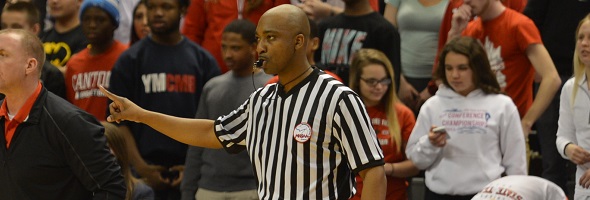
This week, MHSAA assistant director Mark Uyl explains the expectations for officials working with coaches during basketball games.
Be The Referee is a series of short messages designed to help educate people on the rules of different sports, to help them better understand the art of officiating, and to recruit officials.
Below is this week's segment - Basketball Communication - Listen
The most challenging task in officiating any basketball game for referees is effectively working with coaches. In a perfect world, coaches would simply ask questions on plays they had questions or concerns about and the official would simply respond with a description of what he or she saw on the play.
The very best basketball officials keep the communication with coaches during a game a conversation, not an ongoing argument. Officials need to always be in control of their emotions, answer questions from coaches honestly and head off behavior early that is argumentative and unprofessional. Coaches and officials working together makes for a much better game as everyone in the gym – players, media members and spectators – take their cues for how coaches are acting. When coaches are professional with officials, the entire atmosphere is so much more positive.
Past editions:
Dec. 10: Basketball Excessive Contact - Listen
Nov. 26: Pregame Communication - Listen
Nov. 19: Trick Plays - Listen
Nov. 12: 7-Person Football Mechanics - Listen
Nov. 5: Make the Call: Personal Fouls - Listen
Oct. 29: Officials Demographics - Listen
Oct. 15: Make the Call: Intentional Grounding - Listen
Oct. 8: Playoff Selection - Listen
Oct. 1: Kick Returns - Listen
Sept. 24: Concussions - Listen
Sept. 17: Automatic First Downs - Listen
Sept. 10: Correcting a Down - Listen
Sept 3: Spearing - Listen
Aug. 27: Missed Field Goal - Listen
Be the Referee: Puck on Goal Netting
By
Paige Winne
MHSAA Marketing & Social Media Coordinator
December 9, 2025
Be The Referee is a series of short messages designed to help educate people on the rules of different sports, to help them better understand the art of officiating, and to recruit officials.
Below is this week's segment – Puck on Goal Netting - Listen
We’re on the ice today, where after being last touched by Team A, the puck comes to rest on top of the goal netting. What happens?
New this year in high school ice hockey: If a puck is on the top of the goal netting, it’s an immediate stoppage. The puck is considered out of play.
It goes back into play via a faceoff from the nearest faceoff dot in the defending team’s zone.
Why the change from previous years? Because a puck on top of the netting creates too many problematic scenarios to be considered playable – you could have high sticking, closed hand (handling of the puck), goalkeeper contact or player-in-the-goal-crease.
If the puck is on top of the goal netting, blow the whistle and resume with a faceoff.
Previous 2025-26 editions
Dec. 2: Goaltending vs. Basket Interference - Listen
Nov. 25: Football Finals Instant Replay - Listen
Nov. 18: Volleyball Libero Uniforms - Listen
Nov. 11: Illegal Substitution/Participation - Listen
Nov. 4: Losing a Shoe - Listen
Oct. 28: Unusual Soccer Goals - Listen
Oct. 21: Field Hockey Penalty Stroke - Listen
Oct. 14: Tennis Double Hit - Listen
Oct. 7: Safety in Football - Listen
Sept. 30: Field Hockey Substitution - Listen
Sept 23: Multiple Contacts in Volleyball - Listen
Sept. 16: Soccer Penalty Kick - Listen
Sept. 9: Forward Fumble - Listen
Sept. 2: Field Hockey Basics - Listen
Aug. 26: Golf Ball Bounces Out - Listen
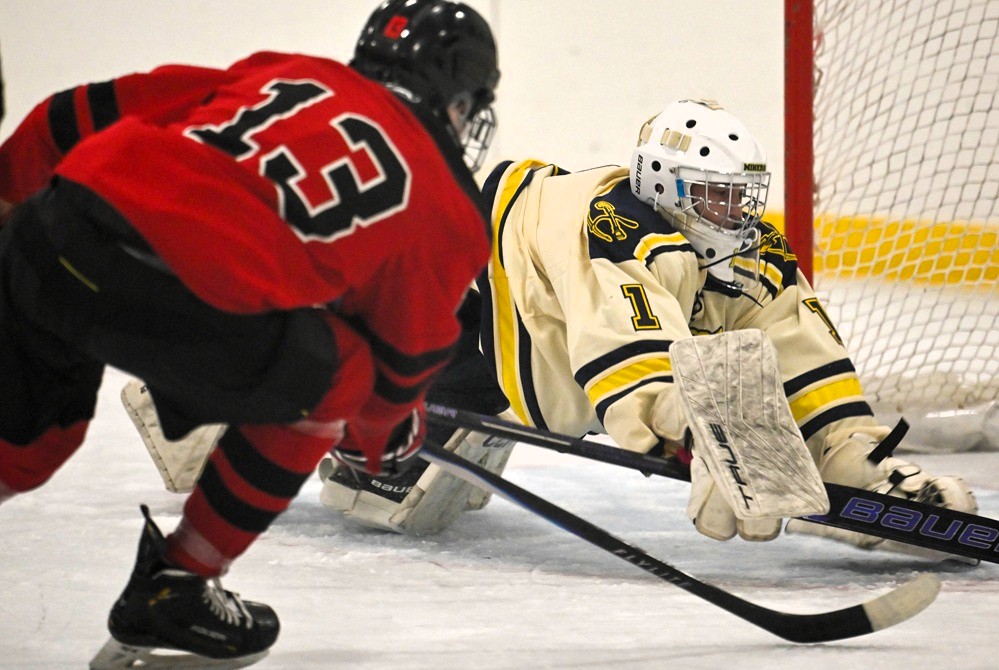
PHOTO Marquette's Skyler Blackburn and Negaunee goalie Kurt O'Brien scramble for the puck during a Nov. 8 matchup. (Photo by Randy Ritari.)