


Be the Referee: Dive on the Floor
December 7, 2017
In this week's edition, assistant director Mark Uyl discusses some of the misunderstandings that arise when a basketball player dives for and gains possession of a loose ball.
Be The Referee is a series of short messages designed to help educate people on the rules of different sports, to help them better understand the art of officiating, and to recruit officials.
Below is this week's segment – Dive on the Floor - Listen
In just about every single basketball game that’s played during the season, a player will hustle and dive for a loose ball that’s on the floor. As that player dives and tries to gain possession of the ball on the floor, yells from every corner of the gym come, screaming for a call of traveling.
This is one of the more misunderstood situations under basketball rules. Once that player dives for the loose ball on the floor and gains possession, there are two ways in which they’re guilty of a traveling violation: The first is if the player takes the ball and attempts to stand up; or the second, the player rolls over from their back to the front or front to back.
Other than that, that’s a legal play, and the ball remains in play.
Past editions
November 30: Wrestling Weight Monitoring - Listen
November 23: Ejections - Listen
November 16: Toughest Call - Listen
November 9: Hurdling - Listen
November 2: The Survey Says - Listen
October 26: Helmet Comes Off - Listen
October 19: Goal Line Rules - Listen
October 12: No 1st-Year Fee - Listen
October 5: Athletic Empty Nesters - Listen
September 28: Misunderstood Football Rules: Kicking - Listen
September 21: Preparation for Officials - Listen
September 14: Always Stay Registered - Listen
September 7: Other Football Rules Changes - Listen
August 31: Pop-Up Onside Kicks - Listen
August 24: Blindside Blocks - Listen
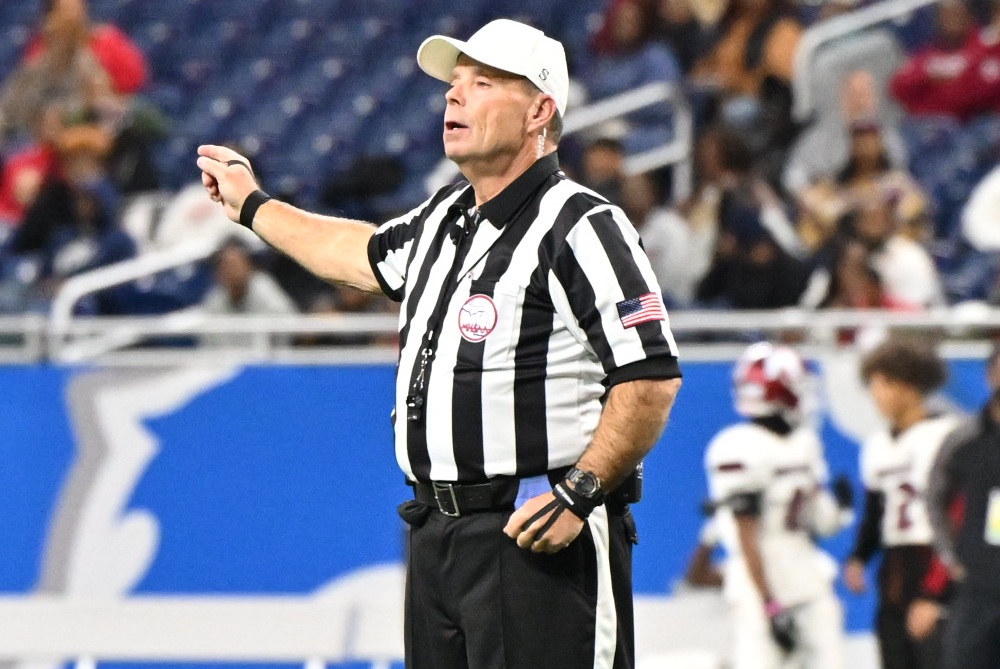
Be the Referee: Defensive Holding
By
Paige Winne
MHSAA Director of Brand Management
October 6, 2026
Be The Referee is a series of short messages designed to help educate people on the rules of different sports, to help them better understand the art of officiating, and to recruit officials.
Below is this week's segment – Defensive Holding - Listen
Team A has the ball on their own 20-yard line and its 4th-and-15. They decide to go for it. The quarterback drops back to pass and is sacked at his 15-yard line, a five-yard loss.
But during the play, Team B – the defense – is flagged for holding an eligible wide receiver.
How is the penalty administered?
- Is it 4th-and-5 from Team A’s 30?
- Is it 4th-and-10 from Team A’s 25?
- Is it 1st-and-10 from Team A’s 30?
- Or is it 1st-and-10 from Team A’s 25?
If you said it is 4th-and-5 from Team A’s 30 – you are correct.
Defensive holding is a 10-yard penalty from the previous spot – which was the 20-yard line. Team A now has possession at the 30, needing to get to the 35 for first down.
Previous 2026-27 editions
Sept. 29: Minimum Number of Volleyball Players - Listen
Sept 22: Soccer Changes - Listen
Sept: 15: Dead Ball Penalty - Listen
Sept. 8: Libero Ejected - Listen
Sept. 1: Soccer Foul After Shot on Goal - Listen
Aug. 25: Fumble Out of Bounds - Listen