

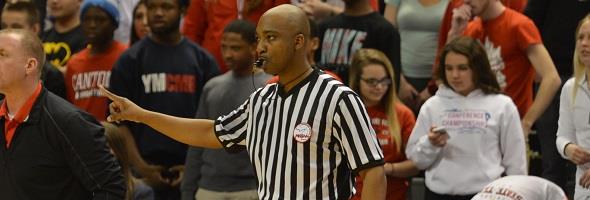
Be the Referee: Dog Days of February
February 15, 2018
In this week's edition, assistant director Mark Uyl talks about some of the challenges that arise during a pivotal point every basketball season.
Be The Referee is a series of short messages designed to help educate people on the rules of different sports, to help them better understand the art of officiating, and to recruit officials.
Below is this week's segment – Dog Days of February - Listen
Every summer, we hear broadcasters talk about the “Dog Days” of the major league baseball season during the month of August and into September, when everybody hits the proverbial wall.
During the month of February, we have also arrived at the Dog Days of the high school basketball season. All of the work that’s gone in in the previous three months is beginning to add up, for both coaches and officials alike. For coaches, it’s managing the pressures and expectations within each of their teams; and for officials, all of those miles up and down the floor are beginning to add up.
It’s this time of year where both groups need to refocus and re-energize themselves to give students the best possible experience during the month of March.
Past editions
February 8: National Playing Rules Process - Listen
February 1: Calling Intentional Fouls - Listen
January 25: Points at the Edge of the Mat - Listen
January 18: Behavior Warning - Listen
January 11: Ice Hockey Safe & Sound - Listen
January 4: Why No Shot Clock - Listen
December 21: Coaches Responsible for Equipment - Listen
December 14: Mentoring New Officials - Listen
December 7: Dive on the Floor - Listen
November 30: Wrestling Weight Monitoring - Listen
November 23: Ejections - Listen
November 16: Toughest Call - Listen
November 9: Hurdling - Listen
November 2: The Survey Says - Listen
October 26: Helmet Comes Off - Listen
October 19: Goal Line Rules - Listen
October 12: No 1st-Year Fee - Listen
October 5: Athletic Empty Nesters - Listen
September 28: Misunderstood Football Rules: Kicking - Listen
September 21: Preparation for Officials - Listen
September 14: Always Stay Registered - Listen
September 7: Other Football Rules Changes - Listen
August 31: Pop-Up Onside Kicks - Listen
August 24: Blindside Blocks - Listen
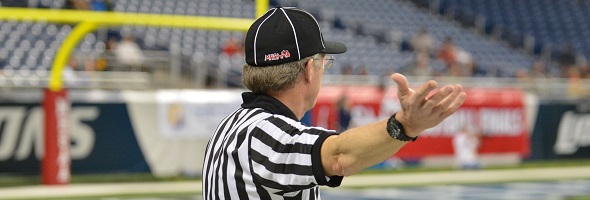
Be the Referee: Automatic 1st Downs
October 16, 2014
This week, MHSAA assistant director Mark Uyl explains the differences between high school and college and pro football when it comes to awarding automatic first downs.
"Be the Referee" is designed to help educate people on the rules of different sports, to help them better understand the art of officiating and to recruit officials. The segment can be heard on Mondays, Wednesdays and Fridays during the school year on The Drive With Jack Ebling on WVFN-AM, East Lansing.
Below is this week's segment - Automatic First Downs - Listen
Today we are going to talk about one of the biggest rule difference areas in high school football from those rules used in college and pro games and that deals with automatic first downs.
When watching that college game on Saturday or the pro game on Sunday, all of us know there are several defensive fouls that give the offense an automatic first down. However, under high school rules, the opposite is true most of the time.
The only high school fouls that result in an automatic first down for the offense are the roughing fouls - roughing the passer, the kicker, the holder and the long snapper. Fouls such as defensive pass interference or any other personal foul do not bring an automatic first down under high school rules.
Past editions
Oct. 8 - Officials & Injuries - Listen
Oct. 1 - Overtime - Listen
Sept. 25 - Field Goals - Listen
Sept. 18 - Tackle Box - Listen
Sept. 11 - Pass Interference - Listen
Aug. 25 - Targeting - Listen