


Be the Referee: Ejections
November 24, 2017
In this week's edition, assistant director Mark Uyl discusses the penalties that come with a player or coach ejection.
Be The Referee is a series of short messages designed to help educate people on the rules of different sports, to help them better understand the art of officiating, and to recruit officials.
Below is this week's segment – Ejections - Listen
Good sportsmanship is at the foundation of what high school sports is all about. Whenever a coach or player is ejected for unsportsmanlike conduct or behavior, that individual is suspended for the rest of that day of competition.
In some sports, that means that they’re done for the rest of that game on that day; or in sports where there are doubleheaders or tournament play involved, the person is disqualified from that entire day of competition.
The rule then also requires that the coach or player is ineligible for the subsequent day of competition, essentially being a one-day suspension for anyone who is ejected.
Past editions
November 16: Toughest Call - Listen
November 9: Hurdling - Listen
November 2: The Survey Says - Listen
October 26: Helmet Comes Off - Listen
October 19: Goal Line Rules - Listen
October 12: No 1st-Year Fee - Listen
October 5: Athletic Empty Nesters - Listen
September 28: Misunderstood Football Rules: Kicking - Listen
September 21: Preparation for Officials - Listen
September 14: Always Stay Registered - Listen
September 7: Other Football Rules Changes - Listen
August 31: Pop-Up Onside Kicks - Listen
August 24: Blindside Blocks - Listen
Be the Referee: Minimum Number of Volleyball Players
By
Paige Winne
MHSAA Director of Brand Management
September 29, 2026
Be The Referee is a series of short messages designed to help educate people on the rules of different sports, to help them better understand the art of officiating, and to recruit officials.
Below is this week's segment – Minimum Number of Volleyball Players - Listen
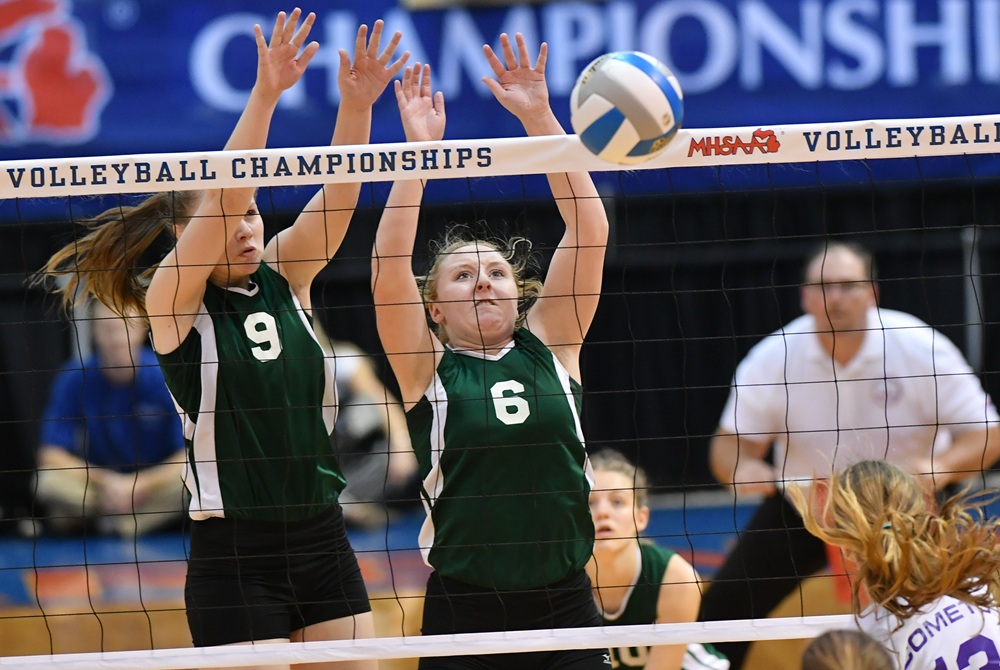
We’re on the volleyball court today, where the home team starts the match with only six players.
Midway through the first set, one of those six players suffers an ankle injury and can’t continue – leaving the home team with just five players.
What should happen?
Is the home team forced to default the match for not having enough players?
Does the home team just continue playing with five?
Or do they continue playing with five, but with the loss of rally or point every time the player lost to injury’s position rotates to serve?
If you said they can continue playing but lose a rally or point every time the injured player’s position rotates to serve, you are correct!
A minimum of six is needed to start – but you can finish a match with fewer than that.
Previous 2026-27 editions
Sept 22: Soccer Changes - Listen
Sept: 15: Dead Ball Penalty - Listen
Sept. 8: Libero Ejected - Listen
Sept. 1: Soccer Foul After Shot on Goal - Listen
Aug. 25: Fumble Out of Bounds - Listen