

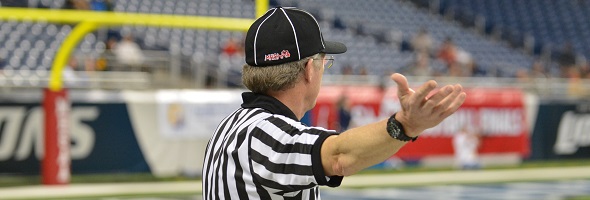
Be the Referee: Football Targeting
August 22, 2014
The series features MHSAA assistant director Mark Uyl's insights on officiating. These weekly messages can be heard on Mondays, Wednesdays and Fridays during the school year on The Drive With Jack Ebling on WVFN-AM, East Lansing.
Below is this week's segment:
"Be The Referee"
Aug. 25 - Targeting - Listen
Today we are going to talk about one of the new rules changes for this fall’s high school football season, targeting. This is yet another example of player safety being the number one priority in our game.
Targeting deals with getting the “head” out of the game of football. Many times when you will see a targeting foul is when a player will use the top or the crown of his helmet to launch or propel himself into an opposing player, making that helmet to helmet contact, which can be so dangerous for both players involved.
When a targeting foul happens, the officials, if they judge it to be flagrant, can not only enforce a 15-yard penalty but also can eject the offending player.
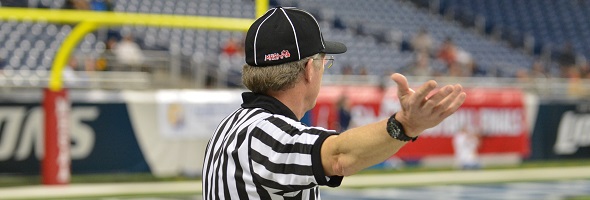
Be the Referee: Toughest Call
November 16, 2017
In this week's edition, assistant director Mark Uyl explains why pass interference is the toughest call for our football officials to make.
Be The Referee is a series of short messages designed to help educate people on the rules of different sports, to help them better understand the art of officiating, and to recruit officials.
Below is this week's segment – Toughest Call - Listen
At all levels of football, far and away the most difficult and controversial call to make is pass interference.
Pass interference can be challenging for officials because so much of it is based on judgment. Were the two players moving down the field making a legitimate play on the football; or did one of the two players initiate contact that created a disadvantaged situation for the opposing player?
Remember, when the ball is in the air, that both players – the offense and the defense – have an equal right to go for the football, making a legitimate play on it. But when that illegal contact occurs, that’s when the flag should come for pass interference.
Past editions
November 9: Hurdling - Listen
November 2: The Survey Says - Listen
October 26: Helmet Comes Off - Listen
October 19: Goal Line Rules - Listen
October 12: No 1st-Year Fee - Listen
October 5: Athletic Empty Nesters - Listen
September 28: Misunderstood Football Rules: Kicking - Listen
September 21: Preparation for Officials - Listen
September 14: Always Stay Registered - Listen
September 7: Other Football Rules Changes - Listen
August 31: Pop-Up Onside Kicks - Listen
August 24: Blindside Blocks - Listen