


Be the Referee: The Goal Line
November 3, 2016
This week, MHSAA assistant director Mark Uyl discusses how rules regarding the football goal line are at times the same and differ from those at other levels of the sport.
Be The Referee is a series of short messages designed to help educate people on the rules of different sports, to help them better understand the art of officiating, and to recruit officials.
Below is this week's segment – The Goal Line - Listen
There’s an old saying in football officiating that the most important line on the field is the goal line. This is certainly true when it comes to touchdowns as the high school rule is just like that at the college and pro level, where all the ball has to do is break the plane for a score.
One unique part of the goal line under high school rules deals with kicks. Whenever a kickoff or a punt breaks the plane of the goal line, it becomes a dead ball with an automatic touchback.
Now whenever the defense gets possession of the ball in the end zone, it can return a fumble or interception out of the end zone for advancement – except if it’s on an extra point or anytime in overtime.
Past editions
Oct. 27: Help Us Retain Officials - Listen
Oct. 20: Point After Touchdown - Listen
Oct. 13: Untimed Down - Listen
Oct. 6: Soccer Penalty Kick Change - Listen
Sept. 29: Preparation for Officials - Listen
Sept 22: You Make the Call: Returning Kickoffs - Listen
Sept. 15: Concussions - Listen
Sept 8: Equipment Covering the Knees - Listen
Sept. 1: Play Clock Experiment - Listen
Aug. 25: Clipping in the Free Blocking Zone - Listen
Be the Referee: Wrong Green
By
Paige Winne
MHSAA Director of Brand Management
April 29, 2026
Be The Referee is a series of short messages designed to help educate people on the rules of different sports, to help them better understand the art of officiating, and to recruit officials.
Below is this week's segment – Wrong Green - Listen
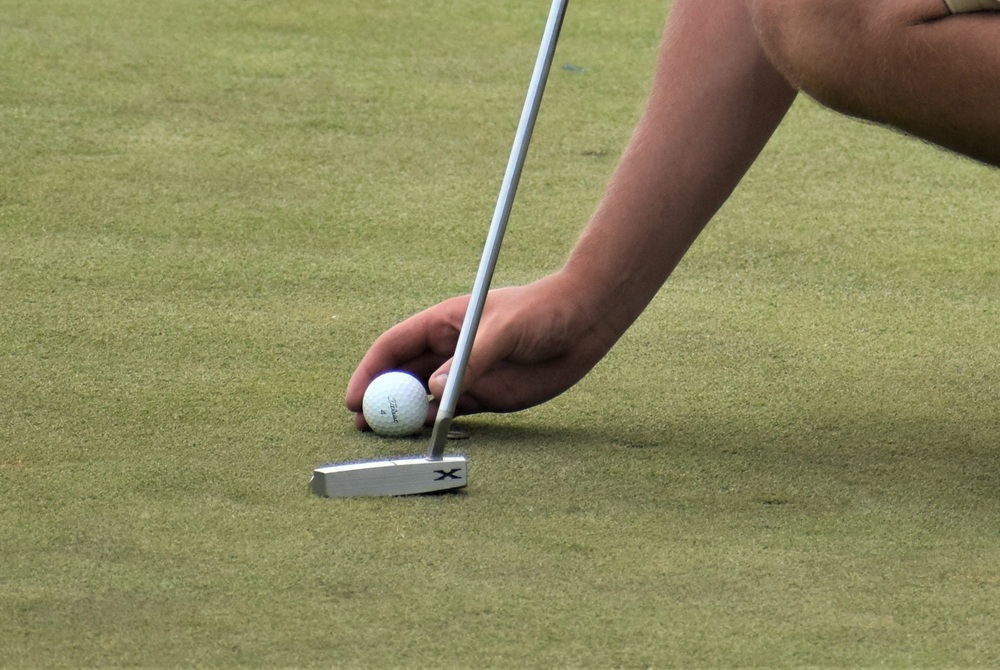
The weather’s getting nicer so we’re breaking out the golf clubs and hitting the links. But our game is still a little rusty.
The first three holes go well enough. But on hole number 4, our tee shot is off target. Way off target. And it lands on the green for a different hole. Now what? Can we just hit our approach shot from the wrong green?
No – but you do get free relief if your ball is on the wrong green.
Identify the nearest point of relief that is not closer to the hole – and completely off of the wrong green, including your stance – and drop your ball within a club-length of that point. Now you are good to hit your next shot.
If you were to take a shot from the wrong green – and not take the free relief – that would be a two-stroke penalty.
Previous 2025-26 editions
April 21: Injured Runner - Listen
April 14: Officiate Michigan Day - Listen
March 11: Basketball Replay - Listen
March 3: Over the Back - Listen
Feb. 24: Wrestling Out-of-Bounds - Listen
Feb. 17: Backwards Skiing - Listen
Feb. 10: Faking Being Fouled - Listen
Feb. 3: Bowling Pins - Listen
Jan. 27: Ski Gates - Listen
Jan. 20: Cheer Judges - Listen
Jan. 13: Basketball Over the Back - Listen
Jan. 6: Bowling Ball Bounces Out of Gutter - Listen
Dec. 9: Puck on Goal Netting - Listen
Dec. 2: Goaltending vs. Basket Interference - Listen
Nov. 25: Football Finals Instant Replay - Listen
Nov. 18: Volleyball Libero Uniforms - Listen
Nov. 11: Illegal Substitution/Participation - Listen
Nov. 4: Losing a Shoe - Listen
Oct. 28: Unusual Soccer Goals - Listen
Oct. 21: Field Hockey Penalty Stroke - Listen
Oct. 14: Tennis Double Hit - Listen
Oct. 7: Safety in Football - Listen
Sept. 30: Field Hockey Substitution - Listen
Sept 23: Multiple Contacts in Volleyball - Listen
Sept. 16: Soccer Penalty Kick - Listen
Sept. 9: Forward Fumble - Listen
Sept. 2: Field Hockey Basics - Listen
Aug. 26: Golf Ball Bounces Out - Listen