


Be the Referee: Hurdling
November 9, 2017
In this week's edition, assistant director Mark Uyl explains when hurdling a defender is and isn't allowed in football.
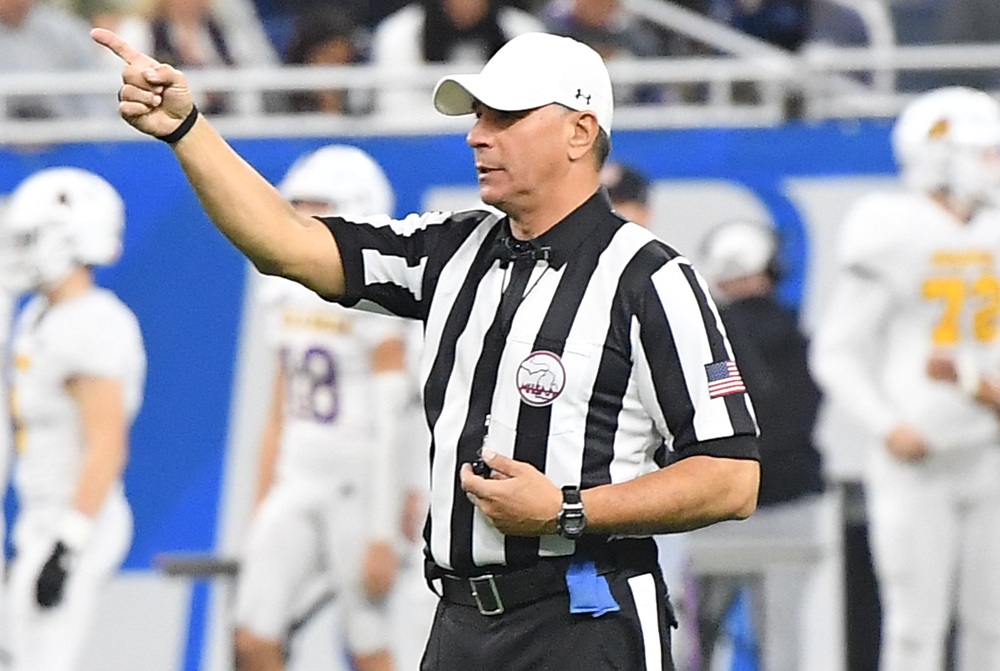
Be The Referee is a series of short messages designed to help educate people on the rules of different sports, to help them better understand the art of officiating, and to recruit officials.
Below is this week's segment – Hurdling - Listen
While we don’t see it very often, one of most unique football rules at the high school level deals with the prohibition about a runner hurdling over a defender.
Whenever a ball carrier is moving down the field and a defender is coming over to make that tackle, the only time that ball carrier can hurdle the defender – and by hurdle we mean trying to go over the top of the defender, leading with their foot first – the only time they can hurdle that defender is when the defender is contacting the ground with more than just their feet and hands.
So if that defender is lying on the ground, a hurdle is a legal move. However, if that defender is still on their feet, hurdling would result in a foul.
Past editions
November 2: The Survey Says - Listen
October 26: Helmet Comes Off - Listen
October 19: Goal Line Rules - Listen
October 12: No 1st-Year Fee - Listen
October 5: Athletic Empty Nesters - Listen
September 28: Misunderstood Football Rules: Kicking - Listen
September 21: Preparation for Officials - Listen
September 14: Always Stay Registered - Listen
September 7: Other Football Rules Changes - Listen
August 31: Pop-Up Onside Kicks - Listen
August 24: Blindside Blocks - Listen
Be the Referee: Dead Ball Penalty
By
Paige Winne
MHSAA Director of Brand Management
September 15, 2026
Be The Referee is a series of short messages designed to help educate people on the rules of different sports, to help them better understand the art of officiating, and to recruit officials.
Below is this week's segment – Dead Ball Penalty - Listen
We’ve got 4th-and-10 on the football field today. Team A has the ball on their own 40 and is going for it.
The quarterback scrambles and is pushed out of bounds at the 49-yard line, one yard short of a first down.
A defensive player from Team B hits the quarterback after he’s been pushed out of bounds and is flagged for a dead-ball personal foul. Where should the ball be marked and who has possession?
Is it 1st-and-10 for Team A at Team B’s 36-yard line? Or does the defense get the ball, 1st-and-10 for Team B at their own 36?
If you said Team B’s ball, you are correct. The personal foul was a dead-ball penalty that is enforced after the change of possession.
Previous 2026-27 editions
Sept. 8: Libero Ejected - Listen
Sept. 1: Soccer Foul After Shot on Goal - Listen
Aug. 25: Fumble Out of Bounds - Listen