

Be the Referee: Missed Field Goal
August 27, 2015
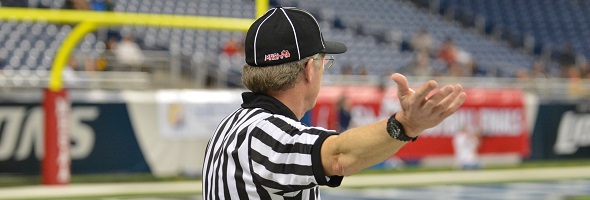
This week, MHSAA assistant director Mark Uyl kicks off the second season of "Be the Referee" with a "You Make the Call" on what happens after a missed field goal rolls out of bounds.
Be The Referee is a series of short messages designed to help educate people on the rules of different sports, to help them better understand the art of officiating, and to recruit officials.
Below is this week's segment - Missed Field Goal - Listen
Let’s get everyone in “football game shape” with the following You Make The Call.
One team has the chance to kick a 50-yard field goal just before halftime. As the kicker approaches the ball being held at the 40-yard line, his plant leg slips and the kick comes up well short and wide as it rolls out of bounds at the 4-yard line. Under high school rules, where will the team that forced the bad kick next snap the ball?
Believe it or not, under high school rules, missed field goals that roll out of bounds before reaching the goal line are treated just like a punt! The new offense will put the ball in play, first and 10, from the 4-yard line.

Be the Referee: Primary Areas
March 7, 2019
This week, MHSAA officials coordinator Sam Davis explains why sometimes the official farthest away from the action is the one with the best angle to make the call.
Be The Referee is a series of short messages designed to help educate people on the rules of different sports, to help them better understand the art of officiating, and to recruit officials.
Below is this week's segment – Primary Areas - Listen
In just about every single basketball game ever played, there are times where fans will turn to each other and wonder, “Why did that official make the call when there was another member of the crew that was a whole lot closer to the play?”
The most important thing in all of officiating, and especially basketball officiating, is the angle for an official. There will be many times during the game that the official that is closest to the play actually has the worst look or the worst angle.
Many times the player is going up in the lane for that shot, and the whistle will come from one of the two outside officials because they had the perfect angle to see all the elements of the play and can rule correctly.
Past editions
February 28: Under the Bus - Listen
February 21: You Make the Call - Listen
February 14: Because They Love It - Listen
February 7: Coach/Official Communication - Listen
January 31: Backcourt Violation? - Listen
January 24: Required Hockey Equipment - Listen
January 17: You Make the Call: 10-Second Clock - Listen
January 10: Tripping in Hockey - Listen
January 3: Sliding in Basketball - Listen
December 27: Stalling in Wrestling - Listen
December 20: Basketball: You Make the Call - Listen
December 13: Basketball Uniform Safety - Listen
December 6: Coaching Box Expansion - Listen
November 29: Video Review, Part 2 - Listen
November 22: Video Review, Part 1 - Listen
November 15: You Make the Call - Sleeper Play - Listen
November 8: 7-Person Football Crews - Listen
November 1: Overtime Differences - Listen
October 25: Trickery & Communication - Listen
October 18: Punts & Missed Field Goals - Listen
October 11: What Officials Don't Do - Listen
October 4: Always 1st-and-Goal - Listen
September 27: Unique Kickoff Option - Listen
September 20: Uncatchable Pass - Listen
September 13: Soccer Rules Change - Listen
September 6: You Make the Call: Face Guarding - Listen
August 30: 40-Second Play Clock - Listen
August 23: Football Rules Changes - Listen