

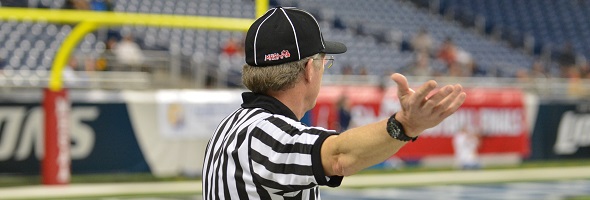
Be the Referee: Officials & Injuries
October 9, 2014
This week, MHSAA assistant director Mark Uyl explains the official's role when it comes to player injuries.
"Be the Referee" is designed to help educate people on the rules of different sports, to help them better understand the art of officiating and to recruit officials. The segment can be heard on Mondays, Wednesdays and Fridays during the school year on The Drive With Jack Ebling on WVFN-AM, East Lansing.
Below is this week's segment - Officials & Injuries - Listen
Player safety is the number one topic in football, from the NFL level to college to high school, all the way down to the youth levels. We often get the question, what is the official’s role when it comes to player injuries?
Officials have no role in diagnosing injuries. However, they must be constantly aware of what’s taking place on the field, and whenever a player is showing signs and symptoms of a possible injury, the game needs to be stopped and that team’s staff alerted to a possible injury.
The decisions on that injury are made by the team’s staff, which often includes a doctor, certified athletic trainer and members of the coaching staff to be certain that the best interests of the student-athlete is being followed in every case.
Past editions
Oct. 1 - Overtime - Listen
Sept. 25 - Field Goals - Listen
Sept. 18 - Tackle Box - Listen
Sept. 11 - Pass Interference - Listen
Aug. 25 - Targeting - Listen
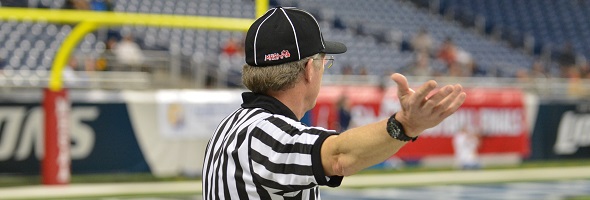
Be the Referee: Trickery & Communication
October 24, 2018
This week, MHSAA officials coordinator Sam Davis explains a key piece of communication that takes place between football referees and coaches during pregame.
Be The Referee is a series of short messages designed to help educate people on the rules of different sports, to help them better understand the art of officiating, and to recruit officials.
Below is this week's segment – Trickery & Communication - Listen
One of the long-time strategies in the game of football is deception. It has lots of other names, and most often goes these days by the name of trickery. Catching an opponent off-guard can break a game wide open. But catching the officiating crew off-guard is something you don’t want to have happen or else your big play may be blown dead inadvertently.
That’s why during the pre-game meeting the officiating crew has with each head coach, one of the questions that will be asked is – “Coach, do you have any trick plays we should be watching for?” And coaches, who are usually tight lipped about a lot of their strategies, will be very open and describe in detail anything fancy that’s in the playbook for that game.
This type of communication gets coaches and officials on the same page and ensures that when trickery comes visiting, only the opponents are surprised.
Past editions
October 18: Punts & Missed Field Goals - Listen
October 11: What Officials Don't Do - Listen
October 4: Always 1st-and-Goal - Listen
September 27: Unique Kickoff Option - Listen
September 20: Uncatchable Pass - Listen
September 13: Soccer Rules Change - Listen
September 6: You Make the Call: Face Guarding - Listen
August 30: 40-Second Play Clock - Listen
August 23: Football Rules Changes - Listen